
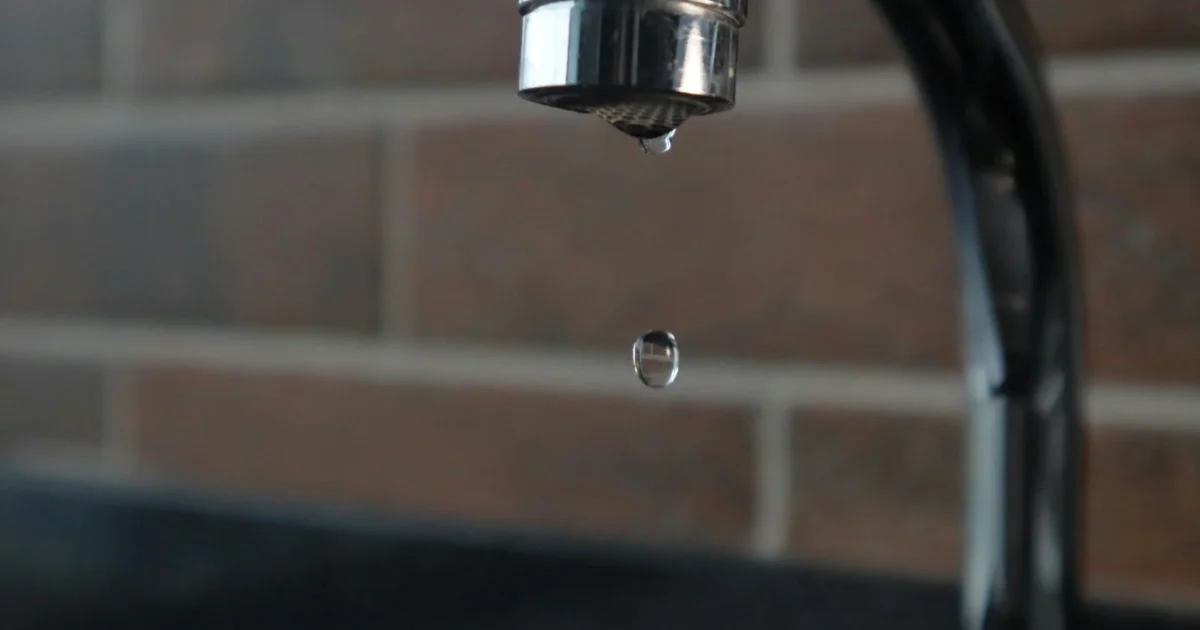
Most faucet repairs are a worn internal part you can replace yourself for under $20 in parts and about 20 to 40 minutes. A drip usually means a worn cartridge or O-ring; weak or sputtering flow is often just a clogged aerator. The labor is easy — the hard part is figuring out which problem you have and which part fits your specific faucet. Diagnose by where the water shows up and when, replace only the worn part, and know when to stop and call a plumber.
Every homeowner deals with a faulty faucet eventually. A drip. A loose handle. A trickle that won’t stop. Water pressure that suddenly halves for no reason. The plumbing didn’t change, but something inside the faucet wore out — and now you have a small problem that won’t fix itself. This faucet repair guide walks through how to diagnose it, what part actually fixes it, and when to stop and call a plumber.
The good news: faucet repair is one of the cheaper plumbing problems you can DIY. Most fixes cost under $20 in parts and take twenty to forty minutes once you’ve done one. The hard part isn’t the work. It’s knowing which problem you have, what part fits your specific faucet, and where to draw the line between “fix it yourself” and “call a plumber.” A good faucet repair guide answers all three.
This faucet repair guide walks through all of it. By the end, you’ll know:
- What’s actually wrong with your faucet (six common diagnoses)
- What kind of faucet you have, and how that changes the fix
- The tools you need (and the ones you can skip)
- When to DIY and when to stop
- Where to go next for the specific repair you’re facing
If you’re looking for a step-by-step on a specific repair right now, scroll to the section The Most Common Faucet Problems and click into the right section of this faucet repair guide. If you want the full picture before you touch anything, read straight through.
Free Tools for Your Faucet Repair
Two free tools do the two things the big-box parts pages can’t — match your exact part and price the job honestly. No sign-up, no app:
- Cartridge & Valve Finder — pick your faucet brand and it returns the exact cartridge or repair part you need. Buying the wrong part is the most common (and most frustrating) faucet-repair mistake; this prevents it.
- Repair Cost Estimator — see the honest DIY-parts cost versus what a plumber charges for the same job, so you know before you call.
The Four Types of Faucets — and Why It Matters for the Repair
Before we get to the diagnosis, you need to know what kind of faucet you’re dealing with. Every fix in this faucet repair guide changes based on the type, and buying the wrong part is the most common — and most frustrating — mistake homeowners make. If you don’t already know what brand or model you have, start with the brand and model identification guide — you can come back here once you know what you’re working with.
There are four faucet types in residential plumbing. Each one fails in a different way and uses different replacement parts.
1. Cartridge faucet — the most common modern faucet
Most kitchen and bathroom faucets installed in the last twenty years are cartridge faucets. The “cartridge” is a small replaceable insert that controls the hot/cold mix and the on/off. When a cartridge faucet leaks, drips, or stops working smoothly, the cartridge is almost always the culprit.
How to identify: single-handle faucets that move smoothly in a fluid arc. Two-handle faucets where each side has a smooth turning motion. If your faucet handle moves in a small, refined motion (rather than the multi-turn of older designs), it’s almost certainly cartridge-based.
How it fails: the cartridge wears out internally — rubber seals harden, ceramic discs scratch, mineral deposits build up. Result: slow drip, hard handle, or imbalanced hot/cold.
Fix: replace the cartridge. Cost: $10–40 for a generic cartridge, $30–80 for a high-end ceramic disc cartridge. Difficulty: easy once you’ve identified the right cartridge.
2. Ceramic disc faucet — premium and durable
Ceramic disc faucets use two ceramic plates (one fixed, one moving) to control flow. They’re more expensive, longer-lasting, and most common on Kohler and high-end Moen faucets.
How to identify: single-handle faucets, often higher-end, with a very smooth and almost frictionless feel. The handle stays in the position you put it — no spring-back.
How it fails: rare, but eventually the ceramic discs scratch or develop hairline cracks. Mineral buildup is a more common problem than wear.
Fix: clean the discs with vinegar (often enough to restore function), or replace the entire ceramic disc cartridge. Cost: $20–80.
3. Ball faucet — older single-handle, mostly Delta
Ball faucets use a slotted metal or plastic ball that rotates inside the faucet body to control mixing and flow. Delta invented the ball-valve faucet in 1954 and used it on most of their single-handle faucets through the late 2000s. If you have a Delta single-handle faucet from before roughly 2010, it’s most likely a ball faucet — newer Delta single-handles use cartridges (Diamond Seal or DST ceramic).
How to identify: single-handle faucet, often with a small set-screw on the side of the handle (rather than under a cap). The handle moves in a slightly stiff, “clicky” way compared to cartridge faucets.
How it fails: the rubber seals and springs underneath the ball wear out. Symptoms: leaks at the spout base, drips at the spout, or hard-to-control temperature.
Fix: rebuild kit (springs, seats, O-rings, ball). Cost: $10–25. Difficulty: medium — more parts to track than a cartridge.
4. Compression faucet — the oldest design
Compression faucets are what your grandparents had. Two separate handles, each requiring multiple turns to fully open or close. Inside, a rubber washer compresses against a metal seat to stop the water flow.
How to identify: two-handle faucet where each handle takes 3–4 full turns to open or close. Common in older homes (pre-1990) and budget bathroom fixtures.
How it fails: the rubber washer at the base of the stem wears out, hardens, or cracks. Sometimes the metal seat the washer compresses against gets pitted from mineral buildup.
Fix: replace the washer (and sometimes the seat). Cost: $2–10. Difficulty: easy mechanically, but you may need a seat wrench if the seat is also damaged.
The Six Most Common Faucet Problems
Most faucet issues fall into one of these six patterns. Find your symptom, click through to the dedicated guide, and you’ll have a fix.
Problem 1: The faucet drips from the spout when off
By far the most common faucet problem. Cause depends on your faucet type:
- Cartridge faucet → worn cartridge (replace it)
- Ball faucet → worn springs and seats (rebuild kit)
- Compression faucet → worn washer (replace it)
- Ceramic disc faucet → debris or scratched discs (clean or replace)
Problem 2: Leak at the base of the faucet (water pooling on the deck)
Water visible around the bottom of the faucet, on the countertop, or in the cabinet below. This isn’t the cartridge — it’s the O-rings inside the faucet body that seal the spout to the base.
Fix: replace the O-rings. Cost: $2–5. Cartridge faucets and ball faucets both have these.
Problem 3: Reduced water flow from one or all faucets
Often misdiagnosed as a faucet repair. Usually it’s not the faucet — it’s the aerator, the small screen at the tip of the spout that mixes air into the water and slows the flow. They clog with mineral deposits over time.
Fix: unscrew the aerator, clean it in vinegar overnight (or replace it for $2–5), screw it back on. Five-minute job.
Problem 4: Handle is hard to turn or won’t move
Mineral buildup is the most common cause, especially in hard-water areas. Sometimes the cartridge has stiffened internally. Sometimes the handle itself is corroded onto the cartridge stem.
Fix: depends on which of the above. Often a vinegar soak fixes mineral buildup. A worn cartridge usually needs replacement. Use plumber’s grease to lubricate during reassembly.
Problem 5: Hot water on cold side (or vice versa)
You turn the cold handle and get hot water — or the other way around. This usually happens after someone replaced a cartridge and installed it backwards.
Fix: remove the cartridge and re-install it in the correct orientation. Most cartridges have a “hot” side marked with red plastic, a notch, or a directional arrow. If yours doesn’t, the manufacturer’s documentation will specify.
Problem 6: New cartridge installed, faucet still leaks
This is the maddening one — you fixed the obvious problem and it didn’t work. Common reasons: cartridge installed wrong, new cartridge is the wrong part for your faucet model, the seats and springs underneath need replacing too (ball faucets), or the bore the cartridge sits in is damaged. The fix is methodical re-checking: confirm the part number against your faucet model, confirm orientation, then inspect seats and bore for damage. If everything looks right and it still leaks, the bore itself may be scored beyond what a cartridge swap can fix — at that point, a full faucet replacement is the practical call.
Tools You Actually Need
Before you start any faucet repair, gather these. Most are in any kitchen drawer; the few you don’t have run $15–40 total at any hardware store.
The essentials for any faucet repair:
- Adjustable wrench (10-inch)
- Channel-lock pliers (10-inch slip-joint kind)
- Phillips screwdriver (#2)
- Allen wrench set (covers most modern faucet handle screws)
- Plumber’s grease (small tub, lasts forever)
- Old towels (3 or 4)
- A flashlight or headlamp
Specific to faucet replacement (not just repair):
- Basin wrench — the only tool that fits behind a sink to reach mounting nuts. You can’t replace a kitchen faucet without one.
Specific to stuck cartridges:
- Faucet cartridge puller — a small specialty tool that pulls a stuck cartridge straight out without damaging the housing. Generic universal pullers work fine; brand-specific aren’t required for most cases.
When to DIY vs. When to Call a Plumber
This is the part nobody tells you, and the part most faucet repair guides skip. Most faucet problems are DIY-friendly. A few aren’t, and the difference between “easy fix” and “expensive disaster” usually comes down to whether you push through a problem you should walk away from.
DIY this — under $30, under an hour
- Cartridge replacement (any brand)
- Aerator cleaning or replacement
- O-ring replacement at the base
- Handle replacement
- Compression faucet washer replacement
- Ball faucet rebuild kit installation
Maybe DIY, with caution
- Replacing an entire kitchen or bathroom faucet (mechanically straightforward, but the basin wrench access is tight, and seized mounting nuts are common in older sinks). Set aside two hours, not thirty minutes. If you can’t get a mounting nut to budge, that’s the moment to stop.
- Replacing a shut-off valve under the sink. Easy if the valve is clean and just leaking at the connection. Stop and call if it looks corroded or won’t close fully.
Stop — call a plumber
- The shut-off valve under the sink won’t move or looks corroded. Forcing it can break the valve open inside the wall, turning a $20 repair into a $1,500+ wall-and-flooring rescue.
- Water is leaking inside walls or ceilings, not just at the faucet itself. By the time you can see water through drywall, the actual damage is usually much larger.
- You can’t shut off the water to the faucet you’re working on. You need isolated water control to safely repair anything. If the home’s main shut-off is your only option, that’s a workable but riskier scenario — and a sign you should consider replacing the under-sink shut-offs at some point.
- The faucet body itself is cracked. Replace the whole faucet, don’t try to repair a cracked body.
⚠️ General safety rule: every faucet repair starts with shutting off the water at the under-sink shut-off valves and confirming no flow at the faucet. The 60 seconds it takes is the cheapest insurance you’ll buy.
Faucet Repair Guide: Step-by-Step Decision Tree
If your faucet has a problem and you’re not sure where to start, work this in order:
- Identify the faucet type — cartridge, ceramic disc, ball, or compression (use the section above).
- Identify the brand and model — look under the sink for a model tag, or check the cartridge once you remove it.
- Diagnose the symptom — drip from spout, leak at base, reduced flow, hard handle, hot/cold reversed, or post-repair leak. Match it to one of the six problems above.
- Buy the right part — cartridge, rebuild kit, washer, or O-rings, depending on faucet type and symptom. Take the old part with you to the hardware store if you can; the staff can help match it. Or order online once you have the model number.
- Shut off the water and confirm.
- Do the repair — follow the specific guide for your faucet type and symptom. We have step-by-step guides for the most common ones.
- Test before reassembly is complete — turn the water back on slowly with the faucet open, watch for leaks before you put the handle back on. Catching a problem at this stage is much easier than after full reassembly.
If something feels wrong at any step — the part doesn’t fit, the handle won’t come off, water keeps coming when shut-offs are closed — stop. Plumbing problems get more expensive when you push through them. They get cheaper when you pause and re-evaluate.
A Quick Note on Common Mistakes
Beyond the major “stop and call a plumber” warnings above, a few smaller errors trip up DIY faucet repairs over and over — and most faucet repair guide content skips them, so they’re worth calling out:
- Wrong Teflon tape, or too much of it. PTFE tape is for threaded water connections only — not compression fittings, not flare fittings, not push-to-connect. And three to four wraps is plenty; bunching the tape in extra layers can crack fittings or create leaks. Wrap clockwise around the male threads as you face the open end.
- Using the wrong tool. A pair of cheap pliers can’t replace a basin wrench. Trying to muscle a mounting nut with the wrong tool damages the nut, the faucet, or your knuckles. If you don’t have the right tool, buy or borrow it before you start the job.
- Forgetting to relieve water pressure. After you shut off the supply valves, open the faucet to drain trapped water in the line. Skipping this step means a small fountain when you disassemble the cartridge.
How long does a faucet cartridge last?
Standard cartridges typically last 5–10 years; premium ceramic-disc cartridges can run 10–20 years. Hard water dramatically shortens lifespan because mineral deposits abrade and clog the seals. In hard-water areas, expect the lower end of those ranges; in soft-water areas, the upper end.
Can I use any cartridge in my faucet, or does the brand matter?
The brand and model both matter. Cartridges are not universal, even within a brand. Delta cartridges differ between the 1300 series, 1700 series, Multichoice series, and others. Moen has 1200, 1222, and 1225 — all different. Always identify the specific cartridge before buying. The dedicated brand identification guides cover this in detail.
Why does my new cartridge leak the same way as the old one?
Most likely cause: wrong cartridge for your faucet model. Second most likely: cartridge installed in wrong orientation. Third: damaged seats and springs (on ball faucets) or scratched bore (on cartridge faucets). Pull the cartridge back out, verify the part number against your faucet model, check orientation against the manufacturer’s diagram, and inspect the cartridge bore inside the faucet body for visible damage or pitting.
Should I replace both my faucet’s cartridge and the O-rings at the same time?
If you’re already disassembling the faucet, yes. O-rings cost a few dollars and adding 2 minutes to the job saves you another disassembly later. Same advice for ball faucet rebuilds — replace springs, seats, and O-rings together as a kit, not individually.
Do I need to turn off the main water shut-off, or just the under-sink valves?
For most repairs, the under-sink shut-off valves are enough. Only turn off the home’s main if your under-sink valves are seized, missing, or won’t fully close. If you do have to use the main shut-off, work quickly — the rest of the household has no water until you’re done.
How much should a plumber charge to replace a faucet cartridge?
A professional cartridge replacement typically runs $200–350 total (parts plus labor). Full faucet replacement, including a new faucet, typically runs $500–700 total — labor alone is roughly $100–250 for the 1–3 hours of work. DIY saves the labor cost; the part itself is often the same price either way.
Are there warranty programs that cover cartridge replacement?
Yes — and they’re worth knowing about before you spend money. Moen, Kohler, Delta, and Pfister all offer Limited Lifetime Warranties to the original homeowner. Moen and Kohler explicitly state they will mail a replacement cartridge free of charge for the life of the original purchaser’s home. Delta and Pfister also cover defective parts under warranty for the life of the original owner, though the language is slightly less explicit about free shipping. Before you buy a replacement cartridge, contact the manufacturer’s warranty line — you may get the part free, especially if the faucet is less than ~10 years old.
Are there regulations that affect what faucets I can buy?
Yes. Two main rules to know:
Can I use silicone caulk or flex-seal instead of plumber’s putty?
No. Plumber’s putty stays pliable and doesn’t bond permanently — you can disassemble and reseal later. Silicone caulk and flex-seal-style products bond permanently and complicate any future repair. Use the right material; it’s $4 at any hardware store.
My faucet handle won’t come off — how do I remove it without breaking it?
Most modern handles have a small set-screw under a decorative cap (pry the cap off with a flathead screwdriver). Some have a screw under the handle base accessible with an Allen wrench. If the handle is corroded onto the stem, soak with penetrating oil (PB Blaster or WD-40 Specialist) for 15 minutes, then use a faucet handle puller. Never pry with a flathead — you’ll crack the porcelain or the handle.
Where to Go Next in This Faucet Repair Guide
This faucet repair guide is the hub for a complete cluster we’re publishing on a steady cadence through 2026. As each guide goes live, we’ll link it here. The series covers:
- Brand and cartridge identification — Delta, Moen, Kohler, and Pfister, including how to identify your faucet when there’s no sticker
- Step-by-step repair walkthroughs — by symptom (drip, base leak, hard handle, post-repair leak) and by brand
- Tools and parts — what you actually need, what you can skip, and a glossary of common faucet parts
- Troubleshooting — for the cases where the obvious fix didn’t work
The fastest way to get each new piece of this faucet repair guide the week it publishes is the email list below — sign up for the free homeowner’s plumbing repair toolkit checklist and you’ll get the rest of the series as it ships.
Brand and cartridge identification
- How to Identify Faucet Brand and Model (Even Without a Sticker)
- Delta Cartridge Identification: Shower + Faucet Chart [2026]
- Delta Cartridge Identification: Shower + Faucet Chart [2026]
- Moen Cartridge Identification: 1222, 1225B, 1200, or 1255? [2026]
- Kohler Cartridge Identification: Complete Guide — GP1016515, GP77005-RP & Rite-Temp [2026]
- How to Identify Your Pfister Faucet Cartridge [2026]
- American Standard Faucet Cartridge Identification: Find the Right Part Every Time [2026]
- How to Identify Your Delta Faucet: Model, Trim, and Cartridge [2026]
- How to Identify Your Price Pfister Faucet Cartridge [2026]
- How to Read a Delta Faucet Model Number: Model vs. Part Number Explained [2026]
- Where Is the Model Number on My Faucet? A Brand-by-Brand Guide [2026]
Step-by-step repair walkthroughs
- Why Your Faucet Is Leaking: 7 Common Causes (and How to Tell Them Apart)
- How to Replace a Faucet Aerator: A 5-Minute Fix Most Homeowners Skip
- How to Replace a Kitchen Faucet: A Homeowner’s Step-by-Step Guide [2026]
Tools and parts
Troubleshooting
Costs and when to hire a pro
- When to Call a Plumber (and When to DIY) [2026]
- How Much Does It Cost to Replace a Faucet Cartridge? [2026]
- How Much Does It Cost to Repair a Faucet? DIY vs. Hiring a Plumber [2026]
- Are Aftermarket Faucet Cartridges as Good as OEM? [2026]
- Single-Handle vs Two-Handle Faucet: Which Is Easier to Repair? [2026]
Sources
This faucet repair guide draws on manufacturer documentation, federal and state regulations, and established trade resources. Specific authoritative sources:
- Delta Faucet Support — official product documentation and warranty pages
- Moen Support — repair and troubleshooting guides for sink, tub, and shower fixtures
- Kohler Customer Care — installation, parts, and warranty documentation
- Pfister Pforever Parts — cartridge identification and warranty support
- EPA WaterSense bathroom faucet specification — federal flow standards (1.5 gpm at 60 psi as of May 2026)
- California Energy Commission appliance efficiency standards — state-level low-flow standards (stricter than federal)
- The Reduction of Lead in Drinking Water Act — federal lead-free requirement, in effect since 2014
- Plumbing trade and contractor resources including Angi, Homewyse, and HomeAdvisor pricing data
- Direct manufacturer cartridge specifications for Delta RP46074 and RP19804, Moen 1200/1222/1225, Kohler GP30420, and Pfister Cerama series
Educational content only. Not a substitute for licensed professional advice. Local plumbing codes vary by jurisdiction; for code-specific questions, consult a licensed plumber. Use of any guidance from this guide is at your own risk.
Get the homeowner’s plumbing repair toolkit checklist — the tools, parts, and decisions every homeowner should have on hand. [Free download — enter your email]