
A slow or clogged drain is one of the most common plumbing problems a homeowner faces, and most of the time it is also one of the most fixable without calling anyone. The water backing up in your sink is usually a local clog a few inches or a few feet down the pipe, and a plunger or a five-dollar tool clears it in ten minutes.
This drain repair guide is built around the one question that actually changes what you should do: is it one drain acting up, or several at once? That single distinction separates a quick DIY fix from a job you should hand to a professional. We will start there, then walk through how a drain system works, how to clear a clog the way plumbers actually recommend (mechanically, not with a bottle of chemicals), how to track down a drain odor, the tools worth owning, real 2026 cost ranges, and the honest line between DIY and “stop and call a pro.”
Each section ends with a specific next step, and the per-problem guides linked at the end go deeper on individual fixtures as they publish.
The First Question: One Drain, or Several?
Before you touch a tool, run one quick test, because it decides everything else.
If only one fixture is slow or backed up – just the kitchen sink, just the shower – the clog is local, sitting in that fixture’s trap or its branch line. This is the DIY-friendly case, and the rest of this guide is mostly about clearing it.
If two or more fixtures are slow or backing up at the same time – the tub drains slowly and the toilet gurgles, or the kitchen sink backs up and the laundry standpipe overflows – the blockage is downstream in a line they share, often the main sewer line. That is not a fixture problem and usually not a DIY job. When more than one drain backs up at once, the problem is in the main line, not a single branch (HomeTips).
There is an even simpler version of the test: run one fixture and watch another. Flush the toilet and listen for gurgling in the nearby shower, or run the bathroom sink and watch whether the toilet water rises. If a drain you did not touch reacts – bubbling, gurgling, rising – air is being forced back through the system because the line downstream is blocked, which points at the main line rather than a branch (Western Rooter). Gurgling and slow drains across multiple fixtures, or anything that smells like sewage, is your cue to skip the DIY steps below and jump to the “When to Call a Pro” section.
How a Drain System Actually Works
A little anatomy makes every later step make sense. Residential drain plumbing has four parts working together.
The trap. Under every sink, tub, and shower is a curved section of pipe – the P-trap – that holds a small plug of standing water at all times. That water plug is not an accident; it is a seal that blocks sewer gas from rising up through the drain into your home. The trap is also where most simple clogs collect, because its bend catches hair, grease, and debris. A toilet has its trap built into the porcelain (the trapway), which is why a toilet is plunged and augered differently than a sink.
The branch line. From each trap, a horizontal branch pipe carries waste to the main stack, sloped just enough (about a quarter inch per foot) for gravity to move solids along with the water.
The vent. Every drain system is also connected to vent pipes that run up through the roof. Vents let air in behind the draining water so it flows smoothly instead of glugging – the same reason you punch a second hole in a juice can. A blocked vent makes drains gurgle and run slow even when nothing is clogged.
The main line. All the branches feed into the building’s main drain, which carries everything out to the municipal sewer or a septic tank. This is the shared pipe; a blockage here affects the whole house at once.
When you understand those four parts, the diagnosis writes itself: a problem at one fixture is a trap or branch issue (DIY), and a problem affecting several fixtures is a main-line or vent issue (usually pro).
The Most Common Drain Problems, by Fixture
Where the clog forms tells you what it is made of and how to clear it.
Kitchen sink – grease and food. Kitchen clogs are typically congealed grease, fat, and food scraps that coat and narrow the pipe over time. They respond well to a plunger and a hand auger; they do not respond well to dumping more grease-laden hot water down after them. A sink with a garbage disposal adds another failure point – a disposal that hums but will not spin is jammed, not clogged, and needs the hex key and reset button, not drain work.
Bathroom sink – hair and the pop-up. Bathroom sink clogs are usually a wad of hair and soap scum caught on the pop-up stopper’s pivot rod, just inches below the drain opening. Pulling and cleaning the stopper often fixes it without any tools at all.
Shower and tub – hair, almost always. Hair causes the large majority of shower and tub drainage problems. The clog sits right under the strainer or stopper, within reach of a plastic hair-removal tool. A tub adds a trip-lever or pop-up mechanism that can collect debris of its own.
Toilet – the trapway. A clogged toilet is cleared with a flange plunger first and a closet (toilet) auger second – never a sink auger, which can scratch the porcelain. If a toilet clogs repeatedly with normal use, the problem may be downstream rather than in the bowl.
Floor drains and laundry – intermittent backups. A basement floor drain or laundry standpipe that backs up, especially during heavy water use, often signals a partial main-line restriction rather than a local clog.
How to Clear a Clog the Right Way: Mechanical First
Here is the method professionals use and recommend, in order. Work down the list; most clogs surrender at step one or two.
- Plunger. A good cup or flange plunger and a dozen firm strokes clears most sink, tub, and toilet clogs. Seal the overflow opening on a bathroom sink or tub with a wet rag first, or you will just push air out of it instead of pressure down the pipe.
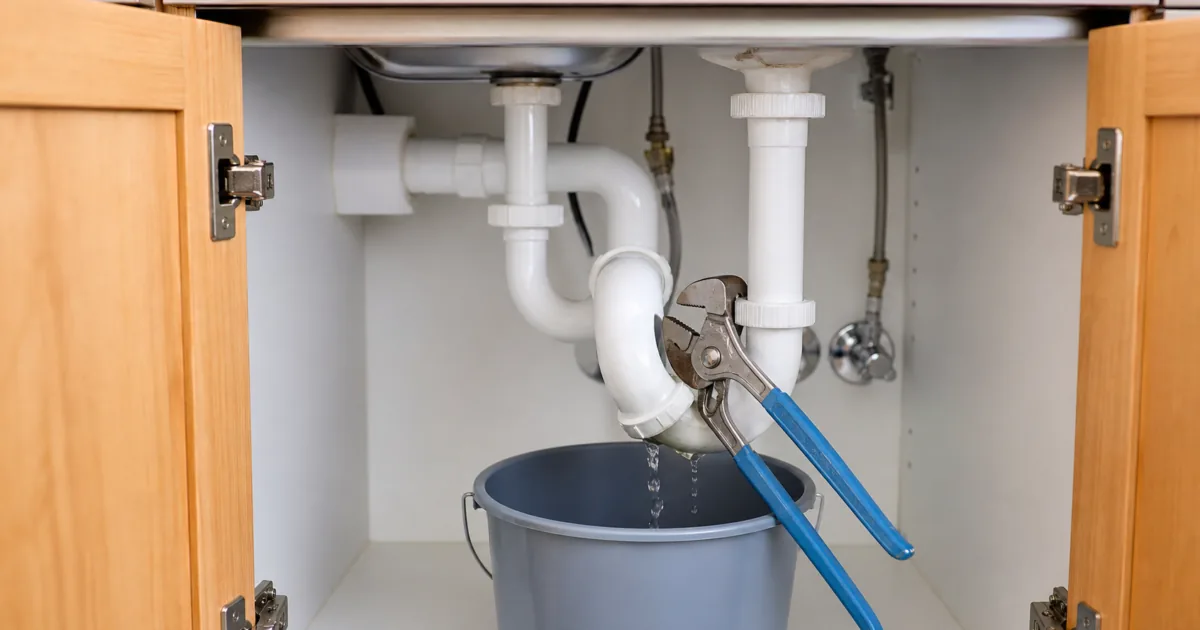
- Remove and clean the trap or stopper. For a bathroom sink, pull the pop-up. For a kitchen sink, put a bucket under the P-trap and unscrew the slip nuts by hand – the clog is very often right there in the bend. This is a fifteen-minute job with channel-lock pliers.
- Hand auger (drain snake). If the clog is past the trap, a 15- to 25-foot hand auger reaches into the branch line where stubborn clogs sit. Feed it in, crank to break up or hook the blockage, and pull it back out.
Why to Skip the Chemical Drain Cleaner
It is tempting to reach for a bottle of Drano or Liquid-Plumr first. Plumbers consistently advise against it, for concrete reasons. Chemical drain cleaners generate intense heat as they work, which can soften and warp PVC piping, corrode older metal pipes, and degrade seals over repeated use (Reliable Heating & Air). They frequently do not actually clear the clog – they erode a small channel so some water passes, leaving the blockage to reform, which is why they become a repeat purchase. And they are genuinely hazardous: caustic formulas release fumes and can cause chemical burns, and a tubful of standing chemical water is dangerous to then plunge or snake.
If your home is on a septic system, there is an extra reason to avoid them: harsh chemicals kill the beneficial bacteria the tank relies on to break down waste. The mechanical methods above – plunger, trap cleaning, hand auger – clear the clog completely without any of that risk, which is why they are the first move, not the last resort.
Why Does My Drain Smell?
A smelly drain is a different problem from a slow one, and it has its own short list of causes.
A dry P-trap. If a drain you rarely use (a guest bathroom, a floor drain) smells like sewer gas, the most likely cause is simple: the water seal in the trap evaporated, opening a path for sewer gas. A trap can dry out in as little as a week or two of disuse (Oatey). The fix is to run water down it for a minute to refill the trap; for a drain you almost never use, pouring a little water in monthly keeps the seal intact.
Biofilm buildup. A musty or sour smell, usually from a bathroom or kitchen sink, is typically a slimy biofilm of soap, hair, and food coating the inside of the pipe and stopper. Pulling and scrubbing the stopper and flushing the drain with hot water (and, if you like, baking soda followed by vinegar as a cleaning – not unclogging – step) usually clears it.
A venting problem. If the smell comes and goes with water use, or drains gurgle along with the odor, the vent may be blocked. That is closer to a pro diagnosis.
A persistent sewage smell across the house, especially with any of the multiple-fixture symptoms above, can indicate a main-line or sewer issue and warrants a professional look rather than more cleaning.
Tools You’ll Actually Need
You do not need a truckload of equipment. The homeowner drain kit is short:
- A quality plunger – a flat-cup for sinks and tubs, a flange plunger for toilets.
- Channel-lock (tongue-and-groove) pliers – for loosening slip nuts on a P-trap.
- A hand auger / drain snake – a 15- to 25-foot drum auger reaches past the trap into the branch line. For toilets, a separate closet auger.
- A plastic hair-removal tool – a few dollars, and it pulls shower and bathroom-sink hair clogs without any disassembly.
- A bucket, gloves, and rags – for the standing water in the trap.
A dedicated tools guide for the drain kit is coming in this cluster; for now, those five items cover the large majority of household drain work.
DIY vs. Call a Pro
Most single-fixture clogs are well within DIY range. Call a professional when you see any of the following – these are the cases where pushing harder makes things worse, not better:
- Multiple fixtures are slow or backing up at once, or running one fixture makes another gurgle or rise. That is a main-line or sewer blockage, often caused by tree-root intrusion or a collapsed pipe, and it needs a powered drain machine or a camera inspection (All Clear).
- Sewage is backing up into a tub or floor drain. Stop using water and call – this is a health hazard, not a DIY project.
- The same drain clogs over and over despite clearing it. Repeated clogs at one fixture can mean a partly collapsed or root-invaded branch that a snake only temporarily reopens.
- You have already tried a plunger and a hand auger and the clog will not move. The blockage is deeper than homeowner tools reach.
- There is any gas-line or soldered-pipe work implied by the repair. That is licensed-trade territory.
There is no prize for forcing it. A clog you cannot reach with a hand auger is exactly the point where a plumber’s powered equipment – and their camera – saves you money versus turning a clog into a damaged pipe.
What It Costs (2026, Rough Ranges)
- DIY clog clearing: essentially the cost of the tools – a plunger ($10-$20), a hand auger ($15-$30), a hair tool ($5) – reused indefinitely.
- Professional single-drain clearing: commonly in the low hundreds of dollars, depending on access and local rates.
- Main-line clearing / sewer auger: several hundred dollars and up, more if a camera inspection or root cutting is needed.
- Sewer-line repair (collapse, major root intrusion): the serious end – often well into the thousands, which is why catching the multiple-fixture warning signs early matters.
Treat these as directional; get a local quote for anything past a single fixture.
Is it OK to use Drano or chemical drain cleaner once?
Occasional use is less risky than regular use, but plumbers still recommend against it – it can damage pipes, often does not fully clear the clog, and is hazardous to handle. A plunger or hand auger is safer and more effective.
Will baking soda and vinegar unclog a drain?
It is a fine cleaning and deodorizing step for a sluggish or smelly drain, but it does not generate enough force to clear a real blockage. For an actual clog, reach for a plunger or auger.
Why do all my drains drain slowly at once?
That points to the main line, not any one fixture. See the first section – run the one-fixture-watch-another test and, if a drain you did not touch reacts, call a professional.
Why does my drain smell like sewage?
Most often a dried-out P-trap (run water to refill it) or biofilm in the pipe. A whole-house sewage smell with gurgling drains can indicate a main-line or venting problem worth a pro look.
How do I unclog a drain without a snake?
Try a plunger first, then remove and clean the P-trap or pop-up stopper – the clog is frequently right there within hand’s reach, no snake required.
Can a clog fix itself?
A partial clog sometimes clears as water keeps pushing debris along, but it usually returns and worsens. It is better to clear it properly than to wait.
Is a slow drain an emergency?
A single slow drain is not – you can schedule the fix at your convenience. Multiple slow drains, sewage backup, or water backing up when you run an appliance is closer to urgent.
Should I rent a power auger for a tough clog?
For a clog past the reach of a hand auger, a rented power auger can work, but it is also the point where many homeowners do more harm than good. If a hand auger did not reach it, weigh a pro’s powered equipment plus camera against the rental.
Where to Go From Here
This hub is the map; the per-problem guides below go step by step on each fixture and technique. They publish over the coming weeks as part of the drains cluster:
- How to Unclog a Kitchen Sink (plunger, auger, no-chemical method)
- How to Unclog a Bathroom Sink (pop-up and P-trap)
- Why Your Shower Drains Slowly: hair clogs and how to clear them
- How to Unclog a Bathtub Drain
- Chemical vs. Mechanical Drain Cleaning: why plumbers skip the Drano
- How to Use a Drain Snake / Hand Auger
- Why Does My Drain Smell? diagnosing sewer-gas and musty odors
- How to Replace a Sink Pop-Up Drain Assembly
- How to Replace a Kitchen Sink Basket Strainer
- How to Fix a Leaking P-Trap
- Multiple Drains Clogged? When it’s a main-line problem
- How to Prevent Clogged Drains
- The Homeowner’s Drain-Clearing Tool Kit
In the meantime, if your problem is actually a toilet that clogs or runs, start with our toilet repair guide; if it is a dripping or low-pressure faucet, see the faucet repair guide.
Step-by-step drain clearing and repair walkthroughs
Tools and replacement parts
Coming soon.
Troubleshooting and diagnostics
- Why Are My Drains Slow? Causes, Diagnosis, and 3 DIY Fixes [2026]
- Why Does My Drain Smell Like Sewage? 8 Causes and Fixes [2026]
Costs and when to hire a pro
- When to Call a Plumber for Drain Problems [2026]
- When to Repipe vs Repair Galvanized, Polybutylene, and Cast Iron [2026]
This drain repair guide is for general homeowner education and is not a substitute for licensed professional advice. Local plumbing codes vary by jurisdiction; when a repair involves the main sewer line, gas-adjacent work, or anything you are unsure about, consult a licensed plumber.
Parts for this repair
As an Amazon Associate, plumbingbythebook earns from qualifying purchases. Links below are affiliate links — they cost you nothing extra.
- Cobra 15-Foot Drum Auger (Hand Snake) — The hand-cranked drain snake that reaches past the P-trap to clear sink, tub, and shower clogs — the mechanical fix this guide recommends over chemicals.
- Oatey 1.5-Inch PVC P-Trap — Standard 1-1/2 in. sink trap — the part to replace when the trap leaks at the slip joints or stays clogged.
- Oatey Stainless-Steel Shower Drain Strainer — Catches hair before it reaches the trap — the single most effective way to prevent shower clogs.
- Sioux Chief 825-T Kitchen Sink Basket Strainer — Stainless replacement basket strainer for a kitchen sink drain that leaks underneath or has a corroded basket.