
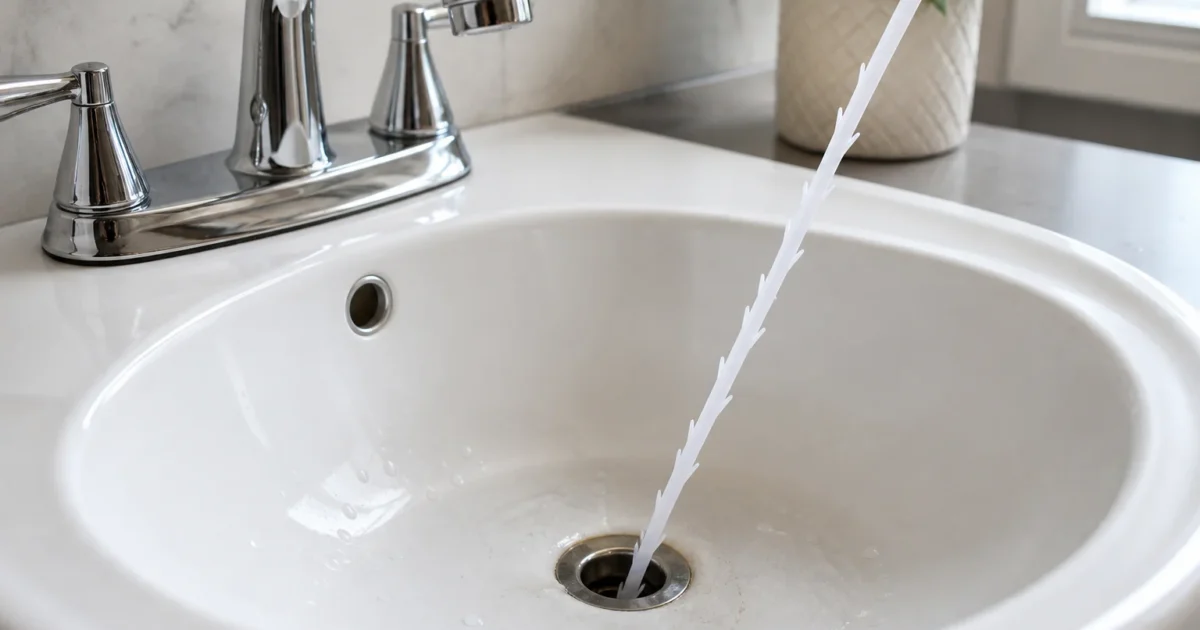
If you’re asking why are my drains slow, the answer almost always starts with one question: is it one fixture or several? A single slow sink or shower is almost always a local obstruction — hair, soap scum, or grease within a few feet of the drain — that a five-dollar tool clears in ten minutes. Two or more drains draining poorly at the same time is a different kind of problem entirely, and it belongs to a plumber, not a bottle of chemicals.
This guide walks through the 7 most common causes of a slow drain, a 5-step diagnostic you can run without disassembling anything, and the 3 DIY fixes that resolve the large majority of single-fixture slow drains. For every cause, we draw the honest line between what you can fix on a Saturday afternoon and what calls for professional equipment.
Why Are My Drains Slow? Start With How Many Are Affected
This is the diagnostic fork that changes everything you do next.
One fixture slow, everything else normal. When only one bathroom sink or shower drains slowly while all nearby fixtures run fine, the restriction is almost certainly local — at the stopper, pop-up assembly, strainer, P-trap, or the first few feet of drain pipe. The Spruce identifies slow drainage, gurgling, and odors together as the early-warning cluster that a single fixture needs attention. This is the scenario where the 3 fixes below apply directly.
Two or more fixtures slow, gurgling, or backing up. When a group of fixtures drains poorly at the same time — or when the toilet gurgles while the sink drains — the restriction is no longer local. It may be in a branch drain, the main drain, a vent, the sewer lateral, or a septic system, and none of those yield to a plunger or a plastic hair tool (Southern Living, Homes & Gardens). Skip the fixes below and call a plumber when you see this pattern.
One fixture, plus a sewer smell. Slow drainage combined with a musty or sewer-gas odor can mean organic buildup near the fixture, a dry trap, or a venting issue rather than a straightforward clog (The Spruce). Clear the local clog first — the smell often disappears with it. If the odor stays after the drain flows normally, that’s a vent or trap issue worth a plumber’s look.
The 7 Most Common Causes of a Slow Drain
The ranking below draws on plumber statements and homeowner guidance across major home publications. The strongest single data point: a plumber quoted by The Spruce estimates that about 90% of shower clogs start with hair.
1. Hair plus soap and product buildup. Hair is the dominant cause for showers and bathroom sinks — it catches on strainers, stopper pegs, and drain crossbars, and once a small mat forms, soap scum, mineral deposits, and skin cells bind to it and thicken the restriction over time (Good Housekeeping). If water pools around your feet during a shower and drains slowly afterward, this is almost certainly the cause.
2. Grease, fats, oils, and food particles. Kitchen sinks slow when grease cools inside the drain, sticks to pipe walls, and narrows the effective opening (Real Simple). Hot water moves grease farther down the line temporarily — it does not remove it. Once it cools again, the restriction re-forms, often farther from the trap where it is harder to reach.
3. Stopper, pop-up assembly, or P-trap blockage. Many bathroom sink clogs are physically reachable at the pop-up mechanism or P-trap — the U-shaped bend under the sink that traps debris in its curve (Homes & Gardens). Toothpaste, shaving cream, and hair accumulate just below the visible drain mouth and build into a slow, persistent restriction.
4. Garbage disposal jam or side clog. A slow kitchen sink with a disposal is often a disposal-side issue rather than a standard grease clog — a jammed impeller, an overloaded drain trap, or food material packed into the discharge pipe (The Spruce). The disposal may still run normally while the drain behind it is restricted.
5. Venting problem. Every drain trap needs air movement to drain by gravity without vacuum problems. When a vent is partially blocked, you get gurgling, slow drainage, and sometimes siphoned traps — but no visible debris at the drain mouth (BHG). Venting issues commonly appear after remodeling or when a new fixture is added to an existing drain line.
6. Main-line or sewer restriction. This cause belongs to the “multiple fixtures” category above. Tree roots, exterior drain buildup, a full septic tank, or a municipal sewer blockage all manifest here (The Spruce). DIY tools do not reach these.
7. Mineral scale or deteriorated pipe. In homes with very hard water or older galvanized drain lines, mineral scale builds inside the pipe and restricts flow — especially in shower drains where hair and soap already coat the walls (The Spruce). Recurring clogs that return quickly after physical cleaning are a sign of this.
The 5-Minute Drain Diagnosis
Run this before reaching for any tool or product:
- Map the scope. Test nearby fixtures — does anything else drain slowly or gurgle? One fixture points to a local fix. Multiple fixtures point to a branch-line, vent, or main-line issue that needs a plumber.
- Look at the drain mouth. Visible hair, soap film, or debris at the strainer or around a pop-up stopper makes local buildup the clear cause. Good Housekeeping recommends clearing visible debris first, before chemicals or tools.
- Listen while the water drains. Gurgling means air is escaping around a partial blockage — usually a clog, sometimes a venting issue. Gurgling that continues after local cleaning is a reason to suspect something deeper.
- Match the fixture to the likely debris type. Showers and bathroom sinks point toward hair and soap. Kitchen sinks point toward grease and food. Fixtures used for cosmetics or heavy product rinsing accumulate a soap-and-product slime that builds slowly rather than suddenly.
- Check trigger timing. Does it slow right after cooking? After the dishwasher runs? After every shower? Timing narrows the cause quickly. A drain that improved with baking soda and vinegar but slowed again within a week likely had a hair mat or grease restriction that the fizzing loosened but did not remove — the Washington Post reports this pattern directly.
Fix 1 — Hair and Soap Buildup in Showers and Bathroom Sinks
When to apply this fix: water pools during a shower, a bathroom sink drains slowly with odor present, you can see hair at the strainer, or the slowdown developed gradually over weeks.
The most effective tool is a plastic barbed drain snake — a thin flexible strip with backward-facing teeth that grab and pull hair masses out from below the strainer. Brands like Zip-It and FlexiSnake run $5-$15 and pull out clogs that no amount of chemical cleaner can dissolve.
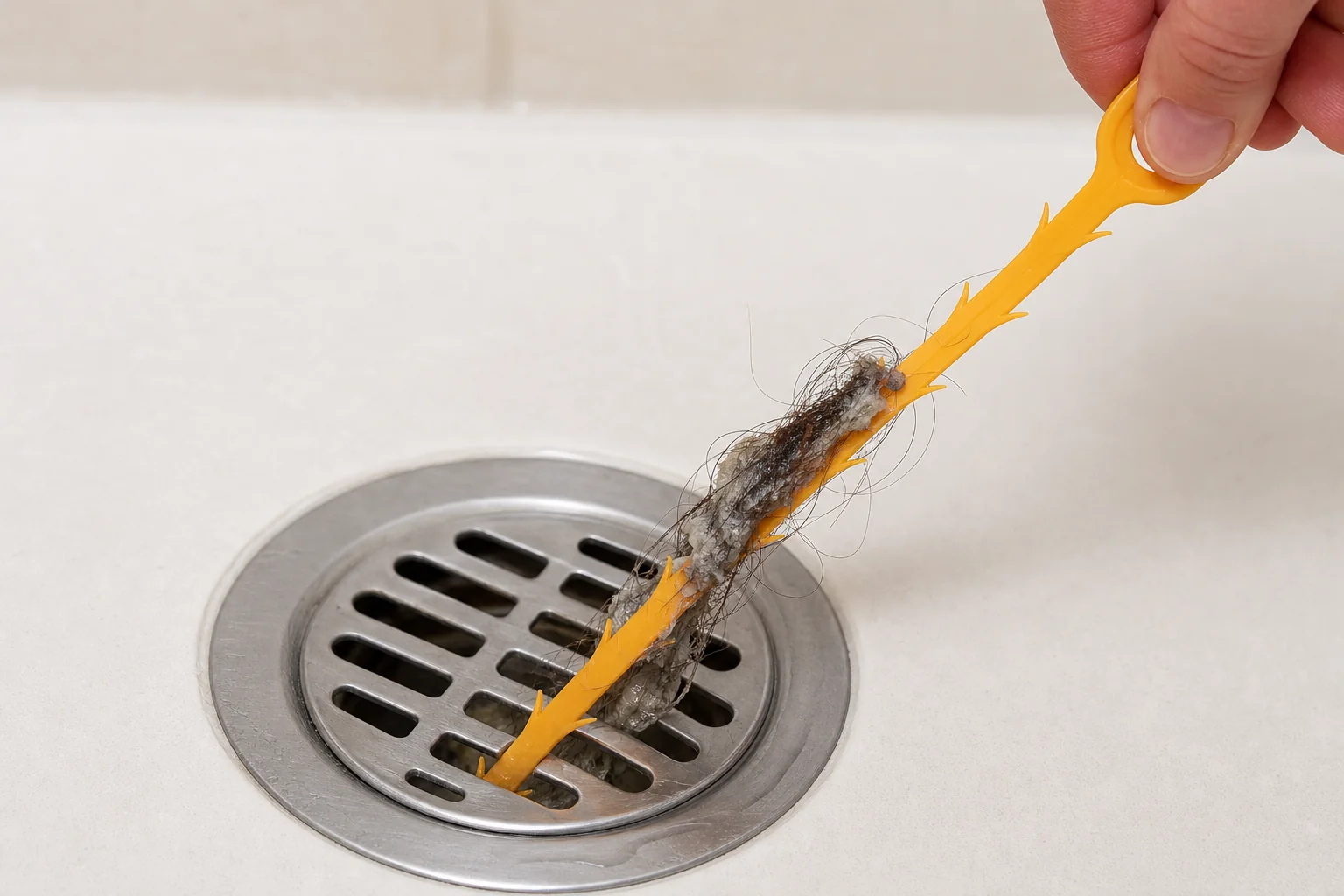
- Remove the drain cover or strainer (most lift off; some require a screwdriver).
- Insert the barbed tool past the opening and twist or push it down 4-6 inches.
- Pull slowly — the teeth drag hair mats upward and out.
- Repeat until pulls come out clean, then flush with hot water for 30 seconds.
For a bathroom sink with a pop-up stopper, unscrew or lift out the stopper first — most pull straight up or unscrew counterclockwise. Wipe the stopper and drain mouth clean before inserting the tool. If the slow drain persists after hair removal, the obstruction may be in the P-trap itself. Placing a bucket under the trap, unscrewing the slip-nut on each side of the U-bend, and rinsing the trap out takes about 10-15 minutes and costs nothing in parts.
Fix 2 — Kitchen Grease and Food Sludge
When to apply this fix: a kitchen sink slows after cooking, after the dishwasher runs, or after heavy disposal use — and only that one sink is affected.
For light, fresh grease film: squirt a few tablespoons of dish soap into the drain and chase it with a full kettle of near-boiling water. Dish soap is a degreaser that can soften and flush minor surface grease (Southern Living). This works only on fresh film. If the clog returns within a day, the restriction is a real grease mat — not a surface coating — and needs mechanical help.
For a real grease clog: skip chemical drain cleaners. Plunging is more reliable and safer for your pipes and for anyone who later needs to open the line. Move to Fix 3. If plunging fails and the kitchen drain stays slow, the grease has set farther down the line and likely needs professional hydro-jetting (Real Simple).
The entire prevention strategy: let grease solidify in the pan, scrape it into the trash, and wipe the pan before washing. There is no product that reverses chronic grease accumulation in a drain.
Fix 3 — Plunge a Single Slow Drain
When to apply this fix: one fixture has standing water or drains very slowly, the above two fixes don’t apply, and the clog feels soft rather than a foreign object.
The correct tool is a cup plunger — flat-bottom — not the bell-shaped flange plunger designed for toilet drain openings. A cup plunger creates the suction seal that sinks and shower drains need.
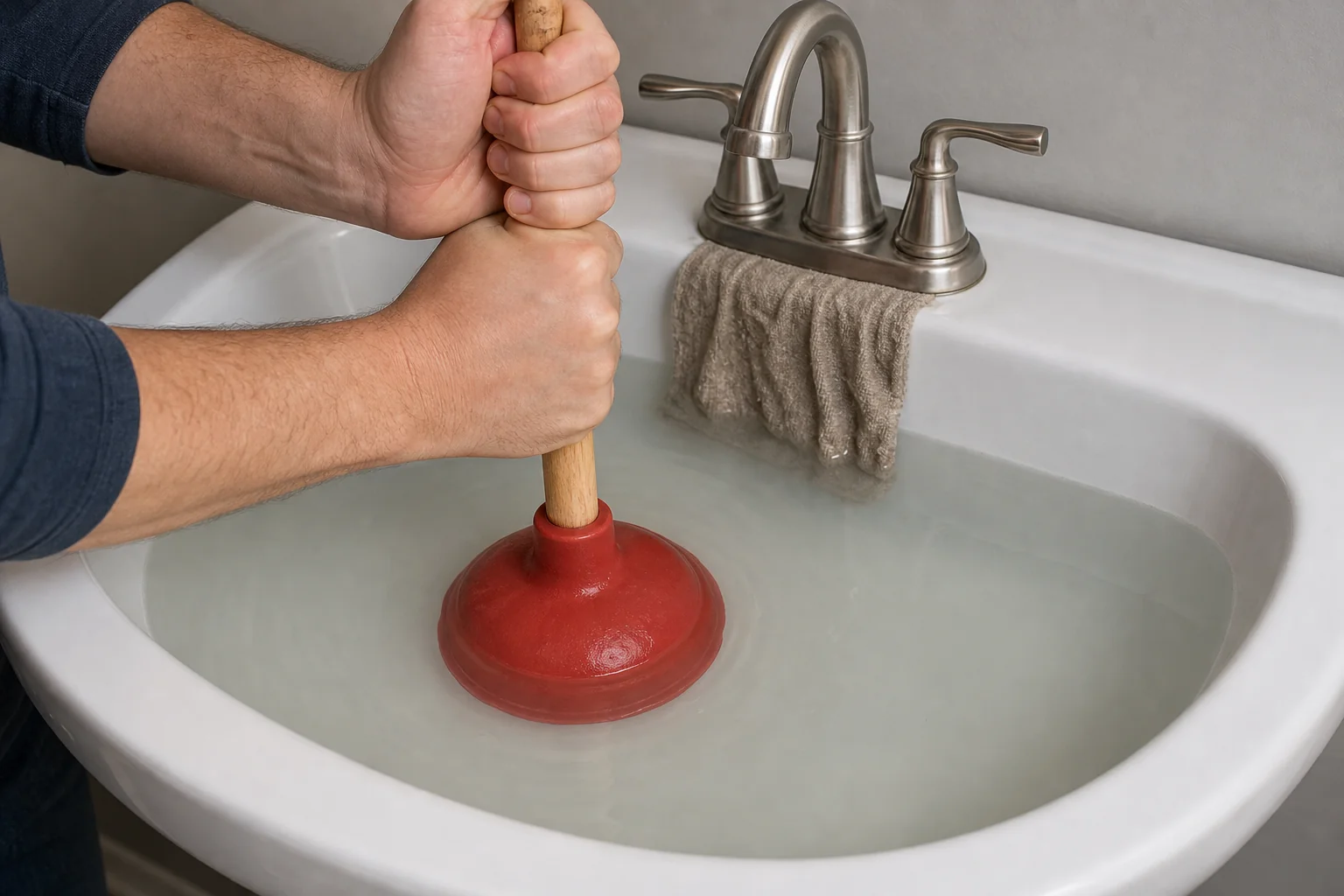
- Cover the overflow opening (the small hole below the rim on a bathroom sink) with a wet rag or your palm. Without this seal, air escapes through the overflow and the pressure never reaches the clog. This is the most commonly skipped step.
- Add enough water to the basin so the cup is fully submerged — the plunger needs water, not air, to transmit force.
- Set the cup flat over the drain opening and press down firmly to create a seal.
- Push and pull vigorously 8-10 times, keeping the seal throughout, then pull sharply on the final stroke to dislodge the clog.
- Run water immediately to test. Repeat if drainage has improved but not cleared.
A cup plunger costs $8-$15 and clears shallow, soft clogs in minutes (Homes & Gardens). It is the second tool — after the barbed plastic hair strip — that every under-sink cabinet should have.
Quick Reference — Symptom, Cause, and Fix
| Symptom | Most Likely Cause | First Fix |
|---|---|---|
| Shower water pools around feet | Hair + soap buildup | Plastic barbed tool (Fix 1) |
| Bathroom sink slow, odor present | Pop-up or P-trap buildup | Hair tool + clean pop-up (Fix 1) |
| Kitchen sink slow after cooking | Grease/food sludge | Dish soap flush then plunge (Fix 2 → Fix 3) |
| One fixture slow, no other symptoms | Soft local clog | Cup plunger (Fix 3) |
| Baking soda helped briefly then slowed again | Hair or grease mat remained | Physical removal (Fix 1 or Fix 2) |
| Multiple fixtures slow or gurgling | Branch/main/vent problem | Call a plumber |
| Slow drain plus toilet gurgling | Vent or main-line issue | Call a plumber |
| Slow drain plus sewer smell | Organic buildup or dry trap | Clear clog first; if smell stays, call a plumber |
When to Stop and Call a Plumber
Call a plumber — rather than attempting another DIY pass — when any of the following are true:
Multiple fixtures drain slowly or gurgle at the same time. This pattern points toward a branch-line, main-line, venting, or sewer issue that no fixture-level tool can reach. The Spruce reports average branch-line unclogging at $350-$500 and sewer-main unclogging at $450-$575 (2023 Roto-Rooter pricing), with average overall drain service around $275 (The Spruce, The Spruce).
The toilet gurgles when a nearby drain runs. Toilet gurgling can indicate a blocked vent, a main sewer-line obstruction, or a septic issue — none of which respond to a plunger (The Spruce).
The clog returns within days or a few weeks. A restriction that re-forms quickly after physical removal usually means the core blockage is deeper than the stopper and trap, or that pipe condition is the underlying issue.
A chemical drain cleaner was used and standing water remains. Stop adding product. Sodium hydroxide-based drain openers leave caustic residue in standing water, generate heat, and can injure anyone who later opens the plumbing — and should never be mixed with other cleaners or bleach (Good Housekeeping). Tell the plumber what product was used before any work begins.
The fixture still drains slowly even after it’s physically clean. If clearing all visible debris and cleaning the P-trap doesn’t restore normal drainage, the problem may be venting or pipe condition rather than debris — and that requires professional diagnosis (Homes & Gardens).
What to Do Next
If any of the three fixes above cleared the slow drain, the most useful follow-up is prevention. A $5-$8 silicone hair-catcher sitting in the shower strainer stops the large majority of future shower clogs before they form. For kitchen sinks, a basket strainer that catches food particles and a firm rule about not rinsing grease into the drain eliminates the top two causes of kitchen-side slow drains.
For a deeper look at the full drain-repair toolkit — when to escalate from a plunger to a hand snake, how to replace a P-trap that keeps clogging, and how to track down a persistent drain odor — see the Drain Repair Guide.
If the slow drain is in a shower and you suspect the issue involves the showerhead, valve, or tub spout rather than just the drain itself, the Shower Repair Guide covers the full system from the mixing valve to the waterproofing.
Why are my drains slow even after I cleaned them?
If the drain improves but slows again within days, the underlying obstruction — a hair mat deeper in the trap, a grease layer farther down the pipe, or mineral scale on the interior walls — likely remained. The next step is a longer hand snake (12-15 feet) or full P-trap disassembly. If that also fails or the restriction returns repeatedly, a plumber’s camera inspection can locate where the blockage is actually sitting.
Is it safe to use chemical drain cleaners on a slow drain?
Chemical drain openers are corrosive — sodium hydroxide products generate heat in water, can damage older pipes over repeated use, and leave hazardous residue in standing water that can injure anyone who opens the plumbing afterward. They also cannot dissolve hair (Good Housekeeping). A plastic barbed tool or a plunger is safer and more reliable for the clogs most homeowners face.
Why does my drain smell even after it drains normally?
A slow drain that smells is usually organic matter — hair, food, soap scum — decomposing inside the trap or just downstream of it. If the smell clears after you physically clean the drain, that was the cause. If the smell persists after the drain flows freely, pour water into the drain to reseal the trap (a dry trap allows sewer gas to enter). A smell that remains even with a full trap can indicate a venting problem or a deeper drain-system issue.
What is the difference between a cup plunger and a toilet plunger?
A cup plunger has a flat rubber cup and seats correctly against a flat sink, tub, or shower drain opening. A toilet plunger (flange plunger) has an extended bell that fits inside the curved throat of a toilet drain. Using a toilet plunger on a sink drain usually won’t create a proper seal and won’t generate enough suction pressure to move a clog.
When should I call a plumber instead of fixing the drain myself?
Call when two or more drains are slow or gurgling at the same time, when the toilet gurgles while a nearby drain runs, when the clog returns within days of clearing it, or when a sewer smell stays after the drain itself is clean. All of those patterns indicate something beyond the fixture — branch-line, main-line, venting, or septic — that DIY tools cannot reach.
How much does it cost to have a plumber clear a drain?
The Spruce puts the average drain-unclogging cost at about $275, with branch-line work running $350-$500 and sewer-main service at $450-$575 based on 2023 Roto-Rooter pricing (The Spruce, The Spruce). Costs vary significantly by ZIP code, access difficulty, and whether the job is a simple trap cleaning or a main-line service call — check Angi or HomeAdvisor for current regional estimates.
Sources
- Good Housekeeping — How to Unclog a Shower Drain
- The Spruce — Signs Your Bathroom Sink Needs Unclogging
- The Spruce — Slower Drains from Possible Clogs
- The Spruce — How to Repair a Garbage Disposal
- The Spruce — Why Is My Toilet Gurgling?
- The Spruce — How Much Does a Plumber Cost?
- The Spruce — Roto-Rooter Cost and Pricing
- Washington Post — Fix a Clogged Shower Drain
- Real Simple — Kitchen Habits That Damage Your Pipes
- Southern Living — What to Do When Your Kitchen Sink Gurgles
- Southern Living — Can You Unclog a Drain With Dish Soap?
- Homes & Gardens — 5 Reasons Your Sink Won’t Drain
- BHG — Signs of Drain Venting Problems
- Angi — How Much Does Drain Cleaning Cost?
- HomeAdvisor — Cost to Clear a Clogged Drain
Educational content only. Not a substitute for licensed professional advice. Local plumbing codes vary by jurisdiction. Use of any guidance from this guide is at your own risk.
Get the homeowner’s plumbing repair toolkit checklist — the tools, parts, and decisions every homeowner should have on hand. [Free download — enter your email]
Parts for this repair
As an Amazon Associate, plumbingbythebook earns from qualifying purchases. Links below are affiliate links — they cost you nothing extra.
- Vastar 4-Pack Drain Snake Hair Clog Remover — Plastic barbed strips that reach past the stopper and pull hair mats out in one motion — the fastest, cheapest fix for a slow bathroom sink or shower.
- Standard Red Rubber Cup Plunger — The flat-bottom cup plunger (not the bell-shaped flange plunger for toilets) for sink, tub, and shower drains. One belongs under every bathroom sink.
- OXO Good Grips Shower Stall Drain Protector — A silicone hair-catcher that sits in the shower drain opening and stops clogs before they form — the most effective drain-clog prevention in this guide.
Related guides
When to Repipe vs Repair Galvanized, Polybutylene, and Cast Iron [2026]
Knowing when to repipe vs repair is a big-ticket decision, and the honest answer depends on which pipe…
When to Call a Plumber for Drain Problems [2026]
Knowing when to call a plumber for drain problems comes down to a short checklist: is it one…

Drains and Pipes Guide: The Complete Homeowner’s Overview of What’s Behind Your Walls [2026]
Drains and Pipes Guide: The Complete Homeowner’s Overview of What’s Behind Your Walls [2026] Water disappears down the…