
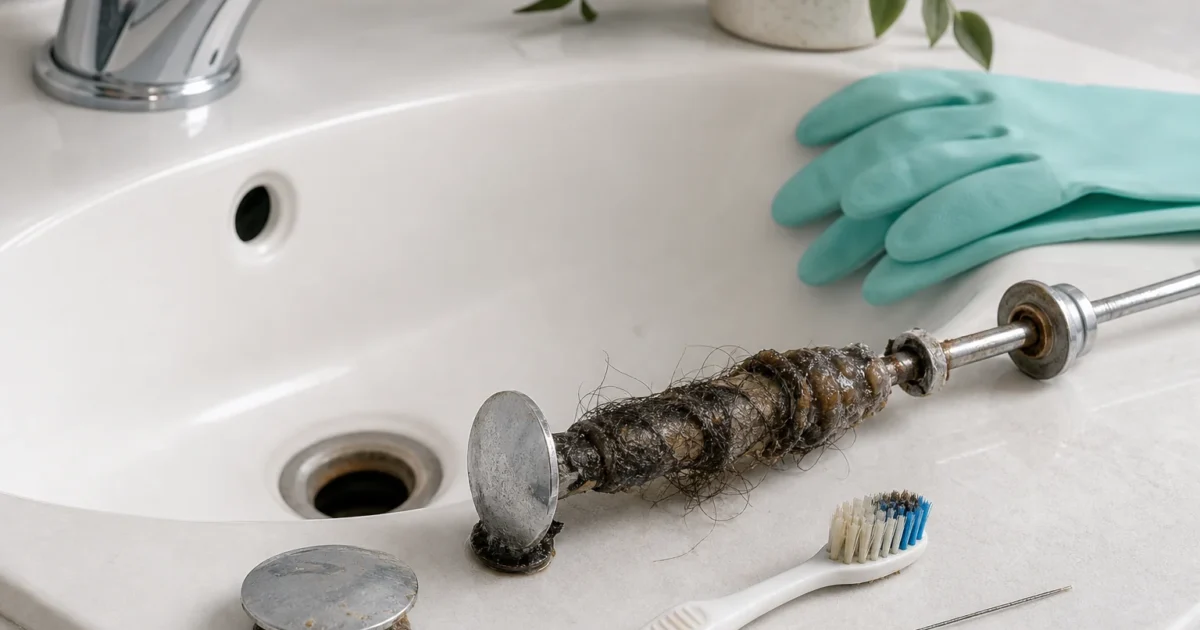
Why does my drain smell? It is one of the most common plumbing questions homeowners ask — and when your drain smells like sewage, you are not sure whether to reach for the drain cleaner, open a window, or call a plumber. The rotten-egg or musty odor rising from a bathroom sink, shower, or floor drain is almost always one of eight specific causes — and most of them are a 15-minute fix with no tools or a $5 zip tool.
The exception is a main-line or sewer problem. There is a fast screen to separate “fixture-level fix” from “stop and call a pro,” and running it takes less than two minutes before you do anything else.
Why Does My Drain Smell Like Sewage? Start With One Drain vs. Many
The fastest question: is it one drain, or are several fixtures smelly, slow, or backing up at the same time?
A single smelly drain — just the guest bathroom sink, just the basement floor drain, just the shower — points to a fixture-level cause. That is where the eight causes below live, and most are fixable without calling anyone.
Multiple slow or smelly drains, gurgling sounds when you run one fixture, or sewage odor from lower-level drains point toward a vent, main-line, or sewer issue. If you flush the toilet and the nearby tub gurgles, or the kitchen sink backs up when the washing machine drains, skip the DIY steps and jump straight to “When to Call a Plumber.”
One safety check before you start: if the rotten-egg smell is very strong or widespread, get fresh air first. Sewer gas at typical household concentrations is an annoyance, not usually a health risk in a ventilated space — but a strong, persistent sewer-gas smell combined with dizziness, nausea, or breathing symptoms is a reason to leave and call for help. If you have natural gas service, rule out a gas-line source before working near any ignition.
Cause 1: Dry P-Trap (Evaporated Trap Seal)
The P-trap is the curved pipe section under every sink and inside every shower drain. After each use, it holds a small amount of standing water — that plug is the seal between your living space and the sewer gas behind the drain line.
When a fixture sits unused long enough, the trap water evaporates and the seal disappears. Guest bathrooms, vacation-home sinks, basement floor drains, and laundry standpipes are the usual culprits — the fixture may otherwise drain perfectly normally, and the smell is strongest right at the drain opening.
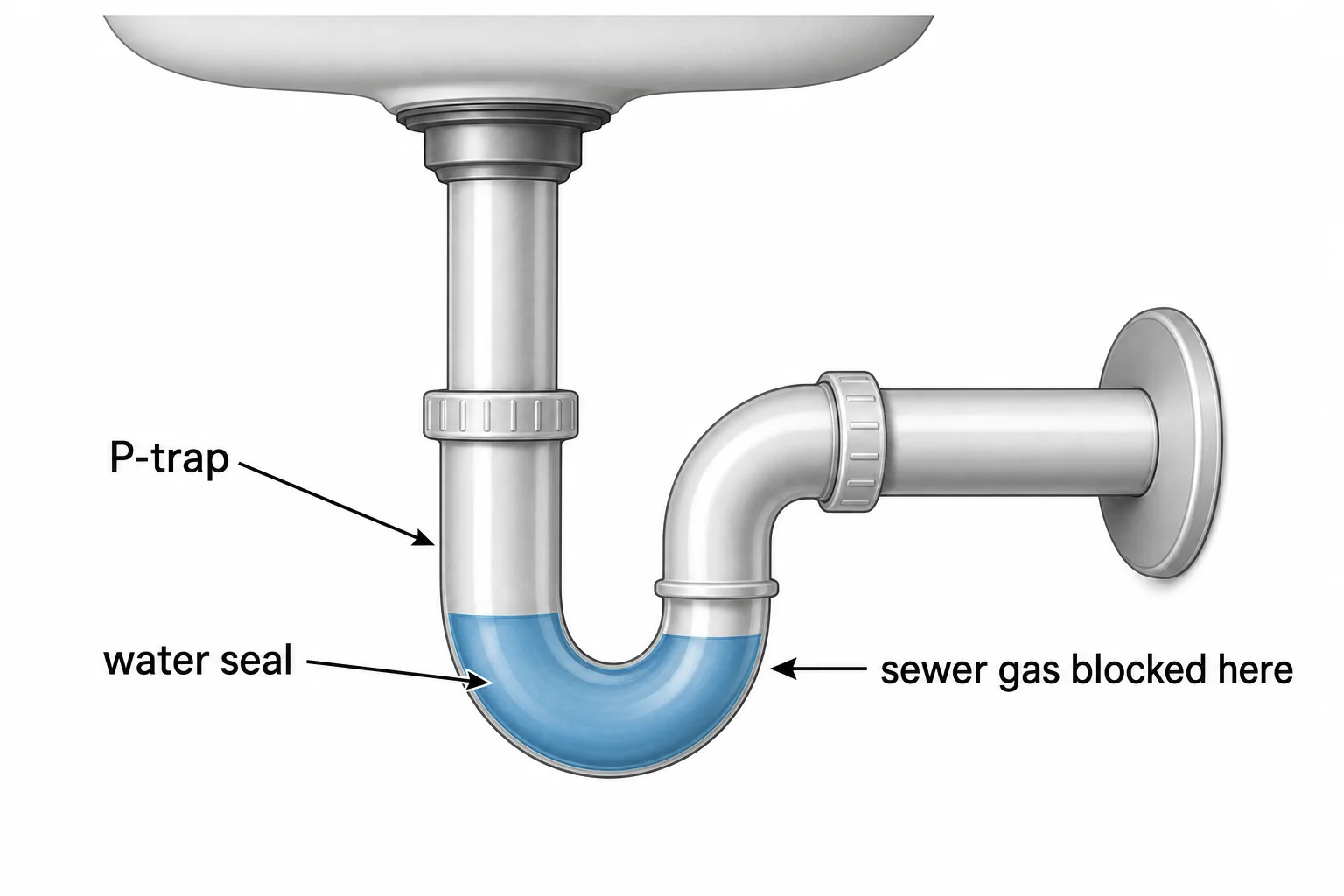
How to confirm: run the water for 30 seconds. If the odor clears quickly, an evaporated trap seal is almost certainly the cause.
Fix: run water long enough to refill the trap. For a floor drain that sits unused, slowly pour a few cups of water down it. If a fixture you use every day develops a recurring sewer smell even after the trap is refilled, look at Cause 5 — a blocked vent can siphon trap water out even from an actively used drain.
Difficulty: none. Cost: $0. Time: 1 minute.
Cause 2: Biofilm, Hair, Soap Scum, and Stopper Buildup
Shower drains and bathroom sinks collect hair, soap residue, skin oils, toothpaste, and body products — and that organic material rots. Biofilm is the slimy, sometimes pink or orange film that develops around the drain opening and inside the first few inches of pipe. It is among the most common odor sources in bathrooms used every day.
The smell tends to worsen after a hot shower and is often described as musty, sour, or swampy rather than pure rotten-egg sewer gas. Bathroom sink drains accumulate hair and shaving debris around the pop-up stopper — an area most homeowners never clean.
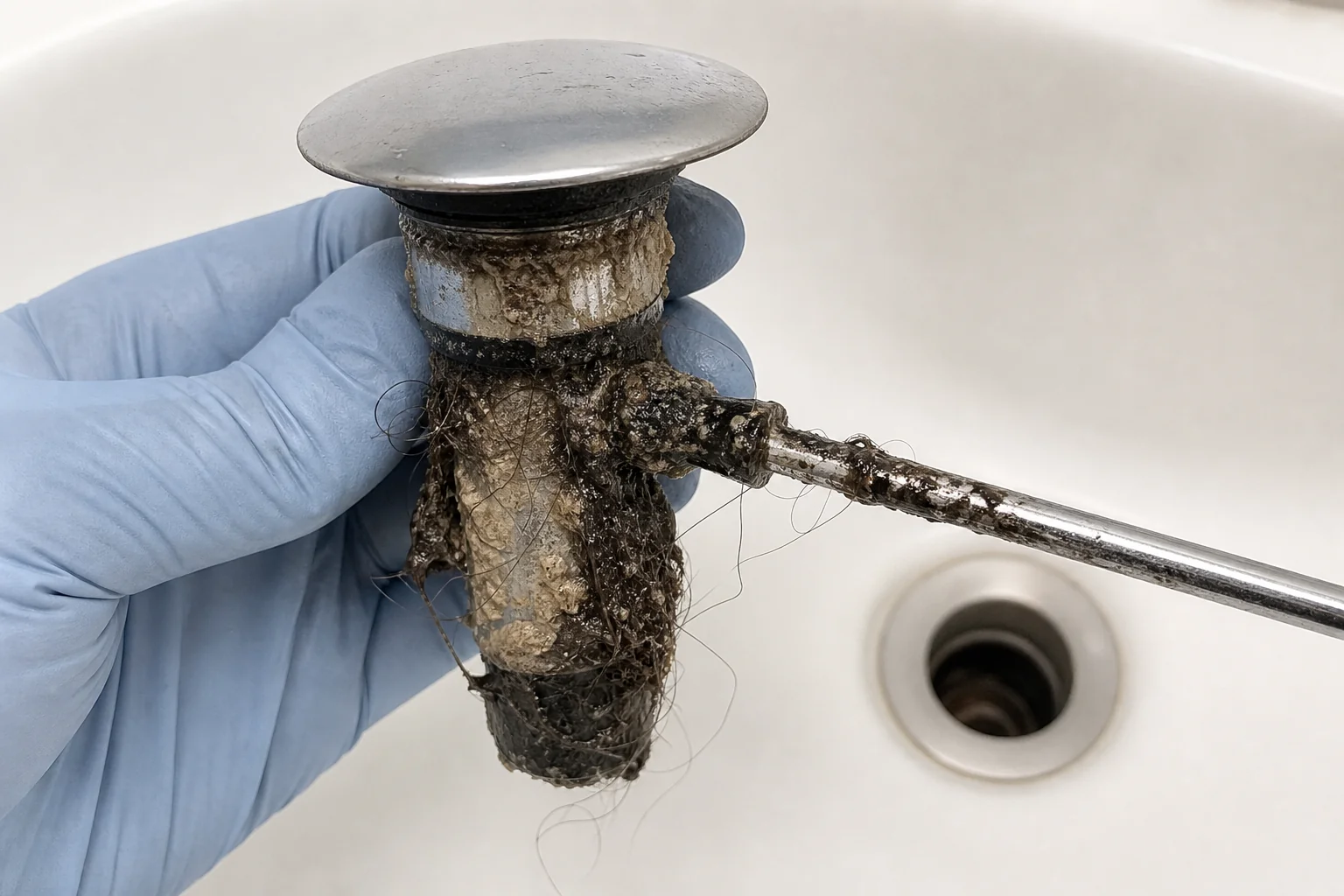
How to confirm: remove the drain cover, strainer, or pop-up stopper. A mat of hair, black slime, or visible biofilm makes the diagnosis immediate.
Fix: pull visible hair and debris with gloves or a plastic barbed drain zip tool; clean the strainer or stopper with an old toothbrush and warm water; flush the drain. The fix addresses the actual odor source — the hair mat and biofilm — not just the smell. Deodorizers and baking soda treat the symptom; the zip tool treats the cause.
Difficulty: low. Cost: $0–$10 (zip tool). Time: 10–20 minutes.
Cause 3: Partial Clog Holding Decomposing Material
A partial clog still lets water pass, but it traps hair, grease, food scraps, soap scum, and organic debris long enough to decompose and smell. In bathroom sinks the usual materials are hair, toothpaste, and shaving debris; in showers it is hair and product residue; in kitchen sinks it is grease, food scraps, and disposal waste.
How to confirm: slow drainage combined with odor that returns within a day or two of cleaning. A zip tool or hand snake that comes back with slimy debris confirms a shallow clog is the source.
Fix: mechanical clearing in order — zip tool for near-surface hair, cup plunger for a clog a few inches deeper, hand snake if plunging does not clear it. Avoid harsh chemical drain cleaners as the first move: they can be corrosive to pipes when overused, and they create a hidden chemical hazard for any plumber who opens the drain without knowing chemicals are present. Good Housekeeping specifically cautions against mixing bleach-based cleaners with vinegar — the reaction produces hazardous gases.
Difficulty: low–moderate. Cost: $0–$30 (tools already owned or inexpensive to buy). Time: 15–30 minutes.
Cause 4: Dirty or Leaking P-Trap Under the Sink
Even a trap holding its water seal can accumulate grease, hair, and residue — the curved low point collects debris before the drain line turns vertical. A dirty trap produces odor at the drain even when the fixture drains and seals normally.
A leaking trap is a second issue. Loose slip-nut connections or a cracked trap section let wastewater seep into the vanity cabinet, where it soaks into the MDF floor, feeds mold, and creates an odor that seems to come from the cabinet rather than from the drain opening. Signs: dampness on the cabinet floor, water stains on the cabinet base, or odor that is stronger from inside the cabinet.
Fix: for buildup, place a bucket under the trap, loosen the slip nuts, remove and clean the trap, and reassemble carefully. For a leaking trap, tighten the connections or replace the trap section if it is cracked. This is a solid DIY task when the trap is plastic, slip-joint connected, and accessible. Stop if the piping is glued ABS, cast iron, or corroded to the point where the nuts will not turn without cracking the pipe — that is a plumber job.
Difficulty: moderate. Cost: $5–$15 (replacement trap if needed). Time: 20–30 minutes.
Cause 5: Vent Problem Siphoning the Trap
Plumbing vents run from each drain branch up through the roof. They equalize air pressure so wastewater flows cleanly — the same reason you punch two holes in a juice can. A blocked or broken vent can create a vacuum as water flows past, which siphons the water out of a nearby P-trap and opens the odor path.
The key sign of a vent problem is a dry trap in a fixture you use every day. A shower you use each morning should never develop sewer smell from an evaporated trap — if it does, and the smell returns after you refill the trap, a blocked vent is the more likely cause. Gurgling — a drain that glugs even when nothing is visibly clogged — is a secondary indicator.
Fix: vent problems are generally not a homeowner repair. Vent stacks run to the roof, and clearing a blocked vent (debris, bird nest, ice cap, or damage) may require safe roof access, smoke testing, or code-aware pipe repair. A plumber can confirm and locate the problem with a camera inspection or a smoke test.
Difficulty: not DIY. Call a plumber.
Cause 6: Garbage Disposal or Kitchen Sink Residue
Kitchen sink odors are often not sewer gas at all — they are food decay. Grease, food scraps, disposal grime, coffee grounds, and organic matter accumulate around the drain, the disposal splash guard (the rubber collar under the disposal opening), the tailpiece, and the trap.
A disposal-specific smell is strongest at the kitchen sink and typically improves after cleaning the disposal itself, not just flushing the drain. The splash guard needs a brush-cleaning because residue collects on its underside where routine water flow never reaches.
Fix: clean the splash guard with a brush; flush the drain with hot water and dish soap; avoid putting grease, fats, and coffee grounds down the drain going forward. Enzyme drain maintenance products work well for kitchen drain residue used as a monthly habit — they break down organic buildup gradually rather than masking it.
Difficulty: low. Cost: $0–$10. Time: 10 minutes.
Cause 7: Water Heater or Water-Supply Odor Mistaken for Drain
A rotten-egg smell near a sink may not be coming from the drain at all. Sulfur bacteria or an anode rod reacting inside a water heater can make hot water smell like hydrogen sulfide. Well water with sulfur contamination affects both hot and cold water and has nothing to do with the drain line.
How to confirm: fill a glass with hot water, carry it away from the sink or outside, and smell the water itself. If the odor follows the water away from the fixture, the source is water-side, not drain-side. If both hot and cold water smell like rotten eggs, the issue is likely the water supply.
Fix: a water heater anode rod issue requires removing or replacing the rod — a moderate DIY task if the rod is accessible and has not seized. A water-supply sulfur problem may require water testing and treatment. Neither is a drain repair.
Cause 8: Leaking Drain Pipe, Sewer Leak, or Main-Line Problem
A cracked or leaking drain pipe inside a wall, under a floor, or beneath a slab can release wastewater odor and moisture into building materials. The EPA’s mold guidance notes that mold control depends on controlling moisture — even a slow internal drip can produce a persistent musty smell that seems to come from everywhere rather than one fixture.
A main sewer-line problem is more likely when multiple fixtures are slow, when sewage odor rises from lower-level drains (basement floor drain, ground-floor toilet base), or when sewage backs up into a tub, shower, or floor drain. Powered drain augers, sewer cameras, leak detection, pipe repair, and water-damage remediation all fall in the professional category.
Fix: stop DIY. Call a plumber.
How to Fix a Smelly Drain: The 6-Step Sequence
Work through these steps in order — each one is faster than the last and clears the most common causes before moving to harder ones.
Refill and flush the trap
Run water for 30–60 seconds, or slowly pour water into an unused floor drain. This costs nothing and takes one minute. Always start here before anything else.
Remove visible debris and clean the stopper or strainer
Take off the drain cover or pop-up stopper; clean hair, slime, and buildup with a brush or zip tool; flush the drain. This step targets the actual cause of most bathroom sink and shower odors.
Plunge if drainage is slow
Use a cup plunger on sinks, tubs, and showers after enough water covers the plunger cup. Plug the overflow hole (or the second basin of a double sink) so pressure moves through the drain path instead of escaping.
Clean or remove the accessible P-trap
Place a bucket under the trap, loosen the slip nuts, remove and clean the trap, and reassemble carefully. Check the slip-nut connections for drips before closing the cabinet.
Use a hand snake or plastic drain tool
A plastic barbed drain snake handles near-surface hair clogs; a hand drum auger reaches further into the branch drain. Plastic drain snake multi-packs run about $5–$10; metal drum augers run $15–$30.
Enzyme products — after mechanical cleaning
Enzyme-based drain products help with residual organic residue and work well as a monthly maintenance step. They are not a substitute for mechanically clearing a substantial hair mat or grease buildup.
Smelly Drain Symptom-to-Cause Quick Reference
| Symptom | Likely cause | First step |
|---|---|---|
| Sewer smell from rarely used drain | Dry P-trap | Run water 30–60 sec to refill trap |
| Musty or sour smell; visible hair or slime | Biofilm / stopper buildup | Remove stopper; use drain zip tool |
| Slow drain + smell that returns quickly | Partial clog | Plunge → zip tool → hand snake |
| Odor from inside the cabinet; wet spots | Dirty or leaking P-trap | Clean or replace trap |
| Dry trap in a used fixture; gurgling sounds | Vent problem | Call a plumber |
| Kitchen sink smell; worse after disposal use | Disposal / kitchen residue | Clean splash guard; flush drain |
| Rotten eggs from hot water only | Water heater anode rod | Water-heater repair — not drain |
| Multiple fixtures slow, gurgling, or backing up | Main-line or sewer problem | Call a plumber — stop DIY |
When to Call a Plumber
Stop DIY and call a professional when:
- Multiple fixtures are affected — slow drainage, gurgling, or sewage odor across two or more fixtures points toward a vent or main-line problem that consumer tools can’t reach.
- Sewage backs up into a tub, shower, or floor drain — this is wastewater exposure and a main-line job.
- A dry trap keeps coming back in a fixture you use every day — a regularly used shower or sink that develops sewer smell despite normal use points toward a blocked vent siphoning the trap.
- The smell returns within a day of thorough mechanical cleaning — recurring odor after proper cleaning suggests a cause further in the line or in the vent system.
- You see cabinet moisture, wet drywall, or persistent floor staining — moisture control is required before the odor will resolve, and finding the source may go beyond normal DIY access.
- The smell comes from the water, not the drain — water heater anode and water-supply issues are separate repairs outside drain work.
For cost context: The Spruce reports an average plumber repair cost of $325, with hourly rates around $105 and drain-unclogging averaging $275 in a range of $125–$425. Main sewer-line unclogging runs higher — around $600 on average. Franchise service-specific estimates from The Spruce place branch-line unclogging at $350–$500 and sewer camera inspection at $350–$500, though pricing varies by market and company.
What to Do Next
If the smell traced back to one fixture — a dry trap, hair buildup at the stopper, or a shallow clog — you are done. Monthly maintenance (hot water and dish soap flush, stopper cleaning every few months) keeps most bathroom drains odor-free without chemicals or a service call.
If you are dealing with slow drainage alongside the odor, the full Drain Repair Guide covers every clog type, the right tools for each, and how the one-fixture-vs-many test changes the approach entirely.
For a broader look at what causes drains to slow down and how to clear them with the right tool, see Why Are My Drains Slow?.
Does baking soda and vinegar actually fix a smelly drain?
Baking soda and vinegar can deodorize and loosen minor surface residue, but the fizzing reaction does not remove a hair clog, grease mat, or biofilm further down the pipe. Use it as a light deodorizer after mechanical cleaning — not as the primary fix when the odor is caused by a hair mat or partial clog.
Why does only my shower drain smell and not the bathroom sink?
A single smelly shower drain usually points to hair and product buildup at the drain strainer and inside the first few inches of pipe — shower drains collect more hair and product residue than sinks and tend to develop biofilm faster. Remove the strainer, clear the buildup with a zip tool, and flush the drain. If the shower is rarely used, a dry trap is the first thing to rule out.
What is the fastest fix when my drain smells like sewer gas?
The fastest fix is to run water for 30–60 seconds to refill the P-trap, which takes under a minute and resolves the problem completely if an evaporated trap seal is the cause. If the smell remains after the trap is refilled, move to removing and cleaning the stopper or strainer — that step clears the cause of most bathroom drain odors in 10–20 minutes.
Is it safe to use bleach or chemical drain cleaners on a smelly drain?
Chemical cleaners sometimes work on organic clogs but carry real tradeoffs: they can be corrosive to plumbing if overused, and they leave a chemical hazard in the pipe for any plumber who opens it without warning. Mixing bleach-based cleaners with vinegar produces hazardous gases. The mechanical approach — zip tool, plunger, hand snake — is safer, just as effective on most clogs, and does not damage the pipe.
Can a smelly drain make you sick?
Sewer gas at the low concentrations typical in a vented home is unpleasant but generally not a health risk. At high concentrations, hydrogen sulfide is toxic and sewer gas is flammable. If the odor is strong, multiple household members feel unwell, or the space is enclosed and poorly ventilated, get fresh air immediately and call for professional help. Never use an open flame near a strong sewer-gas smell.
Do I need a plumber for a smelly drain?
Most single-fixture drain smells — dry trap, hair buildup at the stopper, partial clog — are DIY-resolvable with the steps above. A plumber is needed when multiple fixtures are affected, sewage backs up anywhere, a trap keeps drying out in a used fixture, or a thorough mechanical cleaning does not hold for more than a day or two.
Sources
- The Purpose of a Drain Trap — The Spruce
- Why Your Shower Drain Smells Like Sewage — The Spruce
- Why Does My Kitchen Sink Smell Like Sewage? — The Spruce
- How to Identify and Remove a Sewer Gas Smell in Your House — The Spruce
- 7 Reasons Your House Smells Like Rotten Eggs — The Spruce
- How Much Does a Plumber Cost? — The Spruce
- 2023 Roto-Rooter Prices for Unclogging and Video Inspection — The Spruce
- How to Get Rid of Shower Drain Smells — Better Homes & Gardens
- Why Does My Water Smell? — Better Homes & Gardens
- How to Unclog a Shower Drain — Good Housekeeping
- How to Clean a Bathroom Sink Drain — Southern Living
- How to Unclog a Drain Without Harsh Chemicals — Real Simple
- 7 Reasons Your Sink Won’t Drain — Homes & Gardens
- EPA Mold Resources
Educational content only. Not a substitute for licensed professional advice. Local plumbing codes vary by jurisdiction. Use of any guidance from this guide is at your own risk.
Get the homeowner’s plumbing repair toolkit checklist — the tools, parts, and decisions every homeowner should have on hand. [Free download — enter your email]
Parts for this repair
As an Amazon Associate, plumbingbythebook earns from qualifying purchases. Links below are affiliate links — they cost you nothing extra.
- Plastic barbed drain zip tool (multi-pack) — Keep one under every bathroom sink — clears hair from the stopper and drain in 2 minutes without chemicals.
- Hand drum auger drain snake (15 ft) — Reaches past the P-trap to break up or grab a partial clog in the branch drain — the mechanical fix that chemical cleaners attempt and often fail to replicate.
Related guides
When to Repipe vs Repair Galvanized, Polybutylene, and Cast Iron [2026]
Knowing when to repipe vs repair is a big-ticket decision, and the honest answer depends on which pipe…
When to Call a Plumber for Drain Problems [2026]
Knowing when to call a plumber for drain problems comes down to a short checklist: is it one…

Drains and Pipes Guide: The Complete Homeowner’s Overview of What’s Behind Your Walls [2026]
Drains and Pipes Guide: The Complete Homeowner’s Overview of What’s Behind Your Walls [2026] Water disappears down the…