
![Title card for the article 'Should I Repair or Replace My Shower Valve? [2026]' on Plumbing By The Book](https://plumbingbythebook.com/wp-content/uploads/2026/08/article-99-hero-should-i-repair-or-replace-my-shower-valve-1200x630.webp)
Should I repair or replace my shower valve? For most homeowners, the honest answer is: repair the cartridge first. A professional cartridge swap runs $100 to $400, averaging around $275 (Angi), while a full valve-body replacement runs $150 to $575, averaging $350 to $400 (Angi, HomeGuide). This guide is for the homeowner standing in front of a dripping, stiff, or temperature-swinging shower, trying to decide whether a $10-$80 cartridge fixes it or whether the whole valve needs to come out of the wall. The real answer depends less on your budget than on three things: the condition of the valve body, how hard it is to reach, and whether it still meets modern anti-scald code.
Should I Repair or Replace My Shower Valve? The Short Answer
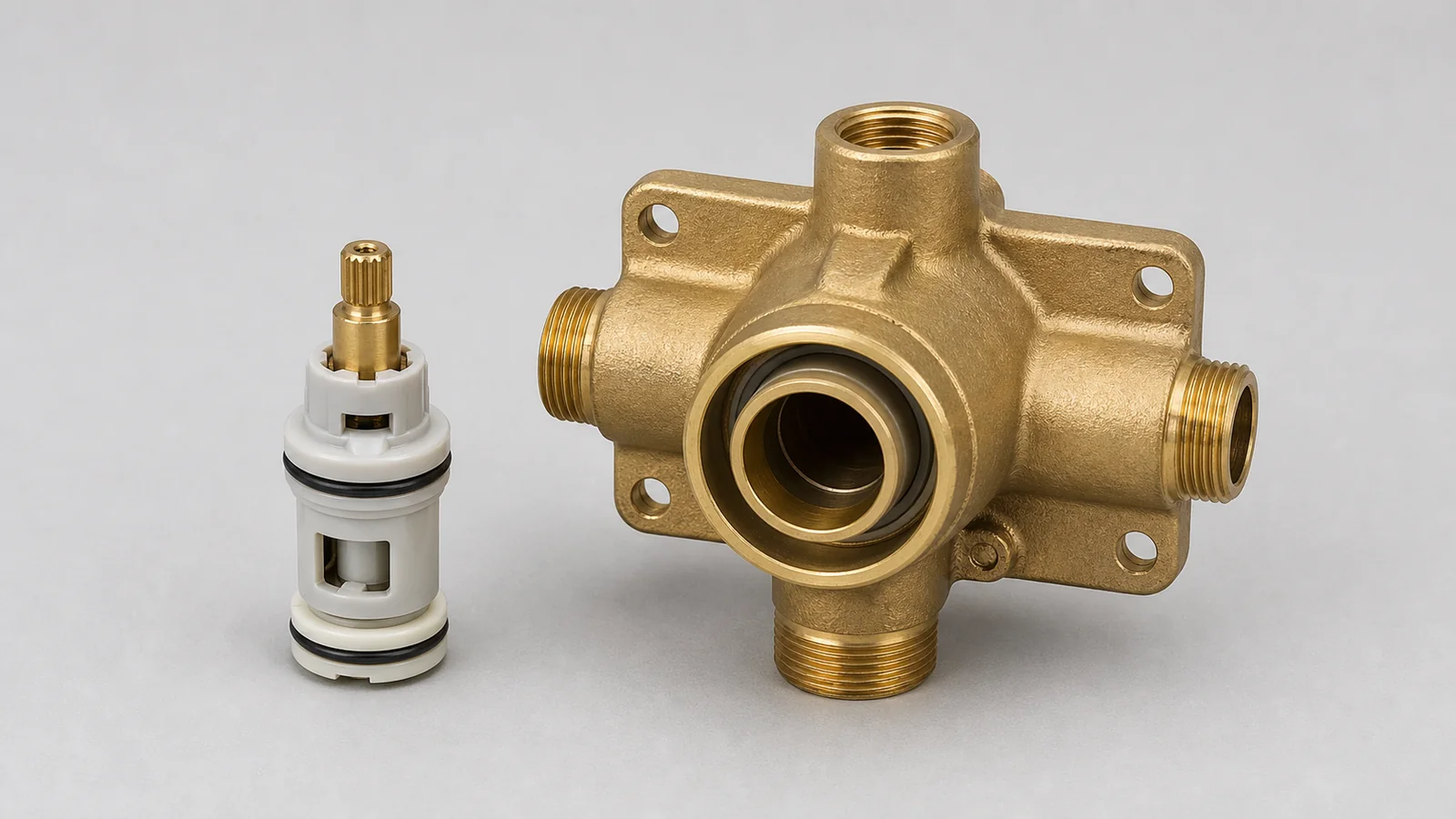
If the valve body is sound, the brand is identifiable, and the symptom is a drip, a stiff handle, or a temperature glitch, repair it — replace the cartridge and stop there (This Old House, Moen). Replace the whole valve body only when it’s cracked, corroded, gouged inside, obsolete, or missing modern scald protection (This Old House, Angi).
| Line item | DIY cost | Pro cost | Source |
|---|---|---|---|
| Cartridge repair (most common) | $50-$120 (part $10-$80 + tools) | $100-$400, avg $275 | Angi / HomeGuide |
| Full valve-body replacement | $50-$250 (materials + tools, ~4 hrs) | $150-$575, avg $350-$400 | Angi / HomeGuide |
| Replacement cartridge (retail) | $71-$72 (Moen 1222, Delta RP46074) | – | Lowe’s / Home Depot |
| Replacement valve body (retail) | $73-$189 | – | Home Depot / Lowe’s |
| Cost of an unfixed drip (water/sewer) | – | ~$156/yr at the average leak rate | EPA |
These are ranges, not quotes — the number you actually pay depends on which of those two jobs you’re really doing, and access is what moves it the most.
What Drives the Cost (the Honest Spread)
The valve body’s condition matters more than anything else, because a new cartridge only works if it can seal inside the existing body (This Old House). If the cartridge bore is scratched, gouged, or corroded, a new cartridge won’t seal, and plumbers on trade forums routinely report having to replace the whole rough-in valve once the bore is damaged (Terry Love). Hard water accelerates this: mineral buildup and worn seals are the most common reasons handles get stiff and cartridges fail in the first place (Moen, This Old House).
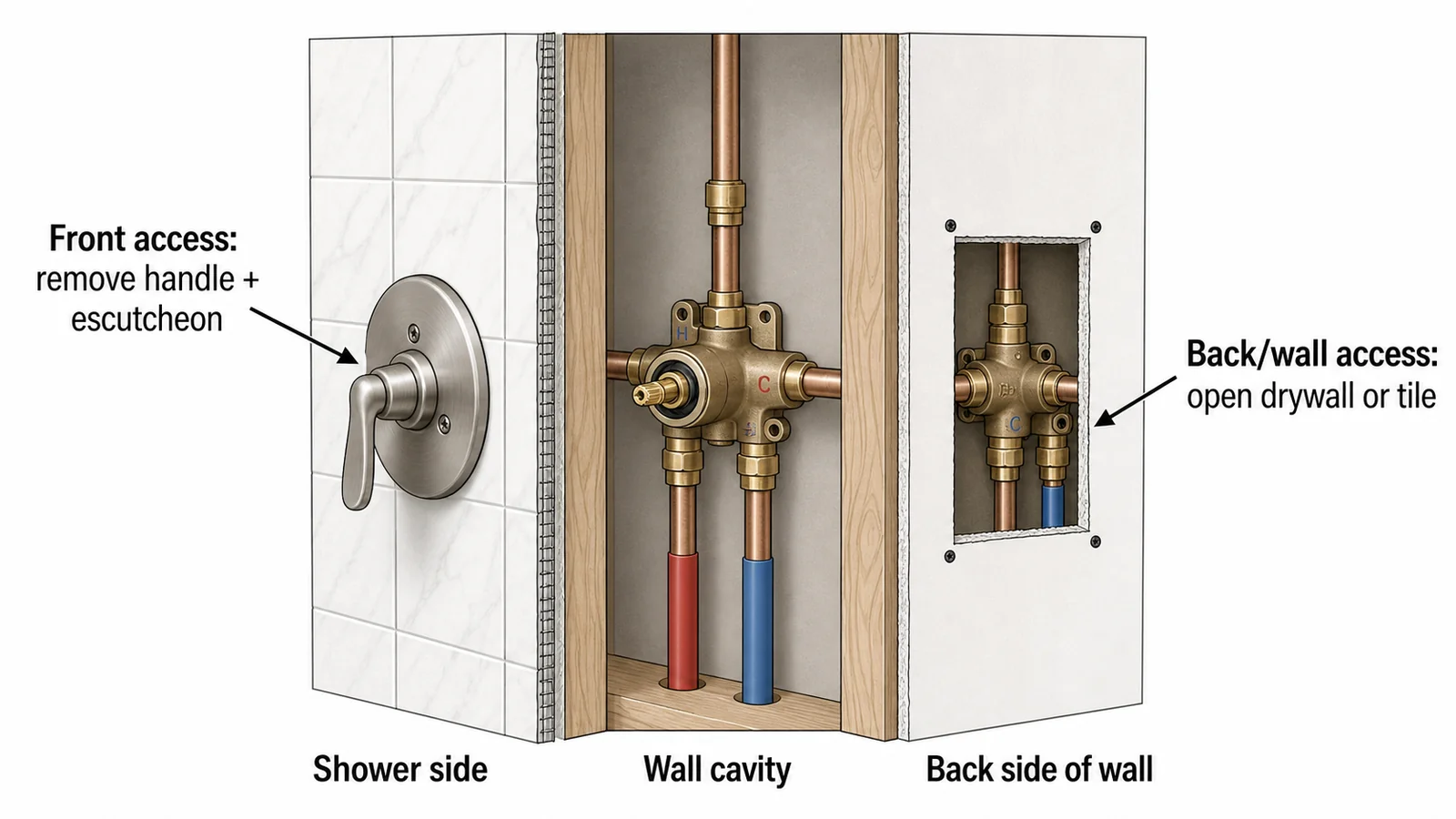
Access runs a close second. A full valve replacement often means opening the wall from the shower side or the back, and the new valve has to sit at the exact depth the manufacturer specifies to clear the finished wall or tile (Home Depot, Angi). Behind drywall, that’s a controlled repair; behind finished tile or a one-piece surround, the hidden cost can exceed the plumbing itself (Angi).
Code is the third driver. The International Plumbing Code requires individual shower and tub-shower valves to be pressure-balancing, thermostatic, or combination valves, field-adjusted to a maximum of 120°F (ICC Safe). Pressure-balancing valves hold temperature within about 2-3°F even when another fixture pulls water elsewhere in the house, and Moen says its Posi-Temp and Moentrol valves hold within ±3°F (Home Depot, Moen). An older mixing valve without that protection is a scald risk worth replacing on its own merits, not just a cost decision.
The Hidden Costs Each Option Can Add
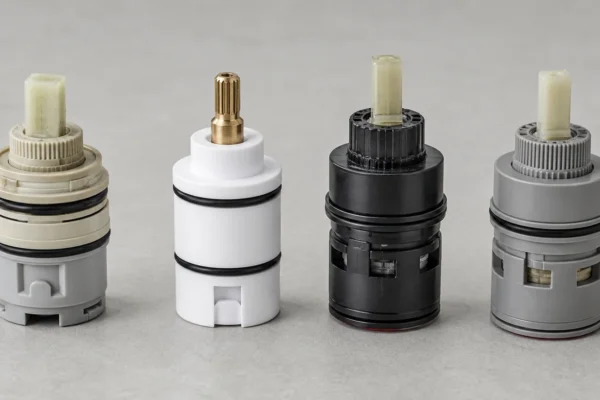
Repair’s hidden cost is misdiagnosis and extraction. Cartridges aren’t universal — different manufacturers use different sizes and shapes — so buying the wrong one means a second trip and a shower out of service in the meantime (This Old House). If the old cartridge is mineral-cemented in place, Moen publishes a separate stuck-cartridge extraction procedure, and forcing it with pliers can gouge the valve bore and turn a $275 repair into a full valve replacement (Moen, This Old House).
Replacement’s hidden cost is the wall. Drywall or tile repair after the valve goes in is a real line item, and a new valve body may also need trim sold separately from the manufacturer, adding a mismatch cost if you’re not careful (Angi, Delta). Opening a wall can also reveal problems you didn’t know you had — This Old House reports that nearly 29% of homeowners surveyed about shower remodels paid for additional plumbing work once demolition started (This Old House). And a leak-free, code-compliant, pressure-balanced valve matters at resale: home inspectors specifically check shower flow, leaks, and valve type during a bathroom inspection (InterNACHI).
Repair vs. Replace — the Honest Math
Over 5 years, repair usually wins if the valve is otherwise sound. One professional cartridge swap at the Angi average of $275 works out to about $55 a year, versus $400 to $575 for a full replacement of an otherwise serviceable valve — $80 to $115 a year (Angi, HomeGuide). If the valve body is fine, there’s no financial reason to replace it.
Over 10 years, the math tightens. An older valve in hard-water service that needs a second cartridge down the road runs roughly $375 to $625 total, sometimes more if the second cartridge is seized and needs extraction labor (HomeGuide, Moen). A full replacement now costs $225 to $575 up front and typically doesn’t need another valve-body repair in that same window, though the cartridge inside it will still eventually wear (HomeGuide, SupplyHouse). Replacement becomes the better long-term bet once you’re expecting a second failure, a seized cartridge, discontinued parts, or a remodel within that decade — not before.
Should You DIY It or Hire a Pro?
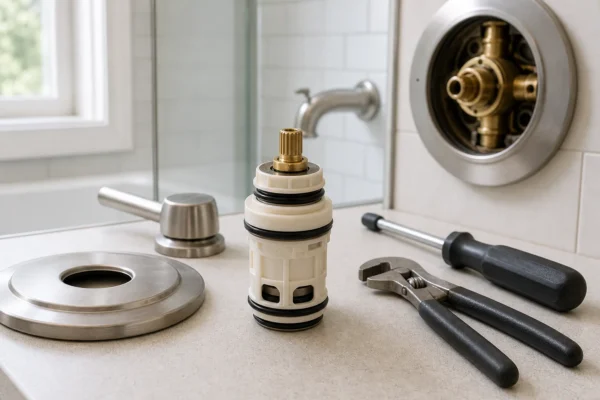
A cartridge swap is the realistic DIY job. Home Depot rates it intermediate difficulty and under two hours, and This Old House says most homeowners can handle it with the right tools (Home Depot, This Old House). Angi puts DIY materials at $50 to $120 against a $275 professional average — real savings, as long as the water shuts off reliably, you know the brand and cartridge, and it pulls without a fight (Angi). Before you buy a cartridge, confirm exactly which one your valve takes with our free Cartridge & Valve Finder — a mismatched part is the single fastest way to turn a one-trip repair into three, and our guide to identifying your shower valve and cartridge walks through the brand markings to look for. If your valve is a Moen Posi-Temp, our step-by-step how to replace a Moen 1222 cartridge guide covers the job start to finish.
Full valve replacement is usually a pro job. Angi rates it “challenging,” estimates about four hours, lists a drywall saw and reciprocating saw among the tools, and recommends hiring a plumber unless you already have the required experience (Angi). The DIY savings can evaporate fast if the valve goes in at the wrong depth, the trim doesn’t seal, or a concealed leak starts behind the wall — Angi specifically warns that bad trim sealing can leak and damage the wall and piping behind it (Angi).
When to Call a Pro
Call a plumber when:
- The valve body is cracked, gouged, or corroded inside — a new cartridge can’t seal against damaged brass (Terry Love).
- The old cartridge is seized by mineral buildup and won’t come out with normal force — forcing it risks breaking the cartridge or gouging the valve body (Moen).
- The job requires opening finished tile, marble, or a one-piece surround to reach the valve (Angi).
- The valve is an older mixing valve with no pressure-balancing or thermostatic protection — code requires a maximum 120°F, field-adjusted, balanced-pressure or thermostatic valve for showers (ICC Safe).
- You can’t identify the brand or find a matching cartridge — cartridges are not universal, and an obsolete or discontinued valve can flip the economics toward replacement (This Old House, Terry Love).
- There’s evidence of water behind the wall, or you can’t fully shut off supply to the shower before starting (This Old House).
Edge Cases That Flip the Default Answer
Rental or multi-family property. Landlords often lean toward replacement sooner, because callbacks and tenant disruption cost more than the part — and Delta’s warranty terms differ for multi-family versus owner-occupied use, so the “lifetime parts” coverage homeowners rely on may not apply the same way (Delta).
Historic bathroom or expensive tile. A high-finish tile surround can favor repair even on an older valve, since opening tile adds finish-matching costs on top of the plumbing — a renovation plate can sometimes provide access without a full tile cut (Angi, Terry Love).
Pending home sale. If the valve is functional, leak-free, and already pressure-balanced, a cartridge repair is usually enough to satisfy a buyer’s inspection (InterNACHI). If it’s an older non-pressure-balanced mixing valve, replacing it before listing removes a scald-risk red flag entirely (Home Depot).
Shared plumbing or no local shutoffs. Without a local stop at the valve, service work can mean shutting off water to more than one unit — a planned replacement to a valve body with integral stops (Kohler and Delta both sell them) avoids repeating that disruption later (Home Depot).
Custom shower with multiple outlets. Body sprays or a hand shower alongside the main head may need a separate valve or integrated diverter that a simple cartridge repair can’t add — Delta recommends a licensed plumber when hot-water demand or outlet count is changing (Delta).
How to Choose and Vet a Plumber
If you’ve landed on replacement, or a repair that’s past the DIY line, get two or three quotes and describe the actual symptom rather than a guess — “single-handle shower, drips from the spout, handle is stiff” gets you a more accurate number than “shower is broken.” Ask each plumber directly whether their quote assumes wall or tile access, since that’s the line item that moves the total the most. Confirm they’re licensed and insured, and get the scope and price in writing before work starts. If quotes vary widely, it’s almost always because they’re assuming different things about how hard the valve is to reach — ask.
Should I repair or replace my shower valve if it’s just dripping?
Repair it. A drip is almost always a worn cartridge, and replacing just the cartridge ($100-$400 with a pro) is far cheaper than replacing the whole valve body ($150-$575) — reserve replacement for a cracked, corroded, or gouged valve (Angi).
How much does it cost to repair vs. replace a shower valve?
Can I just replace the cartridge instead of the whole valve?
Yes, as long as the valve body itself isn’t cracked, gouged, or corroded inside. The cartridge is the part that actually wears out; the brass valve body behind the wall is designed to outlast several cartridges (This Old House).
Is it worth replacing a shower valve myself?
For a cartridge, often yes — it’s a sub-two-hour, intermediate-difficulty job that costs $50-$120 in parts and tools versus a $275 pro average (Home Depot, Angi). For a full valve body, Angi rates the job “challenging” and generally recommends a pro unless you have real plumbing experience (Angi).
When does replacing the whole shower valve make more financial sense than repairing it?
When the valve has already needed more than one cartridge in a short span, the brand is unidentifiable or discontinued, the valve lacks pressure-balancing/anti-scald protection, or a remodel already has the wall open (This Old House, ICC Safe).
Does an old shower valve waste water even if it’s not actively dripping into the tub?
Sources
- Angi – Shower Valve Replacement Cost
- Angi – Shower Cartridge Replacement Cost
- Angi – How to Replace a Shower Valve
- HomeGuide – Shower Valve Replacement Cost
- HomeGuide – Shower Cartridge Replacement Cost
- This Old House – Shower Cartridge Replacement Cost
- This Old House – How to Repair a Shower Valve
- This Old House – How to Replace a Shower Cartridge
- This Old House – Shower Remodel Cost
- Home Depot – How to Replace a Cartridge in a Faucet
- Home Depot – How to Replace a Shower Faucet
- Home Depot – Types of Shower Valves
- Moen – Removing a Stuck 1200 or 1225 Cartridge
- Moen – Handle Is Difficult to Operate
- Moen – What Is Meant by “Pressure-Balancing”
- Delta – Warranty
- Delta – MultiChoice Universal Valve
- Delta – Shower Experience / Planning
- ICC Safe – IPC 2018 Section 412.3, Individual Shower Valves
- EPA WaterSense – Fix a Leak Week
- EPA WaterSense – Rates Data
- InterNACHI – Bathroom Inspection Checklist
- Terry Love Plumbing Forum – Scratched Inside of Shower Valve
- SupplyHouse – How to Replace a Shower Cartridge
Educational content only. Not a substitute for licensed professional advice. Local plumbing codes vary by jurisdiction. Use of any guidance from this guide is at your own risk.
Get the homeowner’s plumbing repair toolkit checklist — the tools, parts, and decisions every homeowner should have on hand. [Free download — enter your email]
Parts for this repair
As an Amazon Associate, plumbingbythebook earns from qualifying purchases. Links below are affiliate links — they cost you nothing extra.
Related guides
Shower Cartridge Identification Chart: Every Major Brand in One Table [2026]
Shower Cartridge Identification Chart: Every Major Brand in One Table [2026] This shower cartridge identification chart puts nine…
How to Identify Your American Standard Shower Valve: Trim, Cartridge, and Rough-In Valve [2026]
How to identify your American Standard shower valve starts with a fact that trips up a lot of…
How to Identify Your Moen Shower Valve: Cartridge Family and Series [2026]
How to Identify Your Moen Shower Valve: Cartridge Family and Series [2026] Knowing how to identify your Moen…