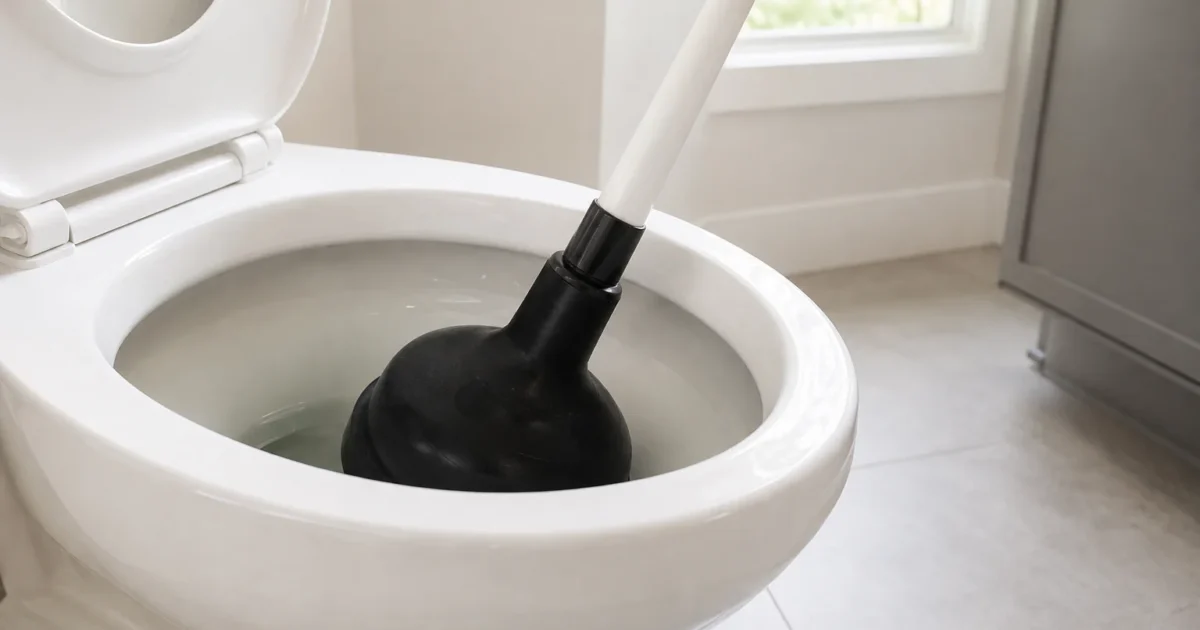
A clogged toilet is one of the most common – and most stressful – plumbing problems a homeowner hits, but the good news is that most clogs clear in a few minutes with a plunger and the right technique. This guide on how to unclog a toilet walks through the methods in the order a plumber would try them, the cardinal rule that keeps a clog from becoming a flood, and the clear signs that the problem is past the bowl and into “call a pro” territory.
First Rule: Stop Flushing
The single most important thing when a toilet is clogged: do not flush it again. The tank refills and dumps another full charge of water into a bowl that cannot drain, and the bowl overflows onto your floor (This Old House). One test flush before you knew it was clogged is how most people find out; a second “maybe it’ll go down this time” flush is how the bathroom floods.
If the bowl is already full to the brim, wait ten to fifteen minutes for the water level to drop on its own before you start – a too-full bowl splashes the moment you put a plunger in it. If it is dangerously high, bail a few cups of water into a bucket first. You want the bowl about half full: enough water to cover the plunger head, not so much that it sloshes over.
If the water is still rising toward the rim, you have two fast ways to stop the flow: turn the shutoff valve – the oval handle on the supply line low on the wall behind the toilet – clockwise to cut the water, or lift the tank lid and push the flapper (the rubber seal at the bottom of the tank) back down by hand to stop the tank from dumping more water. Either one buys you time before you reach for a plunger.
Method 1: The Flange Plunger (Start Here)
A plunger clears the large majority of ordinary toilet clogs, but the tool and the technique both matter.
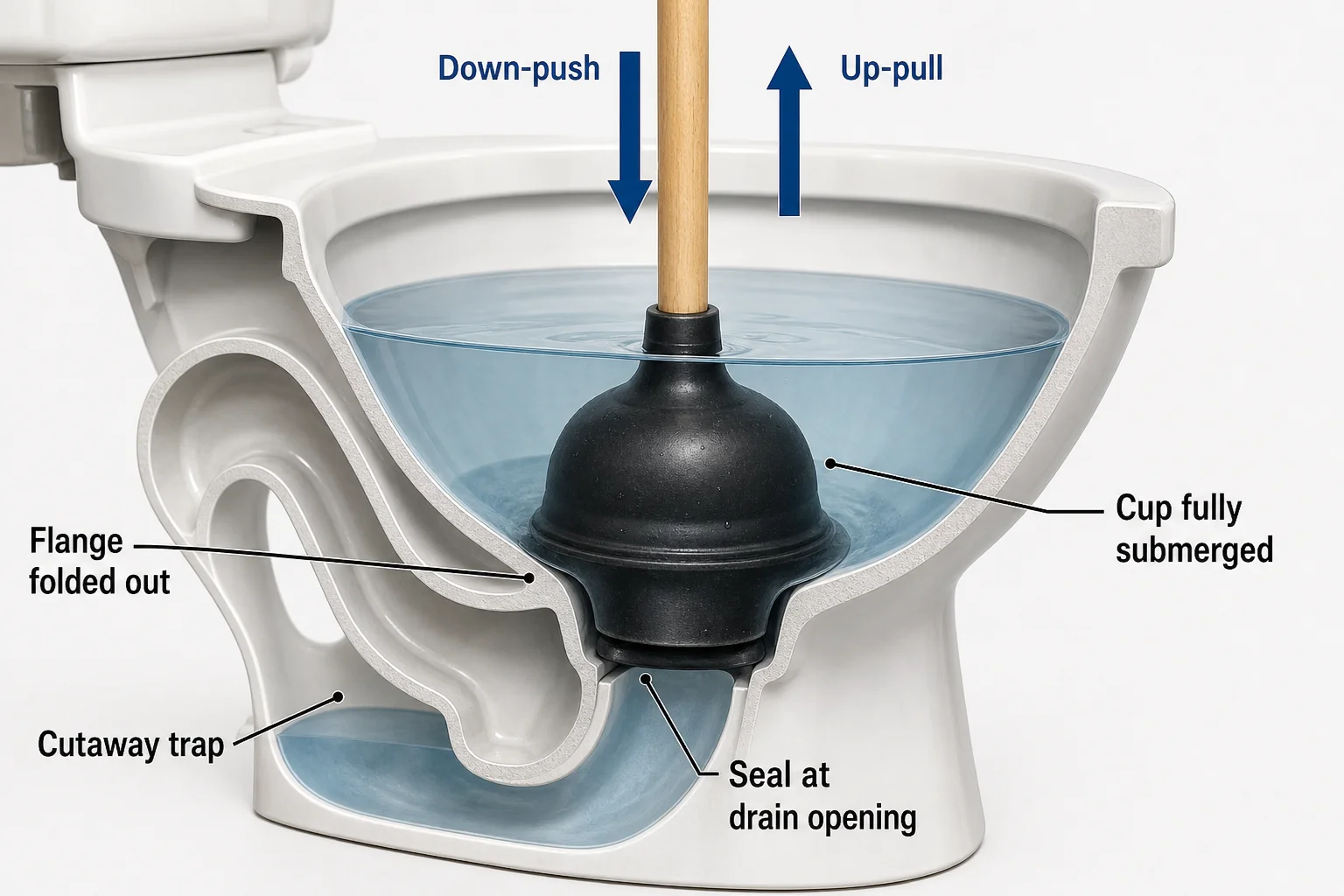
Use a flange plunger, not a flat cup plunger. The flange is the soft rubber sleeve that folds out from the cup; it is shaped to seal inside a toilet’s drain opening, where a flat sink plunger just slides around and never builds pressure. Fold the flange out before you start.
Get a seal, then work it:
- Lower the plunger into the bowl at an angle so the cup fills with water rather than trapping air – air compresses and does nothing, water transmits force down the trap.
- Seat the flange firmly into the drain opening to make a tight seal.
- Give a gentle first push to expel the air, then pump with firm, steady strokes. The pull stroke matters as much as the push – you are rocking the clog loose in both directions (This Old House).
- Plunge for 20 to 30 seconds, keeping the seal, then lift the plunger. If the water rushes out, you have cleared it. Test with a single flush, standing ready to shut the water off at the stop valve behind the toilet if it rises again.
Most clogs give up within a minute or two of good plunging. If the water drains slowly but does drain, plunge a few more cycles to fully clear the passage.
Method 2: Dish Soap and Hot Water (No Plunger Handy)
For a soft, organic clog – too much toilet paper, waste – when you do not have a plunger, a little dish soap and hot water can do the job:
- Squirt about half a cup of liquid dish soap into the bowl and let it sit for five to ten minutes. It works its way down and lubricates the clog.
- Pour in about a gallon of hot – not boiling – water from about waist height. The height adds a little force; the heat softens the clog (This Old House).
Never use boiling water in a toilet. The thermal shock can crack the porcelain, and a cracked bowl turns a free fix into a new toilet. Hot tap water is plenty.
Give it ten minutes or so; if the water level drops, the clog is loosening and a plunge or a second round of hot water usually finishes it.
Method 3: A Closet (Toilet) Auger
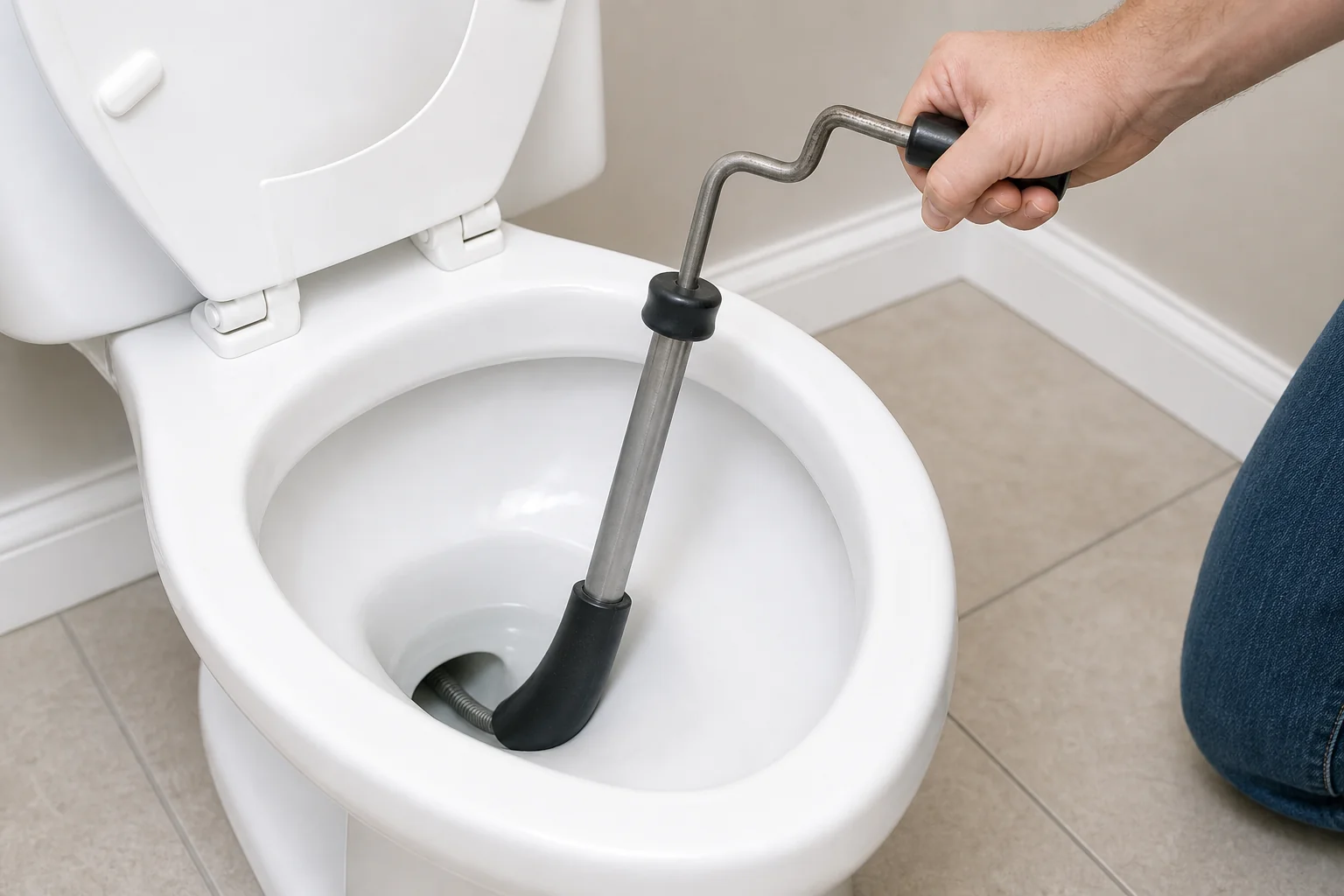
When plunging will not clear it, the next tool is a closet auger – also called a toilet auger – not a regular drain snake. A standard sink snake will scratch and chip the porcelain; a closet auger has a plastic sleeve and a curved end shaped to feed through the toilet’s trap without marring the bowl (This Old House).
- Place the curved tip into the bowl, pointing down into the drain.
- Crank the handle while pushing gently to feed the cable through the trap and around the bend. The small hook on the end is meant to either break up the clog or snag and pull out whatever is blocking it.
- When you feel resistance, do not force it. Forcing the auger can crack the bowl or bend the cable. Work it gently; if it has hooked an object, pull the cable back toward you rather than driving the object deeper.
- Retract the auger, then test with a single flush.
A closet auger reaches roughly three feet – enough for the trapway and the start of the drain, which is where toilet clogs almost always sit.
Method 4: A Wet/Dry Shop Vacuum (Best for a Dropped Object)
When a toy, toothbrush, or other solid object is the clog – something a plunger would only wedge deeper – a wet/dry shop vacuum is the method most homeowners never think of, and it is the one that gets the object out instead of pushing it down.
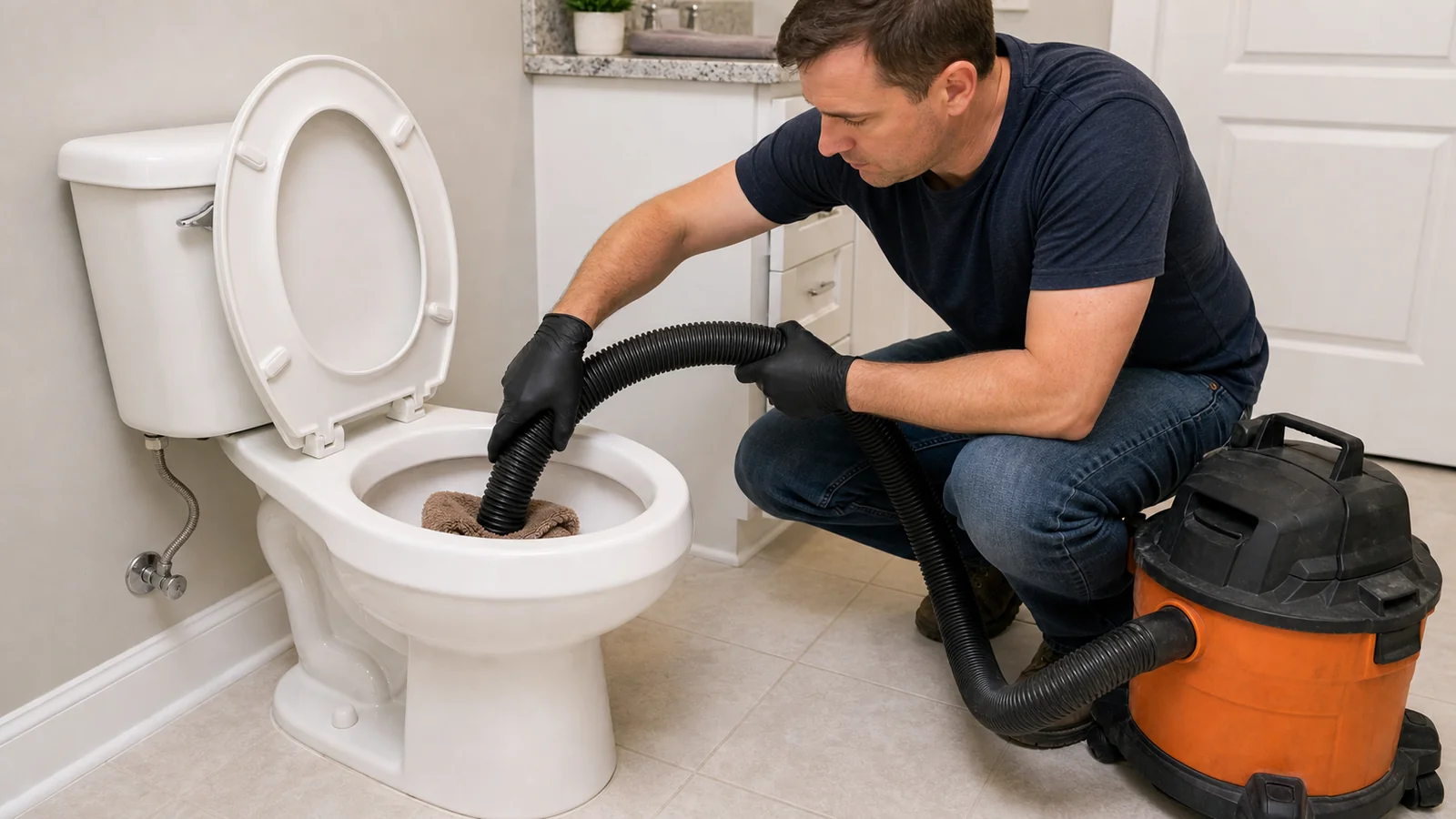
This only works with a wet/dry vacuum – never a regular household vacuum. A standard vacuum is not built to take in water and creates a serious electric-shock risk. Use a true wet/dry shop vac, and plug it into a GFCI-protected outlet.
- Set the vac to its wet setting and remove the bag if it has one.
- Vacuum the standing water out of the bowl first, so you are pulling against suction, not a column of water.
- Push the hose a few inches into the drain opening and pack a folded old towel around the hose to make a tight seal – the seal is what gives you the pulling power.
- Turn it on. The suction pulls the clog (and an object, if that is what it is) back up into the hose or the bowl, where you can retrieve it.
Clean and disinfect the vac and hose thoroughly afterward. If the object is out but the bowl still drains slowly, finish with a few plunger cycles.
What NOT to Do
A few moves make a clogged toilet worse:
- Do not keep flushing. Covered above, but it is the number-one mistake – it causes the overflow.
- Skip the chemical drain cleaner. Caustic drain cleaners are formulated for grease and hair in sink and tub lines; they do little against the paper, waste, and objects that actually clog toilets, and they can damage the porcelain glaze with prolonged contact. Worse, if the chemical does not clear the clog, you are now left plunging a bowl full of caustic water, which can splash and burn (Reliable Heating & Air).
- Do not force a known object deeper. If a toy, toothbrush, or phone went down, plunging or augering can wedge it further into the trap. A lodged object often means pulling the toilet to clear it from below – a bigger job, but cheaper than a clog you pushed into the branch line.
When It’s Not Just the Bowl: Call a Pro
Most toilet clogs are a five-minute DIY fix. Stop and call a plumber when the signs point past the bowl:
- The same toilet clogs over and over with normal use. A repeat clog can mean a partial blockage downstream, a venting problem, or (in old low-flow toilets) a fixture that simply does not flush well – a different problem than a one-off clog.
- Other fixtures react when you flush or run water – the tub gurgles, a floor drain backs up, the shower drains slowly at the same time. When more than one fixture is involved, the blockage is in the shared branch or the main sewer line, not the toilet, and that is a job for a powered drain machine, not a plunger. Our drain repair guide covers how to tell a fixture clog from a main-line clog.
- Sewage is backing up into a tub or floor drain. Stop using water and call – that is a health hazard.
- A hard object is lodged and your auger cannot retrieve it.
There is no prize for forcing it. A clog you cannot reach is exactly where a plumber’s equipment saves you money versus cracking a bowl or driving the blockage deeper.
Preventing the Next One
Most toilet clogs come down to flushing things that should not go down. Only human waste and toilet paper belong in a toilet. So-called “flushable” wipes do not break down like toilet paper and are a leading cause of clogs and sewer backups, as are paper towels, cotton products, and dental floss. Keep a small trash can in the bathroom and the clog rate drops to near zero.
Why is my toilet clogged but still slowly draining?
A partial clog lets some water seep past. Plunge it fully now – a partial clog usually becomes a complete one, and at a worse time.
Can I use a regular drain snake in a toilet?
No – a metal sink snake scratches the porcelain. Use a closet (toilet) auger, which is sleeved to protect the bowl.
Will baking soda and vinegar unclog a toilet?
They can help soften a light organic clog (similar to the dish-soap method), but they do not generate enough force for a real blockage. Reach for a plunger.
My plunger isn’t working – what now?
Make sure you are using a flange plunger with a real seal, and try the dish-soap-and-hot-water soak. If neither works, move to a closet auger. If that fails, the clog is likely past the toilet – time to call a plumber.
Is it safe to leave a clogged toilet overnight?
Often a soft clog relaxes and drops on its own after a few hours, so waiting (without flushing) is a reasonable thing to try. Just do not flush to “check.”
Should I pour hot water in to unclog it?
Hot tap water with dish soap, yes. Boiling water, no – it can crack the porcelain.
How do I stop a toilet from overflowing?
Move fast in the tank or at the wall: lift the tank lid and push the flapper (the rubber seal at the bottom) down by hand to stop more water leaving the tank, or turn the shutoff valve on the supply line behind the toilet clockwise to cut the water entirely. Then bail the bowl down to half full before you plunge.
Can I unclog a toilet with a shop vac?
Yes, and it is the best method for a dropped object – but only with a wet/dry shop vacuum, never a regular household vacuum (water plus a dry vac is a shock hazard). Vacuum the water out first, seal the hose into the drain with a towel, and the suction pulls the clog back up. See Method 4 above.
Do enzyme drain cleaners work on toilet clogs?
On a soft, organic clog (paper and waste) an enzyme cleaner can digest the blockage if you let it sit overnight – six to eight hours – so it is a hands-off option when the bowl is still draining slowly. It will not move a foreign object and it is not fast; for anything you need cleared now, plunge. Enzyme products are also a good monthly maintenance habit, unlike caustic chemical drain cleaners, which do not belong in a toilet.
Where to Go From Here
If your toilet runs, leaks, or flushes weakly rather than clogging, start at the toilet repair guide – it indexes every common toilet problem by symptom. And if the clog turns out to involve more than one fixture, the drain repair guide walks through diagnosing a main-line blockage.
This guide is for general homeowner education and is not a substitute for licensed professional advice. When a clog involves more than one fixture, a sewage backup, or a lodged object you cannot retrieve, consult a licensed plumber.
Tools for this repair
As an Amazon Associate, plumbingbythebook earns from qualifying purchases. Links below are affiliate links — they cost you nothing extra.
- Flange (Toilet) Plunger — the heavy-duty flange plunger that seals the toilet outlet (a flat sink plunger will not) — the first tool for almost every clog.
- Closet (Toilet) Auger — a rubber-sleeved closet auger reaches past the trap to hook the clog without scratching the porcelain — the step up when the plunger stalls.
- Reusable Rubber Gloves — the one bit of PPE this job actually warrants.
Related guides
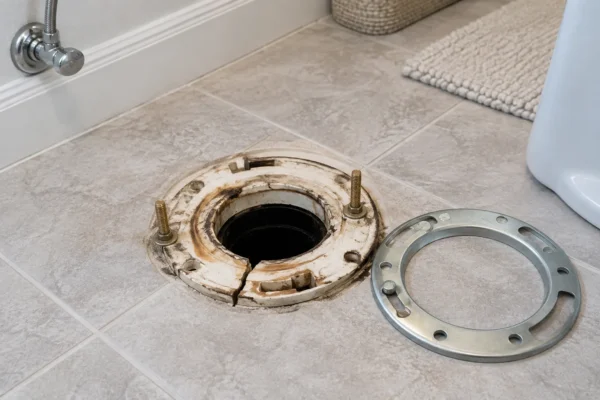
Cost to Repair a Toilet Flange: DIY vs. Plumber [2026]
The cost to repair a toilet flange runs about $145 to $350 with a plumber, according to Angi,…
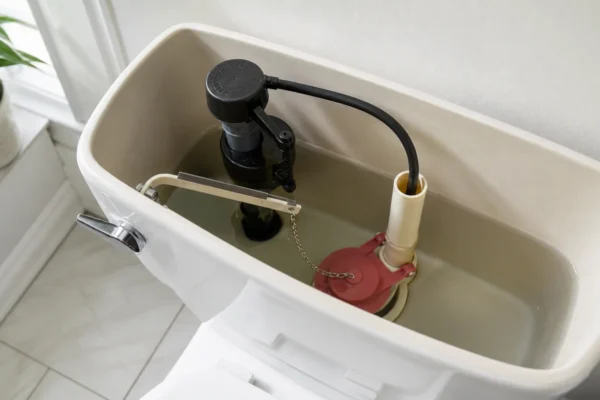
How to Identify Your Toilet Flush Valve [2026]
Pull off the tank lid to fix a running toilet and you’ll find one of two very different…
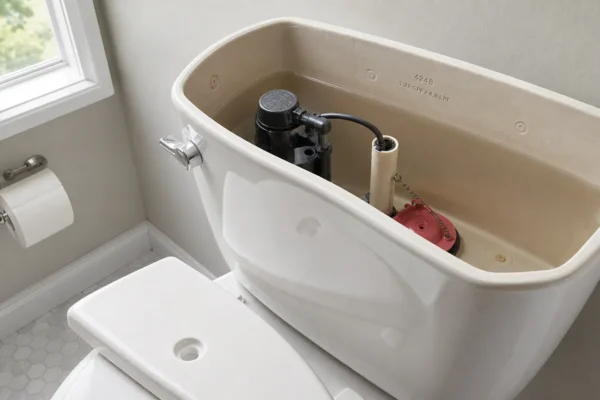
How to Identify Your Toilet Flapper by Brand [2026]
Pop the tank lid to replace a leaking flapper and you’re staring down a hardware-store aisle of red…