
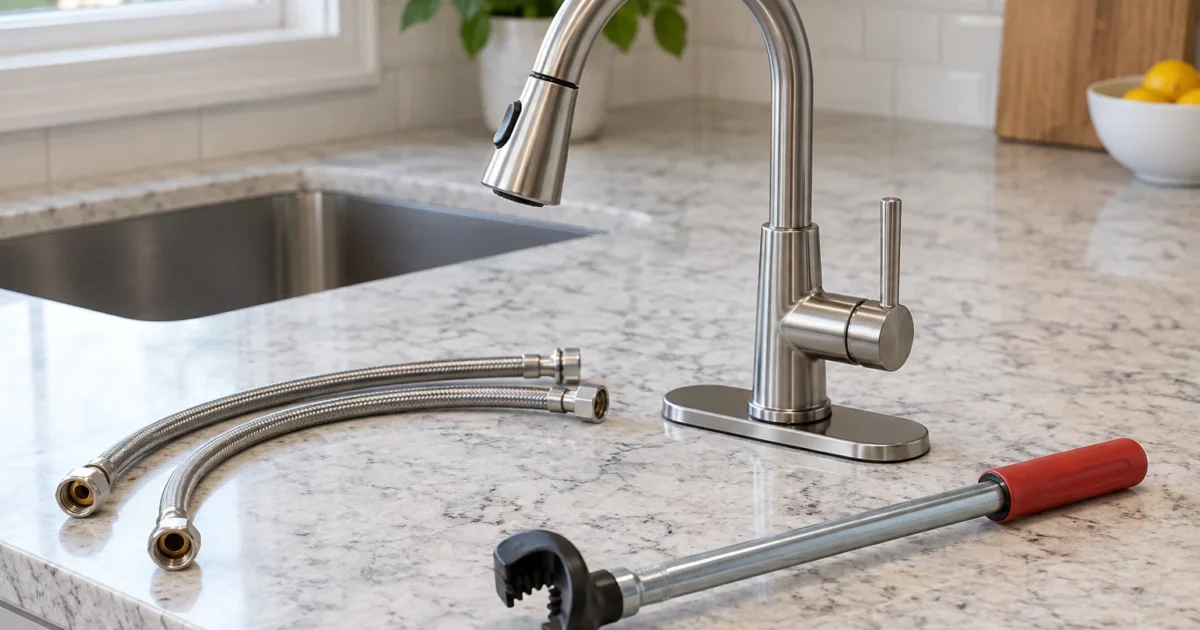
The cost to install a faucet with a professional is usually a low-hundreds job: Home Depot lists an average faucet installation at $195, with a typical range of $97 to $369, per its faucet install cost page. That’s the labor for swapping a faucet into the sink you already have, not the faucet itself. This page is for the homeowner holding a new faucet (or shopping for one) and wondering what the install will really run, and whether it’s worth doing yourself.
Cost to Install a Faucet: The Short Answer
For a same-location swap, plan on roughly $97 to $369 for a professional installation, with Home Depot’s published average at $195 (Home Depot). HomeAdvisor, a cost aggregator, reports kitchen faucet installation at $162 to $364, averaging about $262 (HomeAdvisor). These are planning numbers, not quotes — your local price depends on the sink, the faucet, and what the plumber finds under the cabinet.
| Line item | DIY cost | Pro install | Source |
|---|---|---|---|
| Budget faucet (Moen Adler 84603 ~$59; Delta 21987LF ~$79; Delta 21988LF ~$99) | $59-$99 | same fixture cost | Home Depot / Moen |
| Supply lines, if the faucet doesn’t include them | $6-$9 each | may or may not be in the quote | Lowe’s |
| Standard same-location installation | $0 (your time) | $97-$369, average $195 | Home Depot |
| Kitchen faucet installation (aggregator data) | $0 (your time) | $162-$364, average ~$262 | HomeAdvisor |
| Bathroom faucet labor | $0 (your time) | $130-$350 | Angi |
| Leaky-faucet repair instead of replacement | $5-$130 | $100-$400, average ~$270 | Angi |
Two cautions on that table. First, Angi and HomeAdvisor are sister brands under the same parent company, so when their numbers line up, that isn’t two independent confirmations — treat them as one cost-aggregator view and anchor on the retailer’s published range. Second, the bathroom labor figure comes from a single Angi page, so read it as a rough guide rather than a national standard.
To estimate a specific job, try our free Plumbing Repair Cost Estimator.
What the Labor Price Actually Covers
A standard installation means removing the old sink faucet, installing a new kitchen or bathroom sink faucet in the existing holes, connecting supply lines, sealing per the faucet’s instructions, testing, and cleaning up. Both Home Depot and Lowe’s define their standard service around existing sink locations.
The exclusions matter as much as the inclusions. Home Depot’s standard service does not drill new faucet holes in a countertop, and it excludes tub and shower faucets. Wall-mounted and specialty sink faucets may require a site visit first. In other words, the $195 average buys a like-for-like swap, and anything that changes the setup is a different job with a different price.
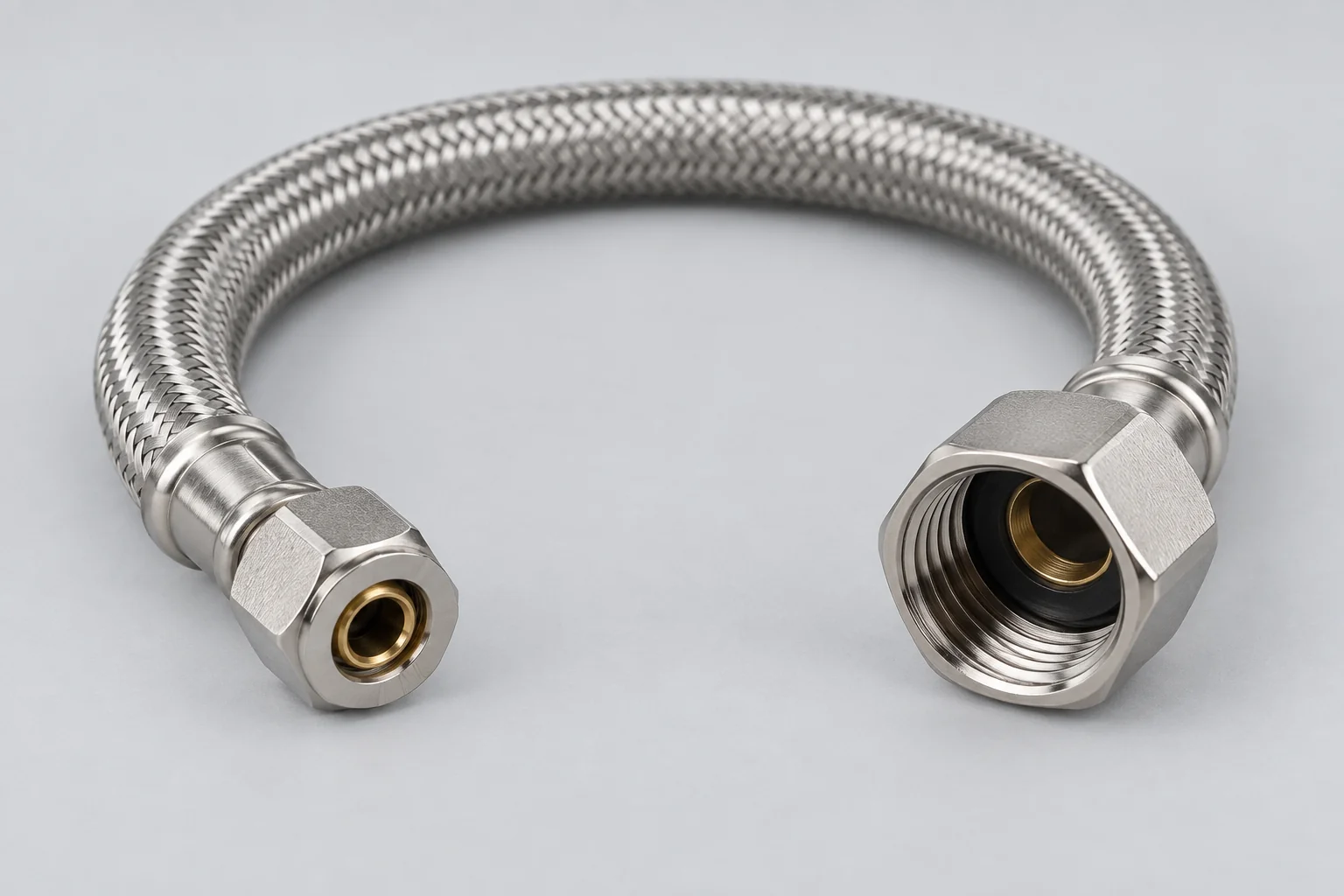
Supply lines are where the fine print gets slippery. Lowe’s requires new supply lines for its faucet installations. Home Depot’s own pages disagree with each other: its replacement FAQ says the customer provides the supply lines, while its cost guide says installers provide new lines matching the existing size. Professional opinion and retailer policy vary here, so don’t assume either way. Ask the installer whether the quote includes them, which connector type your faucet needs, and whether your faucet already has integrated lines. Some do — the Moen Arbor 7594C ships with integrated 3/8-inch compression supply lines, while the Moen Adler 84603 may need separate ones (Moen).
Why the Price Range Is So Wide
The cost to install a faucet swings from $97 to $369 because of scope, not just geography. Cost sources define the job differently. Home Depot’s number is a retailer-style installation of a faucet into existing holes. Homewyse’s national model runs considerably higher because it bundles the faucet, supplies, an equipment allowance, removal and disposal, and minimum-labor assumptions (Homewyse). Thumbtack, meanwhile, prices faucet or sink repair separately from installing a new faucet (Thumbtack).
Kitchen numbers are especially loose. Cost aggregators show kitchen installation totals in the low hundreds, yet labor-only statements can read higher, because project definition, whether the fixture is included, and local labor minimums all change the headline. The honest read: a simple same-hole install through a retailer often prices in the low hundreds, while a plumber-minimum or full-scope job can run higher. Don’t collapse every kitchen install into one number.
Time is the other driver. Angi estimates a plumber may replace a kitchen faucet in 30 minutes to an hour, with a standard installation often taking one to two hours and complex plumbing modifications taking much longer (Angi). For bathroom faucets, Angi puts a plumber at one to two hours and a DIY install at one to four (Angi). Short jobs still often price like a service call, which is why the low end of the range is hard to beat.
What a Budget Swap Adds Up To
A worked example helps, as long as you treat it as an illustration and not a quote. These two models use a budget faucet, two supply lines, and the published labor ranges, before tax and before any shutoff repairs:
- Bathroom, same holes: a $59-$89 faucet, two $6-$9 supply lines, and $130-$350 of labor lands around $201 to $457.
- Kitchen, same holes: a $79-$99 faucet, two $6-$9 supply lines, and Home Depot’s $97-$369 install range lands around $188 to $486.
The kitchen model only holds if the faucet needs separate supply lines and fits the existing holes. The model choice can matter more than you’d think: the Delta 21987LF is a 3-hole, 8-inch kitchen faucet, while the Delta 21988LF is a 4-hole, 8-inch version with a side sprayer (Delta 21987LF, Delta 21988LF). Buy the side-spray version for a sink with three holes and you’ve pushed the job outside standard replacement scope.
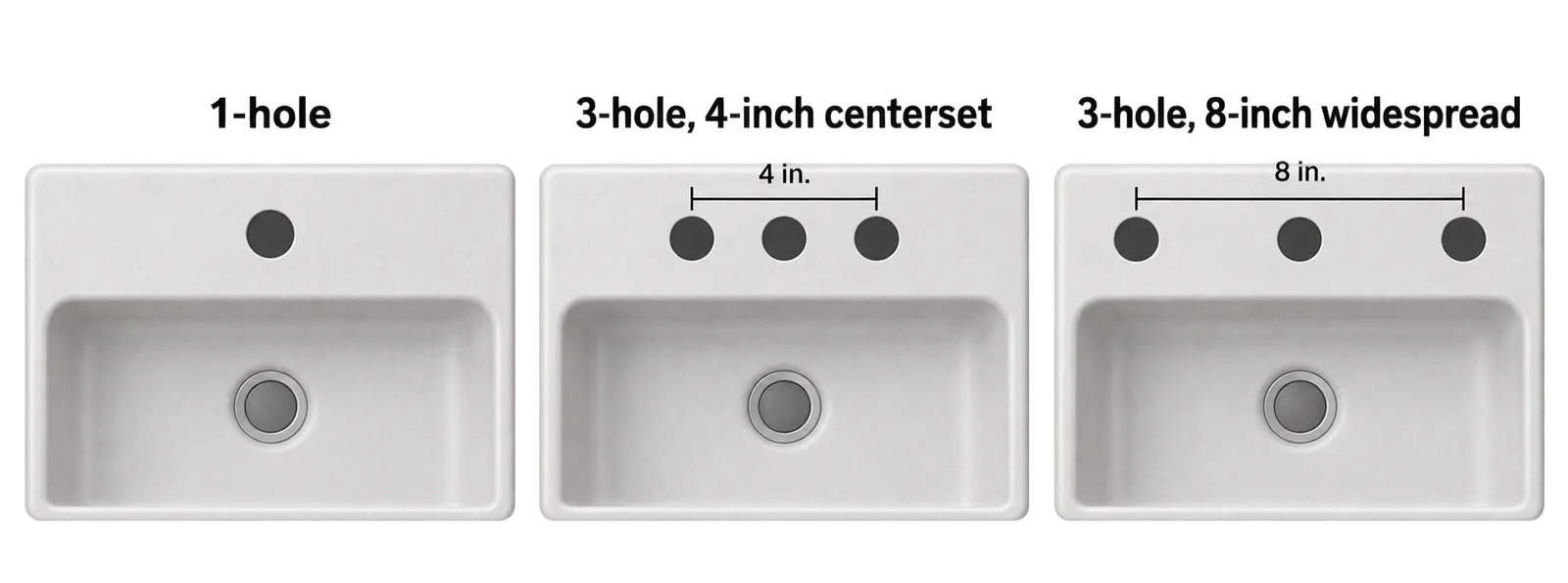
That’s the biggest lever you control: match the new faucet to your existing hole count, spacing, and connection style before you buy.
What Pushes an Install Above the Average
Several things push the cost to install a faucet past that $195 average, and most of them hide until the old faucet is off.
Corroded shutoff valves and old supply lines. A faucet swap assumes the hot and cold stops close and the old connections come apart without damage. If a stop valve won’t shut off, the job becomes a valve replacement first. Lowe’s policy of always installing new supply lines is a practical marker of this risk.
Cramped access. This Old House and Home Depot both describe basin-wrench and tight-clearance problems when removing an old faucet from under a sink (This Old House). Corroded mounting hardware makes it worse.
A new location, new holes, or specialty faucets. Touchless, wall-mounted, pot-filler, filtration, and hot-water taps can add electrical components, new piping, wall or countertop work, permits, and finish repair. Home Depot’s standard service won’t drill holes, so if your new faucet needs one that doesn’t exist, get a separate countertop or plumber quote before you buy the faucet.
Electronics and warranty limits. Delta’s warranty separates ordinary faucet coverage from electronic-parts coverage, and it excludes labor (Delta). If a faucet fails after installation, the part may be covered while the plumber’s time isn’t.
Repair or Replace: The Honest Math
Before you pay the cost to install a faucet, check whether you need a new faucet at all. Angi puts a professional leaky-faucet repair at $100 to $400, averaging around $270, and simple failures like worn O-rings, washers, or cartridges are often cheap parts (Angi). Repair makes sense when it’s a first-time, simple failure and the model is identifiable with parts still available.
Replacement wins when the problem recurs, when there’s corrosion or worn threads, or when the repair quote starts approaching what a replacement would cost (Angi). At that point, a $195 average install plus a $79 faucet buys a clean reset, not a second repair bill. For the full breakdown, see our guides on the cost to repair a faucet and the cost to replace a faucet cartridge.
If you’re selling soon, a modest, mainstream, same-hole replacement can help presentation on a leaking or dated faucet. Zillow lists a new kitchen faucet among modest pre-sale improvements, but NAR’s remodeling data shows kitchen and bathroom projects generally recover less than their full cost — so don’t buy an expensive faucet expecting it to pay for itself (Zillow, NAR).
Should You Install It Yourself or Hire a Pro?
The savings from a DIY install are almost entirely labor: skip the $97-$369 and you pay for the faucet and maybe a few dollars in supply lines and a basin wrench. This Old House rates bathroom faucet replacement as an easy beginner project and kitchen faucet installation as moderate (This Old House bathroom, This Old House kitchen). A same-hole bathroom swap is the most DIY-friendly version of this job.
But the details that trip up first-timers are real. Over-tightening is a common installation mistake according to Delta, and Home Depot warns it can crack a countertop. BrassCraft’s washer-sealed connectors call for hand-tight plus a quarter turn, and no thread sealant (BrassCraft). Debris such as solder, copper chips, and plumber’s tape can lodge in aerators and damage valve seats, so flush the lines before you reconnect the aerator (Delta).
Manufacturer instructions vary, so follow the ones that came with your faucet and connectors. Flushing times range from about 15 seconds to two minutes depending on the source, Teflon tape advice conflicts with connector maker guidance, and putty versus silicone depends on your counter material — standard putty can stain porous stone, which is why Oatey sells a stain-free version (Oatey).
For a sense of DIY risk in general, Angi’s broader survey found that 25% of homeowners hired a pro to fix or finish a DIY project, and 86% of those said it cost more than planned (Angi). That isn’t faucet-specific, but plumbing showed up among the hardest DIY project types.
When to Call a Pro
Hire out the job when any of these apply:
- The shutoff valves won’t close, or they leak when moved. A weekend project shouldn’t turn into a whole-house water shutoff.
- The new faucet needs holes that don’t exist. Drilling a countertop is outside a standard faucet install; get a separate quote before buying the faucet.
- It’s a wall-mounted faucet, pot filler, or a new location. These involve new piping, wall access, and finish repair.
- It’s an electronic or touchless faucet. Debris can foul the solenoid, so follow the exact manufacturer sequence, or let a pro do it.
- You can’t identify the model or the old faucet won’t come off. Corroded hardware and tight clearance are what push labor up.
- It’s a rental or multi-family building. Delta’s warranty terms differ for multi-family and commercial use, and durable, common-parts models often matter more than features.
In an older or historic home, repairing an original-quality faucet or matching its finish may beat covering old holes with a cheap deck plate, according to This Old House and Angi’s finish guidance.
How to Get and Vet a Quote
Ask three things before you accept any quote for the cost to install a faucet. First, does the price include the faucet, the supply lines, and disposal of the old one? Second, does it assume the shutoffs work? Third, is there a minimum charge? Get the answers in writing. Confirm the plumber is licensed and insured, and get two or three quotes — a wide spread usually means one plumber is pricing in a risk (stuck hardware, bad shutoffs) that another hasn’t looked for.
Buying the faucet yourself is fine, but check compatibility first: hole count, spacing, and whether it needs separate supply lines. For drinking water, kitchen and bathroom faucets sold in the U.S. are required to meet NSF/ANSI/CAN 61 lead-leaching requirements (NSF). Note that EPA WaterSense labeling covers bathroom (lavatory) and bar sink faucets, not kitchen faucets (EPA).
How much does a plumber charge to install a faucet?
Home Depot lists an average faucet installation at $195, with a typical range of $97 to $369. HomeAdvisor reports kitchen faucet installation at $162 to $364. Those are planning numbers, and your local quote may be higher or lower.
Does the installation price include the faucet and supply lines?
Not necessarily. The install price is labor for swapping the faucet into existing holes. Home Depot’s pages disagree on who supplies the supply lines, and Lowe’s requires new ones, so ask whether the quote includes them.
How long does it take to install a faucet?
Angi says a plumber may replace a kitchen faucet in 30 minutes to an hour, with standard installations often taking one to two hours. For a bathroom faucet, Angi estimates one to two hours for a plumber and one to four for a DIY install.
Is it worth installing a faucet myself?
For a same-hole bathroom faucet with working shutoffs, yes — that’s the most DIY-friendly version, and it saves the whole labor charge. If the shutoffs are corroded, the holes don’t match, or it’s a wall-mounted or electronic faucet, a pro is the safer choice.
Does a faucet install cost more if I need a new hole in the countertop?
Yes. Standard faucet replacement usually excludes drilling. If the faucet needs a hole that isn’t there, get a separate countertop or plumber quote before you buy.
Should I repair my faucet instead of replacing it?
If it’s a first-time, simple failure on an identifiable model, repair is usually cheaper, at $100 to $400 with a pro per Angi. Replace it when problems recur, corrosion or worn threads show up, or the repair quote nears replacement cost.
Sources
- Home Depot – Cost to Install a Faucet
- Home Depot – Faucet Replacement Service
- Lowe’s – Sink and Faucet Installation
- HomeAdvisor – Cost to Install a Faucet
- Angi – Plumber Cost to Fix a Leaky Faucet
- Angi – Cost to Replace a Bathroom Faucet
- Angi – Cost to Install a Kitchen Faucet
- Angi – Should I Repair or Replace a Leaky Faucet
- Angi – Is a DIY Project Costing More
- Homewyse – Cost to Install a Faucet
- Thumbtack – Sink and Faucet Repair Cost
- Delta – Foundations 21987LF
- Delta – Foundations 21988LF
- Delta – Faucet Warranty
- Delta – Flushing Procedure
- Moen – Arbor 7594C
- Moen – Adler 84603
- BrassCraft – Connector Installation Instructions
- Oatey – Plumber’s Putty
- This Old House – How to Replace a Bathroom Faucet
- This Old House – How to Install a Kitchen Faucet
- This Old House – How to Replace an Old Faucet
- NSF – Faucets and Plumbing Products
- EPA WaterSense – Bathroom Faucets
- Zillow – Home Improvements That Pay Off
- NAR – Should I Remodel Before I Sell
Educational content only. Not a substitute for licensed professional advice. Local plumbing codes vary by jurisdiction. Use of any guidance from this guide is at your own risk.
Get the homeowner’s plumbing repair toolkit checklist – the tools, parts, and decisions every homeowner should have on hand. [Free download – enter your email]
Parts for this repair
As an Amazon Associate, plumbingbythebook earns from qualifying purchases. Links below are affiliate links — they cost you nothing extra.
- Braided Stainless Faucet Supply Lines, 3/8 in. Compression x 1/2 in. FIP — The connector type many budget faucets need. Check your faucet first: some models ship with supply lines already attached.
- Basin Wrench for Faucet Nuts — Reaches the mounting nuts in the cramped space behind a sink, which is where most old-faucet removals get hard.
- Oatey Stain-Free Plumber's Putty — Made for porous surfaces such as granite, marble, and quartz where standard putty can stain. Follow your faucet's own sealing instructions first.
Related guides
Frost-Free Outdoor Faucet Stem: How to Identify Yours Before You Order
Your outdoor faucet drips from the spout or the handle, and the repair parts aisle is full of…
Replacement Hose for Pull-Down Kitchen Faucet: How to Tell Which Fits
You have a pull-down kitchen faucet that won’t retract, drips under the sink, or has a cracked hose,…
Faucet Valve Type Identification Chart: Cartridge, Ball, Compression, and Ceramic Disc [2026]
This faucet valve type identification chart covers the four mechanisms hiding inside almost every residential sink faucet —…