
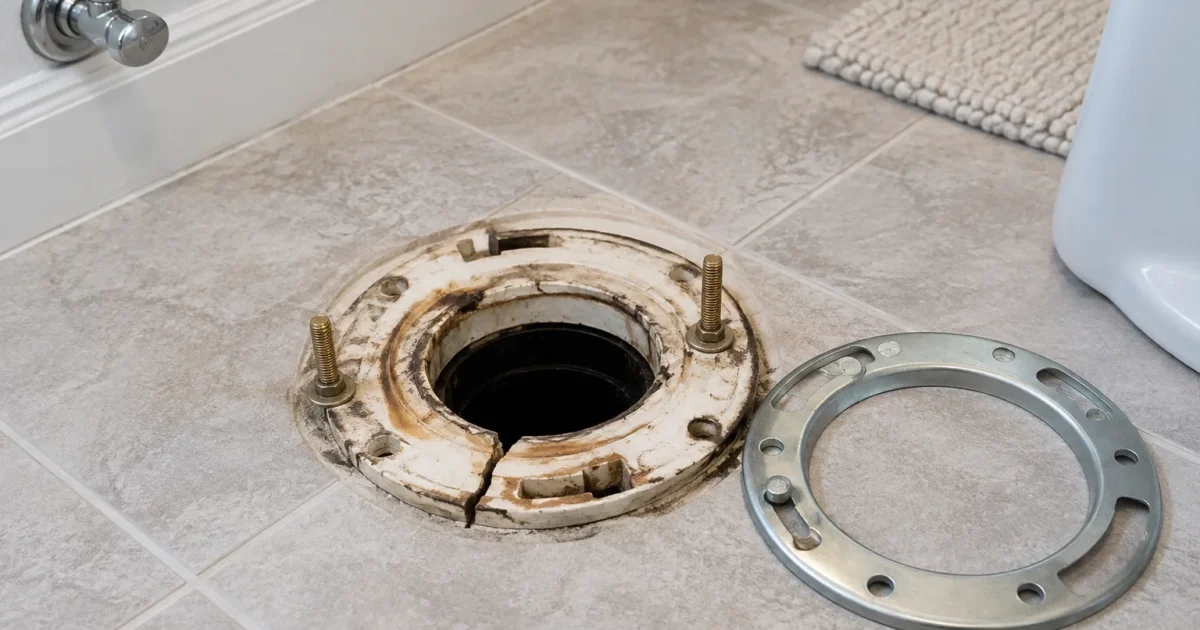
The cost to repair a toilet flange runs about $145 to $350 with a plumber, according to Angi, while a DIY repair ring, extender, or seal typically costs somewhere around $15 to $60 in parts. This page is for the homeowner whose toilet rocks, leaks at the base, or has a cracked or rusted flange and who wants to know whether to fix it or hire it out. The parts are cheap. The real spread comes from what you find under the toilet — and from a mistake you can only make once, which is diagnosing a bad seal as a bad flange, or the other way around.
Scope note: everything here applies to a standard floor-outlet toilet. Wall-hung carrier toilets and macerating (upflush) toilets, such as Saniflo-style systems, mount and discharge differently and are a different job.
For how flange work compares to other repairs, see our DIY-vs-pro plumbing repair cost study.
How Much Does It Cost to Repair a Toilet Flange?
The direct answer, from national cost guides: a pro flange repair runs $145 to $350, and a pro flange replacement averages $145 to $165 (Angi, Angi flange guide). This Old House repeats the $145-$165 average, but it draws on Angi and Fixr data, so treat it as a second read of the same numbers rather than independent confirmation. These are national guide ranges, not a bid for your house.
| Line item | DIY parts cost | Pro (parts + labor) | Source |
|---|---|---|---|
| Wax-ring reset only (flange is fine) | $5-$25 | $50-$200 | Angi / Lowe’s / Home Depot |
| Repair ring (Oatey Fix-it 42775) | ~$8-$10 ring, plus screws, silicone, and a new seal | $145-$350 (flange repair) | Angi / Lowe’s / Home Depot |
| Danco HydroSeat repair | ~$23-$25 | included in the flange-repair range above | Home Depot / Lowe’s |
| Extender for a low flange (Oatey Set-Rite 43400 kit) | ~$24 kit; roughly $25-$45 with seal and fasteners | not itemized by Angi | Home Depot / SupplyHouse |
| Full flange replacement | $5-$75 for the flange (PVC to cast iron) | $145-$165 average | Angi |
| Plumber labor rate | — | $45-$150 per hour; minimums or trip fees possible | HomeAdvisor |
Two cautions on that table. First, the “wax-ring reset only” row is a seal repair, not a flange repair — it only applies when the flange is intact, anchored, and at a workable height. Second, if you price the full Set-Rite kit, don’t compare it to the cheaper spacer accessories on the same shelf; those cover smaller height gaps and cost less.
What Drives the Cost (the honest spread)
The biggest driver of the cost to repair a toilet flange is which fix you actually need. A failed wax seal is a $5-$25 part and about two hours (Angi). A cracked mounting ring is a repair-ring job. A flange that is missing or too deteriorated to hold a repair is a full replacement, which Oatey says is necessary when the drain section can’t hold a repair.
Material and connection type is the second driver. A broken bolt slot on an otherwise sound flange is a very different job from a glued PVC or ABS flange, a soldered brass or copper flange, a cast-iron lead-and-oakum joint, or work in a concrete slab. Concrete needs masonry anchors and a hammer drill, per Oatey’s installation guide.
Then there’s labor. HomeAdvisor lists plumbers at $45-$150 per hour, and small jobs can carry a minimum or trip fee — which is why a quick flange repair can price near the top of Angi’s range even when the work is short. And the wildcard is the floor: if the subfloor is soft, the price stops being about the flange.
Repair Ring vs. New Flange — the Honest Math
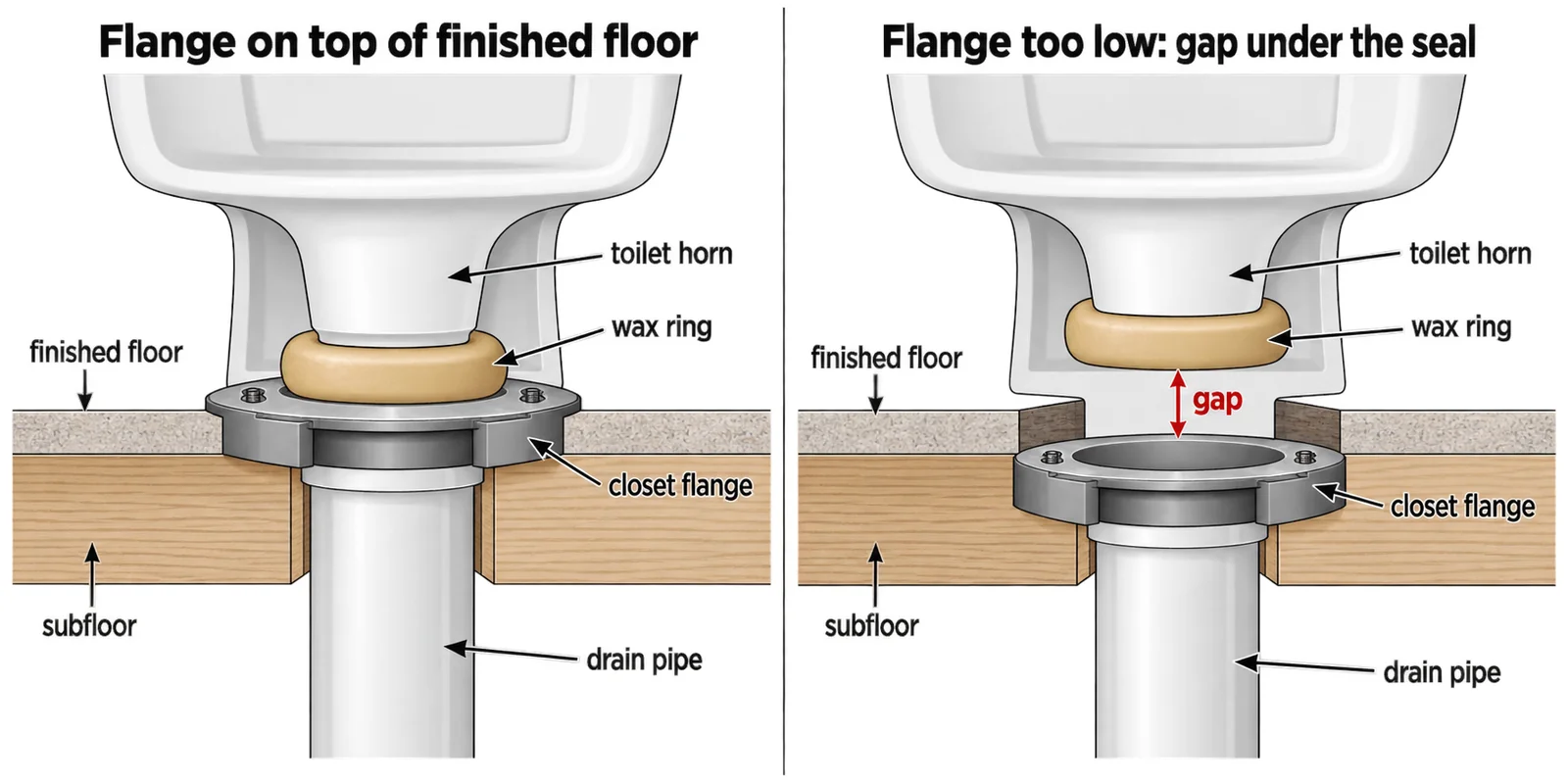
On parts alone the comparison is lopsided: an $8-$10 repair ring against a $5-$75 flange and a $145-$165 pro replacement. Parts price is not the deciding number, though. Flange height and anchoring rank ahead of price, because a flange below the finished floor can keep the wax from compressing properly, and a “floating” flange that moves compromises the seal (Oatey).
Here is the plain version of when each option makes sense:
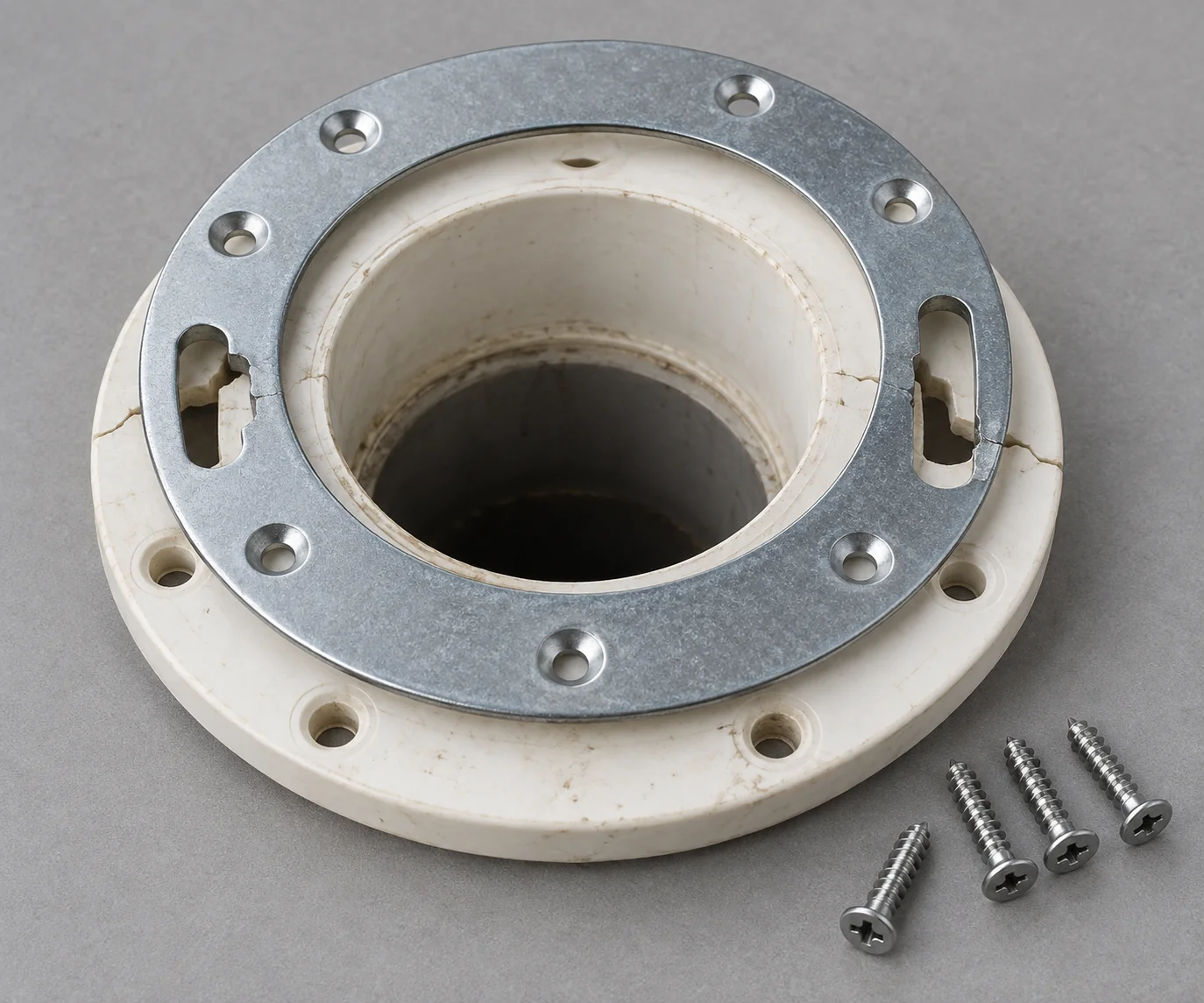
- Repair ring or HydroSeat — when the failure is a broken, cracked, rusted, or worn mounting ring, enough of the existing flange remains, the drain pipe is usable, and the subfloor can hold fasteners. Oatey’s Fix-it ring and Danco’s HydroSeat are both built for this. HydroSeat installs over an existing flange, so it can’t replace one that’s missing.
- Extender — when new flooring left a sound, secure flange too low. Lowe’s notes that thicker flooring can leave a gap between the toilet and flange, and Oatey’s Set-Rite family exists for exactly this. A low flange that is also loose or broken needs structural repair first — an extender doesn’t fix that.
- New flange — when the flange is missing, badly deteriorated, or the drain section can’t hold a repair.
A useful rule from the cost side: the $10 ring is not the risk boundary. Water that gets past a bad seal costs far more than any flange part — Angi puts flooring repair at $200-$3,000 and water-damage restoration at $450-$16,000. We can’t give you a percentage break-even, because none of the cost sources publish one. We can say that a repair ring on a flange in poor shape is a cheap way to spend money twice.
Should You DIY It or Hire a Pro?
Whether DIY lowers the cost to repair a toilet flange depends on the job. The DIY ladder runs from easiest to hardest: wax-ring reset, then a repair ring or extender, then full flange replacement. Angi rates a wax-ring replacement as intermediate at about two hours; Oatey rates flange repair as intermediate and under two hours, and new flange installation as intermediate at two to four hours. Those times don’t include a second trip to the store, stuck bolts, or floor repair.
The savings are real — you’re avoiding most of a $145-$350 bill — but the work has costs that don’t show on the shelf tag:
- Lifting. A toilet can weigh 70 to 120 pounds, according to Angi, and Home Depot recommends a helper to avoid injury or cracked porcelain.
- Fasteners. Per Home Depot’s Q&A on the Fix-it ring, screws aren’t included, and wood versus concrete subfloors need different ones.
- Cure time. Oatey’s ring instructions call for 100% silicone and letting it cure before the toilet goes back on.
- Overtightening. Home Depot and Danco both warn that overtightening the nuts can crack the porcelain — turning a flange repair into a toilet replacement.
- Sewer gas. Plug the open drain with a rag while the toilet is off, and Lowe’s warns an open drain lets sewer gas into the house.
Product instructions differ, so follow the ones in your box. HydroSeat goes over a standard wax ring and doesn’t call for a second ring on top; Fluidmaster’s Better Than Wax has depth-specific spacer rules; Oatey’s Twist-N-Set flanges must match pipe size and material. We couldn’t find a published success rate for homeowners attempting flange repairs, so we won’t quote one.
How to Know the Repair Worked (and the Caulk Question)
Don’t judge a flange repair by the first flush. Lowe’s suggests flushing several times with tissues around the base, checking again after an hour and again the next day. A dry base at each check is your green light.
Caulk is where guides disagree, so here is the balanced version: never use caulk to hide an active leak — it can conceal water and let damage continue. Once the repair has passed those checks, some guides and code language expect the fixture-to-floor joint to be sealed, and Lowe’s specifically recommends caulking while leaving about a 1-inch gap at the back so a future leak has somewhere to show. Local practice varies, so check what your jurisdiction expects.
When to Call a Pro
This is the part that decides the cost. Call a plumber when:
- The flange is glued, soldered, metal, or lead-and-oakum and won’t lift out after the bolts are removed. Home Depot and Angi both warn that damaging the drain pipe can cost more than hiring the job out.
- The flange is missing or nearly destroyed. A repair ring or HydroSeat needs enough existing flange to attach to; if the drain section can’t hold a repair, it’s a replacement.
- The subfloor is soft or the floor can’t hold fasteners. Building codes call for a toilet flange to be secured to a structurally firm base (IPC). If screws won’t bite, the job is bigger than a ring.
- There’s ceiling staining below, mold, or long-standing saturation. The EPA recommends drying water-damaged areas within 24-48 hours to help prevent mold — at that point you’re doing damage control, and Angi lists mold removal at $1,200-$3,800.
- You need an offset flange or the drain is misaligned. Oatey says offset flanges can shift a toilet roughly two inches but can’t be adjusted once solvent-cemented.
- You rent, live in a condo or multi-unit building, or are selling soon. The DIY isn’t impossible, but leak liability and inspection scrutiny outweigh saving $100-$200. InterNACHI inspectors check that the bowl is firmly connected, and ASHI notes buyers often underestimate a loose toilet that hides a broken flange or damaged wood.
- The work involves changing piping. Simple like-for-like resets are treated leniently in some cities (New York and Philadelphia, for example), but pipe alteration or relocation generally needs a licensed plumber and a permit. Rules vary by city, so check locally.
How to Choose and Vet a Plumber
When you price the cost to repair a toilet flange with a pro, the quote tells you whether the plumber understands the problem. Describe what you actually see — “toilet rocks, cracked flange ear, floor feels solid” — so the quote reflects real scope. A complete quote covers removing and resetting the toilet, diagnosing flange height and drain condition, the flange repair or replacement, a new seal, and a leak test.
Ask specifically:
- Is this a repair ring or a full replacement, and why?
- Is there a minimum or trip fee on top of the hourly rate?
- What happens if you find subfloor damage once the toilet is up — and who quotes that?
- Do they carry a license and insurance? Get the price in writing, and consider two or three quotes for anything beyond a seal swap.
A wide gap between quotes usually means each plumber is assuming something different about the flange and floor. For a quick baseline before you call, try the free Plumbing Repair Cost Estimator. If the flange is fine and the real problem is the toilet itself, our guide on when to replace the whole toilet vs. repair it and the cost to replace a toilet are the next reads.
What to Do Next
If you’re not sure the flange is the problem, start with the cheaper diagnosis: water between flushes points to the supply line, tank-to-bowl bolts, or condensation, not the flange, and our leaky toilet bowl guide walks through the base-leak causes. For the wider picture, see the Toilet Repair guide. If you do lift the toilet and find a cracked flange, stop and match the fix to the table above before you buy anything.
Can I repair a toilet flange myself?
Sometimes. A repair ring or extender is a reasonable DIY job when the flange is sound enough to anchor to, the drain pipe is usable, and the subfloor holds screws. Glued, metal, soldered, or lead-and-oakum flanges that don’t lift out are better left to a plumber (Home Depot, Angi).
How much does a plumber charge to replace a toilet flange?
Angi lists a professional flange replacement at about $145 to $165 on average, and $145 to $350 for flange repair in its broader toilet-repair table. Plumber labor runs $45-$150 per hour per HomeAdvisor, and minimums may apply.
Is a wax ring the same as a flange repair?
No. A wax ring is the seal between the toilet and the flange; it runs $5-$25 to DIY. It only solves the problem if the flange itself is intact, anchored, and at a workable height. A broken or low flange is a separate repair.
What if only one bolt slot on the flange is broken?
If the drain pipe and floor are sound, a repair ring is often the best-value fix, according to Oatey’s guidance — the failure is at the mounting ring, not the pipe or subfloor.
How long does a toilet flange repair take?
Oatey rates flange repair as intermediate and under two hours, and new flange installation as two to four hours. Add time for silicone to cure on a repair ring, and for repeated leak checks afterward.
Do I need a permit to repair a toilet flange?
Usually not for a simple reset, but pipe changes or relocation often do, and rules vary by city. Check with your local building department, especially for rentals or commercial work.
Sources
- Angi — How Much Does It Cost to Replace a Toilet Flange?
- Angi — How Much Should Toilet Repairs Cost?
- Angi — How to Replace a Toilet Wax Ring
- Angi — How to Replace a Toilet Flange
- Angi — Water Damage Restoration Cost
- HomeAdvisor — Plumbing Costs
- This Old House — Cost to Replace a Toilet Flange
- Oatey — How to Repair a Toilet Flange
- Oatey — How to Install a Toilet Flange
- Oatey — Fix-it Flange Repair Ring (42775)
- Oatey — Set-Rite Toilet Flange Extension Kits
- Danco — HydroSeat Flange Repair
- Home Depot — How to Replace a Toilet Flange
- Lowe’s — How to Replace a Toilet Wax Ring
- 2024 International Plumbing Code — Fixture Support
- EPA — A Brief Guide to Mold, Moisture, and Your Home
- InterNACHI — Toilet Inspection
Educational content only. Not a substitute for licensed professional advice. Local plumbing codes vary by jurisdiction. Use of any guidance from this guide is at your own risk.
Get the homeowner’s plumbing repair toolkit checklist — the tools, parts, and decisions every homeowner should have on hand. [Free download — enter your email]
Parts for this repair
As an Amazon Associate, plumbingbythebook earns from qualifying purchases. Links below are affiliate links — they cost you nothing extra.
- Oatey Fix-it Toilet Flange Repair Ring (42775) — Steel repair ring for a broken, cracked, or worn mounting flange when the drain pipe and subfloor are still sound. Screws are not included.
- Danco HydroSeat Toilet Flange Repair — Installs over an existing flange (not directly to the drain pipe), so enough of the old flange has to remain.
- Oatey Set-Rite Toilet Flange Extension Kit (43400) — For a sound, secure flange left too low by new flooring. Confirm the exact kit number for your height gap.
Related guides
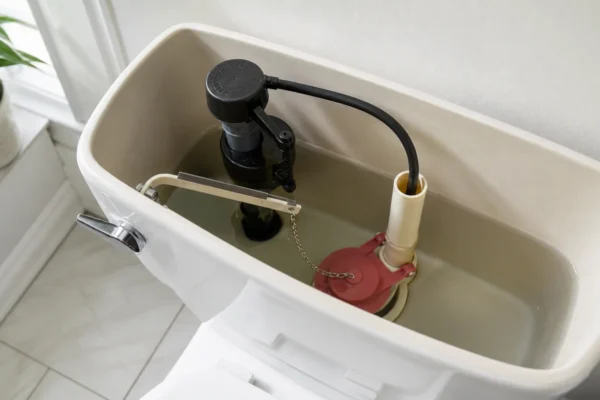
How to Identify Your Toilet Flush Valve [2026]
Pull off the tank lid to fix a running toilet and you’ll find one of two very different…
How to Identify Your Toilet Flapper by Brand [2026]
Pop the tank lid to replace a leaking flapper and you’re staring down a hardware-store aisle of red…
How to Find Your Toilet Model Number [2026]
Pop the tank lid to fix a running toilet or order a new flapper, and the part you…