
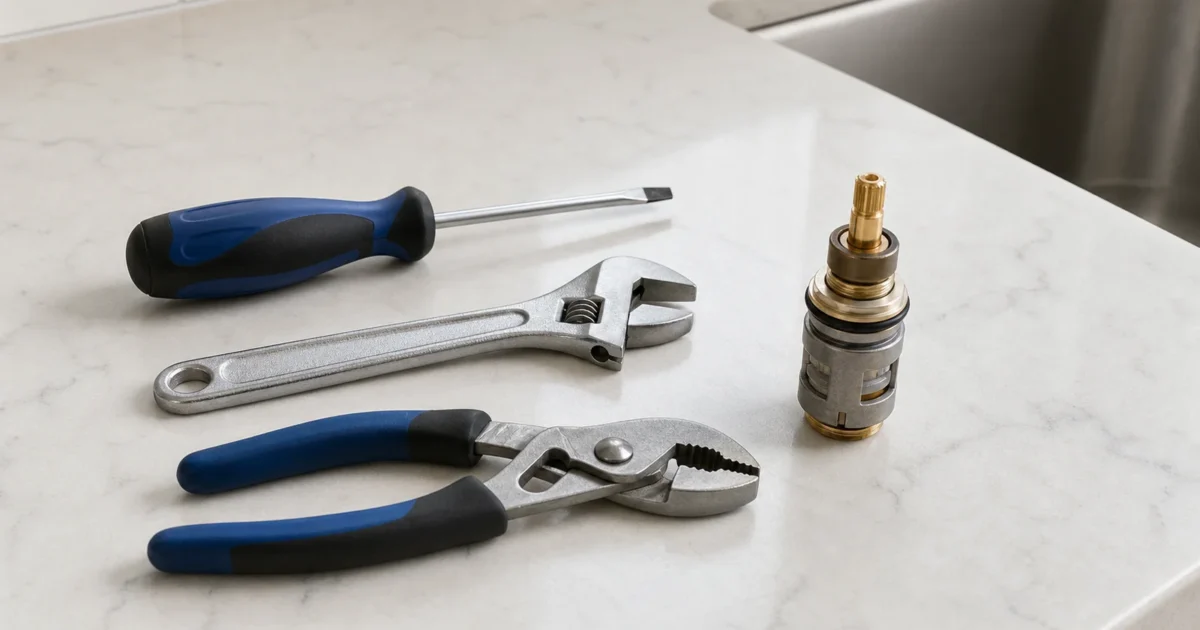
The cost to replace a faucet cartridge is one of the cheapest repairs in the house — about $15 to $130 if you do it yourself, or $100 to $400 with a plumber, averaging near $270, per Angi. This page is for the homeowner standing at a dripping sink or a shower handle that won’t fully shut off, trying to decide whether to grab a cartridge puller or make a call. The honest answer turns on one thing more than any other: whether you can positively identify the cartridge and whether it comes out cleanly.
For how this compares against other common repairs, see our data study on what plumbing repairs cost, DIY vs. a pro.
How Much Does It Cost to Replace a Faucet Cartridge?
For a straightforward sink faucet, DIY cartridge replacement runs $15 to $130 — a $10-$100 cartridge plus $0 to about $30 for a puller or retainer tool if the faucet doesn’t take a standard driver (Angi, Home Depot). Hiring it out costs $100 to $400, with Angi’s national average landing near $270 for a leaky-faucet repair (Angi). A second cartridge failure ten years later can push the lifetime total to roughly $30-$260 DIY or $200-$800 with a pro, depending on whether the same faucet needs a repeat visit (Angi).
| Line item | DIY parts cost | Pro (parts + labor) | Source |
|---|---|---|---|
| Sink cartridge (Moen 1225B, Delta RP47422, Kohler GP77006-RP) | $15-$30 | included below | Home Depot / Lowe’s |
| Tub/shower pressure-balance cartridge | $47-$92 | included below | Home Depot |
| Puller or retainer removal tool (if needed) | $6-$26 | – | Home Depot |
| Pro cartridge replacement, any type | – | $100-$400 (avg ~$270) | Angi |
| Plumber labor alone | – | $45-$200/hr (Angi), $45-$150/hr (HomeAdvisor) | Angi / HomeAdvisor |
| Whole-faucet DIY replacement (if the cartridge alone isn’t enough) | $99-$325+ | – | Home Depot / Lowe’s |
| Whole-faucet pro replacement | – | $170-$500+ | HomeAdvisor |
These are ranges, not quotes — the number you actually pay depends on the brand, whether the cartridge is seized, and whether you already own the tools. To estimate your specific job, use our free Plumbing Repair Cost Estimator.
What Drives the Cost (the Honest Spread)
The cartridge itself is cheap; getting it out cleanly is what costs money. Home Depot rates cartridge replacement as an intermediate job doable in under two hours when the faucet comes apart normally, and This Old House puts many kitchen faucet repairs at 20 to 30 minutes (Home Depot, This Old House). But hard water changes that math: USGS confirms hard water causes mineral buildup in fixtures, and Moen specifically recommends cleaning and flushing the valve body before a new cartridge goes in, because buildup is what seizes a cartridge in place (USGS, Moen). Moen even publishes a separate procedure just for stuck 1200/1225 cartridges, and plumbing-forum threads describe scratched or gouged valve bodies after a bad removal attempt turning a $20 part into a valve-body replacement (Moen, Terry Love forum). Cartridge type matters too — a sink cartridge runs $15-$30, while a tub/shower pressure-balance cartridge is closer to $47-$92 (Home Depot). Whichever type it is, a plumber’s bill is dominated by labor, not parts: Angi lists plumber labor at $45-$200 per hour, and a fast cartridge swap can still trigger a minimum charge or trip fee that makes a 20-minute job price out like a full service call (Angi).
Repair vs. Replace — the Honest Math
Start with the cartridge, not the whole faucet. If the fixture is under about 15 years old, this is the first leak, and the shutoff valves work, replacing the cartridge for $15-$130 is almost always the right first move — Angi puts typical bathroom faucet life at 15 to 20 years and recommends replacement mainly when a faucet is near that age or already has repeated repairs, corrosion, or persistent leaks, not after a single cartridge failure (Angi, Angi repair-vs-replace). Full faucet replacement makes more sense when the cartridge failure is one symptom among several — stiff handles, corrosion, worn mounting hardware, or a finish that’s seen better days. At that point the math shifts: a common pull-down kitchen faucet runs $99 to $325 DIY (Home Depot Delta Classic at $99, Moen Adler at $169, Kohler Simplice at $324.71), versus $170-$500+ installed by a pro (HomeAdvisor). If the faucet is otherwise sound, a $15-$30 cartridge beats a $99+ replacement every time; once the faucet is old and failing in more than one way, the replacement cost buys you a clean reset instead of a second repair bill.
Should You DIY It or Hire a Pro?
The honest savings is almost entirely labor. A DIY cartridge job costs the part ($10-$100) plus maybe a $6-$26 puller tool, against a $100-$400 pro visit — call it $90 to $270 saved, which is why Home Depot rates this as an accessible intermediate project and Kohler says installing new valves in a two-handle faucet is something almost anyone can do (Home Depot, Kohler). That savings only holds when three things are true: the shutoff valves actually work, the cartridge is correctly identified before the faucet is disabled, and the cartridge isn’t seized. Skip any of those checks and the math flips — Angi’s broader DIY survey found more than 40% of homeowners rated their DIY projects more expensive than expected, more than 40% found them more challenging than expected, and nearly 80% made at least a minor mistake along the way (Angi Inc.). Delta’s own installation instructions warn that failing to fully tighten the retaining bonnet nut can cause water damage — exactly the kind of mistake that turns a $20 cartridge into a much larger bill (Delta manual).
Before you buy, find your exact cartridge with our free Repair Finder so you don’t make a second trip to the hardware store — Moen, Kohler, and Pfister all route homeowners through model-specific identification before ordering parts, because the wrong cartridge is the most expensive mistake in this repair.
When to Call a Pro
This is the section that actually decides the cost. Call a plumber when:
- The cartridge is seized or won’t budge with reasonable force — Moen’s dedicated stuck-cartridge procedure exists because forcing a jammed cartridge is what leads to a scratched or gouged valve body Moen.
- The shutoff valves under the sink (or behind the wall) are unreliable, frozen, or missing — you need working shutoffs before you can safely open the valve body Home Depot.
- The faucet is a tub/shower valve buried behind a wall rather than an accessible sink faucet — the repair scope and risk both go up Moen.
- You can’t confidently identify the brand or model, and the faucet is old enough that a mismatched part means a second trip or a damaged valve body Pfister.
- You live in a condo or multi-unit building where the individual shutoff may not isolate the work — a failed shutoff there can affect other units, and shared-plumbing water damage crosses unit boundaries HomeAdvisor.
DIY is reasonable when the faucet is accessible, the shutoffs work, the part is identified, and you can tolerate a one- to two-hour repair window (Home Depot). Past that line, the $90-$270 you’d save on labor is smaller than the cost of a mistake.
A few scenarios flip the usual advice. In a rental or multi-family unit, a pro visit often beats repeated DIY attempts once you count tenant downtime and repeat-call risk — Delta’s warranty itself treats multi-family and commercial use differently from an owner-occupied home, at 10 years and 5 years respectively instead of a lifetime Delta. In a historic or character-defining bathroom, the National Park Service’s restoration standards favor repairing and retaining the original fixture over replacing it, which argues for a careful pro cartridge or valve rebuild rather than a swap NPS. And if you’re selling soon, a documented cartridge repair is usually enough on an otherwise attractive, newer faucet — but on one that’s already near 15 years old and dripping, a visible replacement can head off an inspection note Angi lifespan.
How to Choose and Vet a Plumber
If the job is past the DIY line, a few minutes of vetting saves money. Describe the problem precisely — “single-handle kitchen faucet, dripping at the spout, I think it’s the cartridge” — so the quote reflects the actual job instead of a worst-case guess. Ask whether the quote already assumes the cartridge is stuck, since that’s the variable that moves the price from the $100 low end toward the $400 high end. Confirm the plumber is licensed and insured, and get the price in writing before work starts. A like-for-like cartridge swap in the same location typically doesn’t need a permit, but HomeAdvisor notes that moving a fixture or adding a new line can trigger a $50-$500 permit cost, so ask if the scope has grown beyond a simple swap HomeAdvisor. For a job this size, two or three quotes is reasonable — a wide spread usually means one plumber is pricing in a stuck cartridge or valve-body risk that another isn’t.
If you’d rather confirm the cause before you call anyone, our Complete Guide to Faucet Repair and Why Is My Faucet Leaking cover the diagnostic step, and How to Identify Faucet Brand and Model plus our brand-specific guides for Moen, Kohler, Delta, and American Standard cartridges walk through identification in full. If you’ve already confirmed a Moen 1225 cartridge is the fix, our step-by-step replacement guide covers the DIY procedure end to end.
Is it worth replacing a faucet cartridge myself?
If the shutoff valves work and you can identify the cartridge, yes — the part runs $10-$100 plus maybe a $6-$26 puller tool, versus a $100-$400 pro total (Angi / Home Depot). You save roughly $90-$270 in labor. If the cartridge is seized or the shutoffs are unreliable, the risk of a bigger repair outweighs the savings.
How much does a plumber charge to replace a faucet cartridge?
Plan on $100 to $400 all-in, with Angi’s national average around $270. Plumbers bill $45-$200 per hour (Angi) or $45-$150 per hour (HomeAdvisor), often with a minimum charge or trip fee that can make even a 20-minute cartridge swap price like a full service call.
How long does it take to replace a faucet cartridge?
Home Depot rates it as an intermediate job doable in under two hours when the faucet comes apart normally, and This Old House puts many kitchen faucet repairs at 20 to 30 minutes. A stuck cartridge, corroded shutoffs, or an unfamiliar brand can extend that well past two hours.
Should I repair the cartridge or replace the whole faucet?
Repair the cartridge if this is the first leak on a faucet under about 15 years old with working shutoffs — it’s a $15-$130 fix. Replace the whole faucet when the cartridge failure is one symptom among several: corrosion, stiff handles, worn mounting hardware, or a faucet already near the 15-to-20-year mark (Angi).
Why did my cartridge get stuck, and does that change the cost?
Hard water causes mineral buildup that can seize a cartridge in the valve body (USGS / Moen), which is why Moen publishes a separate stuck-cartridge procedure. A seized cartridge is one of the clearest signs to call a pro instead of forcing it, since a scratched valve body can turn a $20 part into a full valve-body repair.
Do I need a permit to replace a faucet cartridge?
No — a like-for-like cartridge swap in the same location typically doesn’t require a permit. Permits mainly come into play if the job grows into moving a fixture or adding a new supply line, which HomeAdvisor lists at $50-$500 depending on the municipality.
Sources
- Angi – Plumber Cost to Fix a Leaky Faucet
- Angi – How Long Do Bathroom Faucets Last
- Angi – Should I Repair or Replace a Leaky Faucet
- Angi Inc. – Risks and Rewards of DIY
- HomeAdvisor – Cost to Install a Faucet
- HomeAdvisor – Who to Hire for Faucet Replacement
- Home Depot – How to Replace a Cartridge in a Faucet
- This Old House – How to Repair a Leaky Faucet
- Moen – Removing a Stuck 1200 or 1225 Cartridge
- Moen – Valve Body Cleaning and Flushing
- Delta – Faucet Warranty
- USGS – Water Hardness
- National Park Service – Restoration Treatment Standards
Educational content only. Not a substitute for licensed professional advice. Local plumbing codes vary by jurisdiction. Use of any guidance from this guide is at your own risk.
Get the homeowner’s plumbing repair toolkit checklist – the tools, parts, and decisions every homeowner should have on hand. [Free download – enter your email]
Related guides
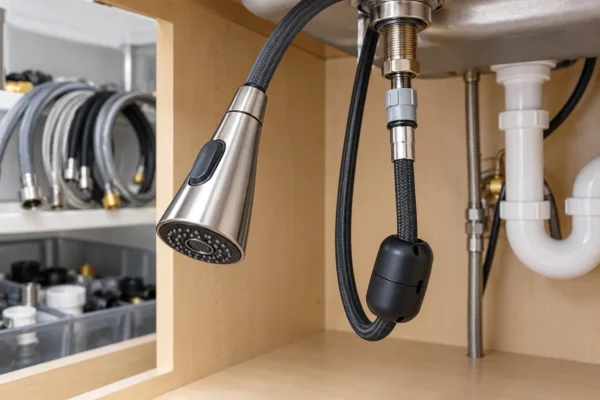
Replacement Hose for Pull-Down Kitchen Faucet: How to Tell Which Fits
You have a pull-down kitchen faucet that won’t retract, drips under the sink, or has a cracked hose,…
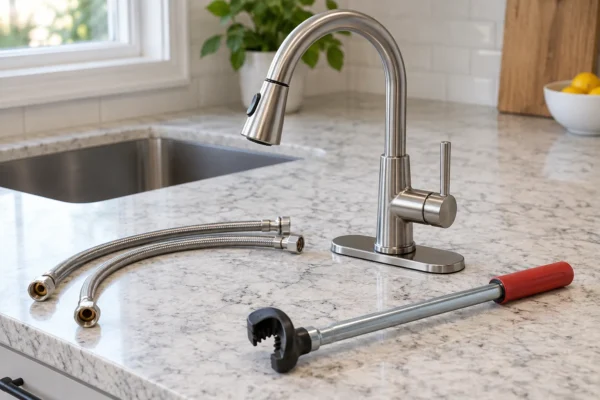
Cost to Install a Faucet: What the Labor Actually Runs [2026]
The cost to install a faucet with a professional is usually a low-hundreds job: Home Depot lists an…
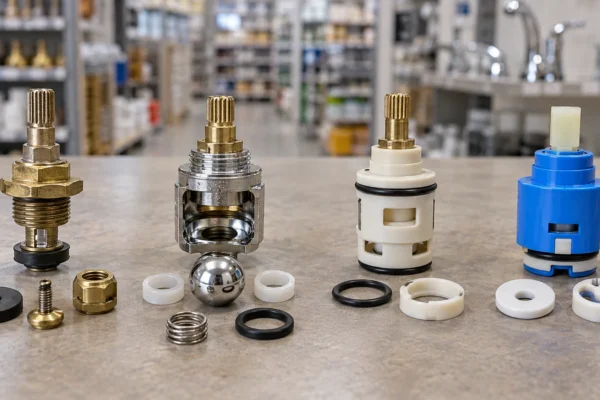
Faucet Valve Type Identification Chart: Cartridge, Ball, Compression, and Ceramic Disc [2026]
This faucet valve type identification chart covers the four mechanisms hiding inside almost every residential sink faucet —…