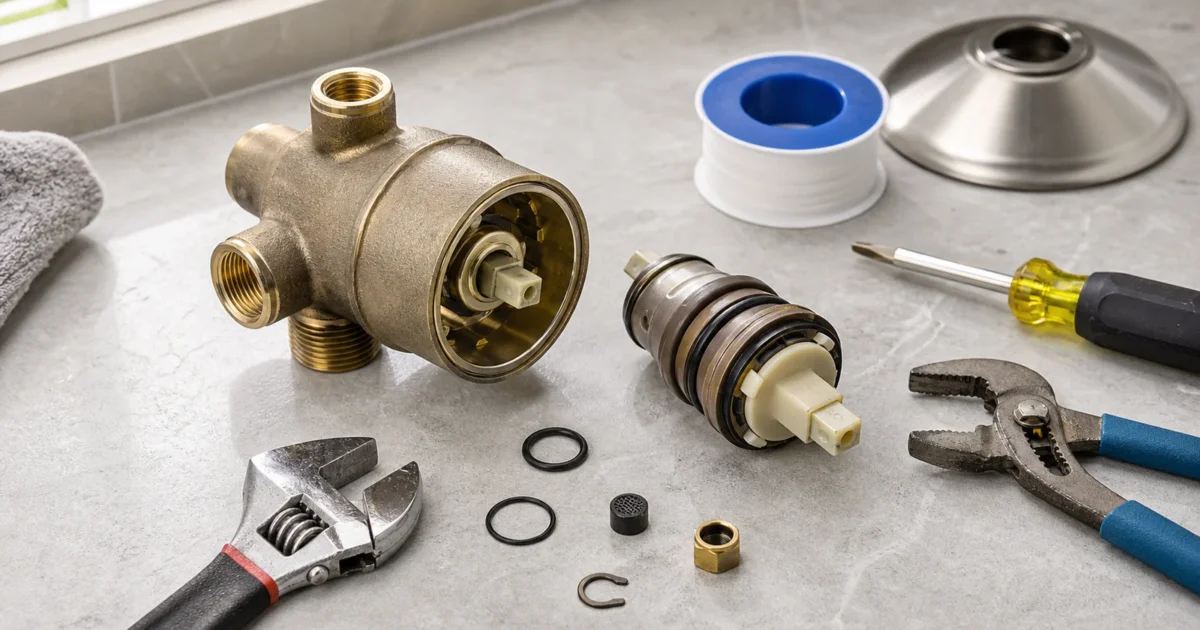
The cost to replace a shower valve lands around $225 to $575 with a plumber for a typical job, per HomeGuide – but most people who think they need a whole new valve actually need a cartridge, which is cheaper. This page is for the homeowner standing in the shower with a drip or a stiff handle, deciding whether to grab a wrench or call a pro. The honest answer depends almost entirely on one thing: whether the valve is reachable from the front of the wall, or buried behind tile.
For how this compares across the most common repairs, see our data study on what plumbing repairs cost, DIY vs. a pro.
How Much Does It Cost to Replace a Shower Valve?
For a straightforward job, the cost to replace a shower valve is about $225 to $575 including parts and labor (HomeGuide); Angi puts the average near $350 with a $150-$550 spread, and Fixr cites $200-$650. But the more common and far cheaper job is replacing just the cartridge inside the valve – $100 to $350 (HomeGuide), or about $300 on average with a $200-$400 range, per This Old House.
| Line item | DIY parts cost | Pro (parts + labor) | Source |
|---|---|---|---|
| Cartridge swap (most common) | $10-$80 cartridge + ~$40-$60 basic tools | $100-$350 | HomeGuide / This Old House |
| Full valve-body replacement | $30-$100+ valve kit | $225-$575 (up to $650) | HomeGuide / Angi / Fixr |
| Simple valve repair (e.g. clean/seal) | parts only | $75-$250 | Fixr |
| Plumber labor alone | – | $100-$300 (valve), $90-$270 (cartridge) | Angi / HomeGuide |
| Plumber hourly + call-out | – | $45-$150/hr + $50-$200 minimum | HomeGuide / Fixr |
These are ranges, not quotes – the figure you actually pay depends on the parts below and, more than anything, on access. To estimate your specific job (DIY parts vs. a pro), use our free Plumbing Repair Cost Estimator.
What Drives the Cost (the honest spread)
The valve itself is cheap. Access is what costs. A plumber working on a valve reachable from the front of the wall is a quick job; a valve behind tile or marble – or one that can only be reached from the back of the wall – means opening the wall and repairing tile or drywall afterward, which pushes the total well past the $225-$575 typical range (HomeGuide). Valve type matters too: a thermostatic valve costs more than a pressure-balancing valve, which costs more than a basic mixing or diverter valve (HomeGuide). Time tracks the same line – a cartridge swap is a 30-minute-to-1-hour job, while a full valve-body replacement runs 1.5 to 3 hours depending on access (Fixr).
Repair vs. Replace – the Honest Math
Start with the cartridge, not the valve body. A dripping or stiff shower is usually a worn cartridge, and replacing it ($100-$350) is far cheaper than swapping the whole valve ($225-$575) – so the cartridge is the right first move (HomeGuide). Sometimes the cartridge is only fouled by mineral deposits and can be cleaned rather than replaced (Fixr). Replace the cartridge outright when the handle is hard to turn, the water will not fully shut off, or you hear water hammer (This Old House). Replace the whole valve body only when the valve itself is cracked or corroded, or you are deliberately upgrading to an anti-scald pressure-balancing or thermostatic valve. A simple valve repair, when that is all it needs, runs $75 to $250 (Fixr).
Should You DIY It or Hire a Pro?
The honest savings is the labor. A DIY cartridge swap costs roughly the part ($10-$80) plus about $10-$20 each for basic tools like hex keys, a screwdriver, pliers, and caulk – call it $40 to $120 – versus a $100-$350 pro total (This Old House / HomeGuide). So you save roughly the $90 to $270 in labor. That math only holds when the valve is accessible from the front and the cartridge pulls cleanly. The moment the job needs wall access, soldering, or anti-scald compliance, the savings collapse: one bad solder joint or an overlooked code requirement behind a sealed wall can mean thousands in hidden water damage, which dwarfs the labor you were trying to save. If you can identify your valve and the cartridge pulls with a puller tool, it is a reasonable afternoon job; if you cannot, it is not.
Before you buy a cartridge, confirm exactly which one your valve takes – our free Cartridge & Valve Finder walks you to the right part by brand and model so you do not make a second trip, and our Delta cartridge identification guide covers the most common case.
When to Call a Pro
This is the part that actually decides the cost. Call a plumber when:
- The job requires cutting into a tiled, marble, or finished wall, or the valve is only reachable from the back of the wall – access and the tile/drywall repair afterward are where DIY costs balloon (HomeGuide).
- The valve connects with copper that must be soldered (sweated), or the existing pipe is galvanized steel – one bad solder joint behind a sealed wall can cause thousands in hidden water damage.
- You are replacing the full valve body (not just the cartridge), relocating the valve, or upgrading to a thermostatic or pressure-balancing anti-scald valve – these involve code and safety requirements a licensed pro should handle.
- The old cartridge breaks or seizes during removal and a piece stays stuck in the valve – this can require drilling it out and raises the labor cost (HomeGuide / This Old House).
- You cannot fully shut off the water to the shower, or there is an active leak behind the wall – stop and call before opening anything.
DIY is reasonable only for a front-accessible cartridge swap on a known brand where the part pulls cleanly – a 30-minute-to-1-hour job (HomeGuide). Everything past that line is where the expected cost of a mistake exceeds the labor you would save.
How to Choose and Vet a Plumber
If the job is past that line, a few minutes of vetting saves money. Describe the problem precisely – “dripping single-handle shower, I think it is the cartridge” – so the quote reflects the real job, not a worst-case guess. Ask whether the quote includes opening and repairing the wall if access is needed, since that is the line item that moves the total. Confirm the plumber is licensed and insured, and get the price in writing before work starts. For a job this size it is reasonable to get two or three quotes; a wide spread usually means they are scoping the access differently, so ask each one what they are assuming about the wall.
If you would rather start with the simpler fix, our Shower Repair guide and the step-by-step how to replace a Delta shower cartridge walkthrough cover the cartridge job in full.
Is it worth replacing a shower valve cartridge myself?
If the valve is accessible from the front and the cartridge pulls cleanly, yes – the part runs $10-$80 plus basic tools, versus a $100-$350 pro total (HomeGuide). You save roughly the $90-$270 labor. But if it needs wall or solder work, the risk outweighs the savings.
How much does a plumber charge to replace a shower valve?
Plan on $100-$300 in labor alone for a valve, or $90-$270 for a cartridge swap (Angi / HomeGuide). Plumbers bill $45-$150 per hour plus a $50-$200 minimum (HomeGuide / Fixr). With parts, the typical all-in total is $225-$575 for a valve (HomeGuide).
How long does it take a pro to replace a shower valve?
A straightforward cartridge swap takes about 30 minutes to 1 hour (HomeGuide). A full valve-body replacement runs 1.5 to 3 hours depending on access (Fixr). Valves behind tiled walls or reachable only from the back take longer and cost more in tile and drywall repair.
Should I repair or replace my shower valve?
Start with the cartridge – most drips and stiff handles are a worn cartridge, replaced for $100-$350, not a dead valve body at $225-$575 (HomeGuide). A simple valve repair is $75-$250 (Fixr). Replace the whole valve only if it is cracked or corroded, or you are upgrading to anti-scald.
Why is replacing a shower valve so expensive sometimes?
The valve itself is cheap; access is what costs. If a plumber must open a tiled wall, solder copper, or repair drywall and tile afterward, totals climb past the $225-$575 typical range (HomeGuide). Thermostatic and back-of-wall valves also cost more than basic mixing or diverter valves.
When should I definitely call a plumber instead of DIYing?
Call a pro if the job needs soldering, the valve sits behind a finished wall, the pipe is galvanized steel, you are replacing the valve body or adding anti-scald, or you cannot fully shut off the water. A bad solder joint behind sealed tile can cause thousands in hidden water damage – far more than the labor saved.
Sources
- HomeGuide – Shower Valve Replacement Cost
- HomeGuide – Shower Cartridge Replacement Cost
- Angi – Shower Valve Replacement Cost
- This Old House – Shower Cartridge Replacement Costs
- Fixr – Cost to Repair a Shower
Educational content only. Not a substitute for licensed professional advice. Local plumbing codes vary by jurisdiction. Use of any guidance from this guide is at your own risk.
Related guides
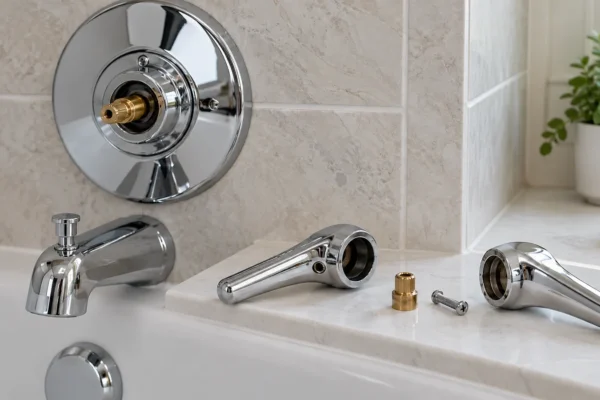
Replacement Shower Handle: How to Match It to Your Valve Before You Buy
The handle on your tub and shower is cracked, loose, spinning on the stem or worn through at…
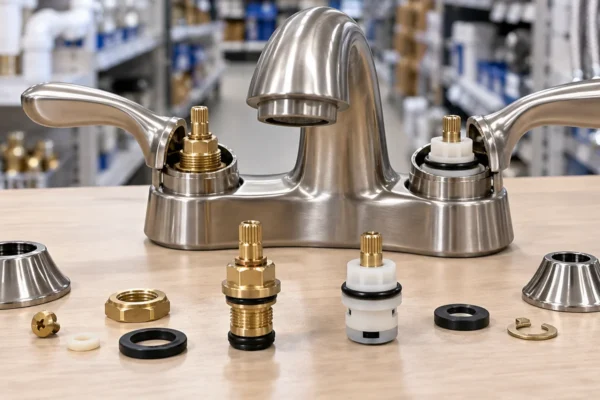
Shower and Faucet Stem Identification Chart: Match Yours by Length and Broach
You pulled the stem out of a two-handle tub and shower valve, and there is no brand and…
Which Shower Trim Kits Fit Your Valve? How to Tell by Brand
You found a shower trim kit you like, in the right finish, from the right brand. It still…